Clear two-zone control for a tidy helm
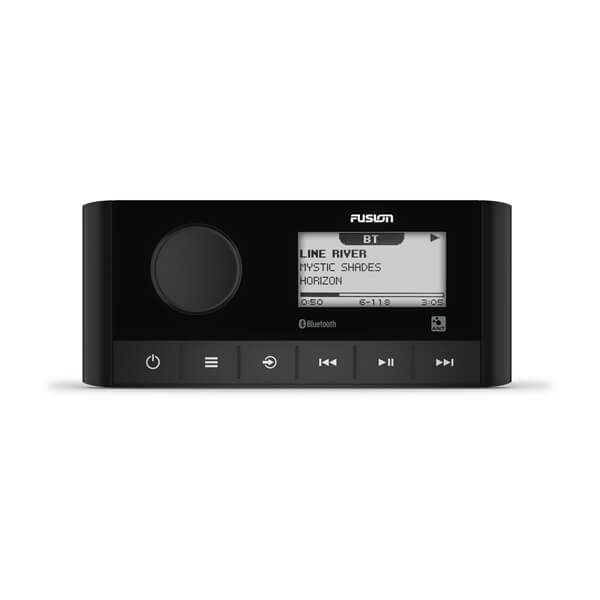
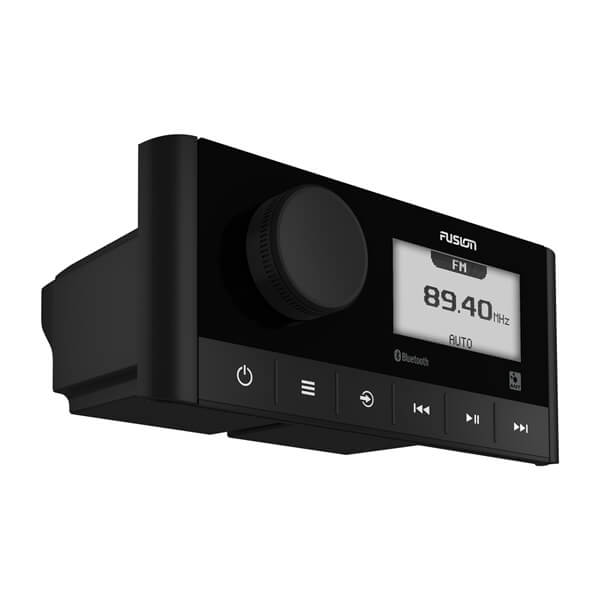
At the helm, the useful stereo is the one I can read and control without turning a simple volume change into a tour of the menus. The Fusion MS-RA60 takes that job seriously. Its 2.3-inch monochrome liquid-crystal display (LCD) is bonded to help resist fogging, the front carries IPX6 and IPX7 water-resistance ratings, and the controls are deliberately direct. At £284 including VAT, it brings proper two-zone marine audio into a compact panel without asking for a large display or an elaborate network.
I see the MS-RA60 as a particularly tidy answer for a small cruiser, cuddy boat, rigid inflatable boat (RIB) or open helm where space is limited but music is shared between different parts of the boat. It produces 180 watts of peak output through its built-in Class-D amplifier, accepts a 10.8-to-16-volt supply and lets me manage two listening zones independently. Those figures matter because a cockpit and cabin rarely need the same volume, especially when conversation, wind and engine noise change during the day.
A compact helm unit with useful sources
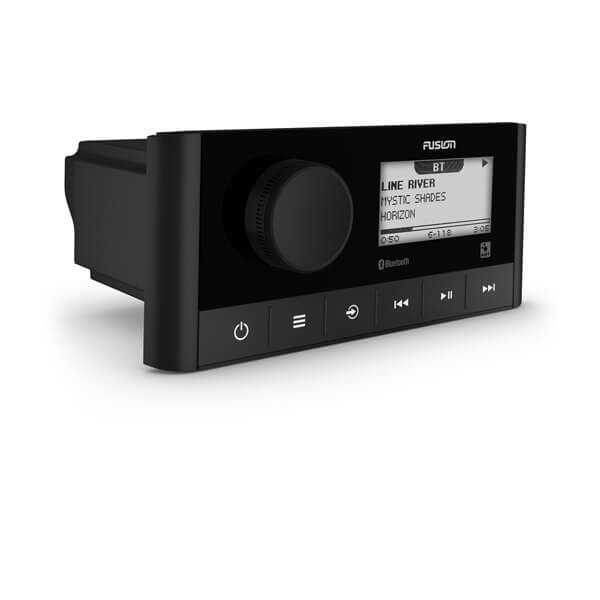
The source list is well chosen for British and Irish boating. Digital Audio Broadcasting Plus (DAB+) is built in, alongside amplitude modulation and frequency modulation (AM/FM) radio, Bluetooth streaming and a rear RCA auxiliary input. I can pair a phone for a playlist, return to digital radio without another box, or connect a separate source through the auxiliary input. The unit also supports Fusion-Link control from the Fusion Audio app and compatible Garmin watches.
If I am sitting aft or handling a line, I can adjust the track or volume without stepping back to the dash. The app also handles over-the-air software updates by Bluetooth, so I do not have to treat routine firmware work as a dismantling exercise.
Fusion MS-RA60 vs Hertz HMR 10 D vs Hertz HMR 20 vs Kenwood KMR-M508DAB
| Marine stereo | Current price inc VAT | Difference | Front protection and display | Radio and sources | Zones and output | Installation | Control and updates |
|---|---|---|---|---|---|---|---|
| Fusion MS-RA60 | £284 | Reviewed model | IPX6 and IPX7 water-resistant front; bonded anti-fog display | DAB+, AM/FM, Bluetooth and RCA auxiliary input | Two independently controlled zones; 180 W peak | 156.9 × 68 × 103.2 mm; fits MS-RA55 mounting profile | Fusion-Link phone app, compatible Garmin watch control and over-the-air updates |
| Hertz HMR 10 D | £320 | £36 more | IP66 front; 2.8-inch monochrome display | DAB+, AM/FM, Bluetooth and USB | Four 50 W channels; two stereo pre-outs | 92 mm gauge opening; mounting depth not published on checked listing | Front controls and Bluetooth; no watch control published |
| Hertz HMR 20 | £330 | £46 more | IP66 front; 3-inch colour display | AM/FM, Bluetooth and USB; DAB+ module optional | Four 50 W channels; two-zone controls | Wide colour-face format; 98 mm mounting depth | Front controls and Bluetooth; no watch control published |
| Kenwood KMR-M508DAB | £165 | £119 less | Conformal-coated circuit board; no front IP rating published | DAB+, AM/FM, Bluetooth, USB and front auxiliary input | Four 50 W channels; two RCA pre-outs | Single-DIN chassis with short body | Kenwood Remote app and Alexa; detachable face |
I rate the Fusion as the strongest overall purchase here because its £284 price sits £36 below the HMR 10 D and £46 below the HMR 20 while adding a bonded display, two-zone management, a front rated to both IPX6 and IPX7, watch control and app-based updates. The Kenwood is £119 lower, but it uses a single-DIN opening and a conformal-coated circuit board rather than a published sealed-front rating; it also lacks the Fusion’s neatly integrated two-zone and watch-control combination. The MS-RA60 gives me the best balance of marine protection, fitting flexibility and everyday control.
Visibility without unnecessary theatre
The monochrome screen is not trying to imitate a chartplotter, and I think that suits the job. Its dot-matrix layout displays source and track information cleanly, while the bonded construction addresses condensation and fogging. At a working helm I value contrast, legibility and a control sequence I can remember after a winter ashore.
Physical dimensions of 156.9 by 68 by 103.2 millimetres keep the unit compact. More importantly for an upgrade, Fusion designed it to fit the earlier MS-RA55 mounting profile. If that opening is already in the dash, I can replace the older unit without enlarging a finished panel. That can save far more bother than the specification line suggests, particularly where switches, gauges and structural backing leave little room for a new cut-out.
Two zones make the output more usable
The 180-watt peak figure divides across the internal amplifier, but the practical gain is how the MS-RA60 lets me use it. With two zones, I can keep speakers near the helm clear enough for the skipper while reducing the level in a cabin or aft seating area. Balance and naming are easier to understand when the system reflects the spaces aboard rather than treating every speaker as one room.
For a straightforward four-speaker installation, the internal Class-D amplifier keeps the component count sensible and uses power efficiently. A rear pre-out also leaves a route to an external amplifier where the system grows. I would still match speaker impedance, cable size, fuse protection and power supply to the installation instructions; marine audio performs best when its wiring and connections receive the same care as the visible head unit.
Built for water at the face of the dash
Fusion publishes IPX6 and IPX7 ratings for the front panel. In plain language, that gives me a much more relevant starting point for spray and temporary water exposure than a generic car receiver. The rating belongs to the installed front, so the rear still deserves a dry, ventilated position with properly supported cables and protected connections. A marine label never excuses careless mounting.
I also value the bonded LCD because mist inside a display can make a perfectly powered stereo awkward to use. The black face sits neatly beside modern instruments, yet the styling remains quiet enough for an older helm. My attention stays on the water, and the stereo looks like part of the panel rather than an accessory fastened on afterwards.
Daily ownership and system growth
Bluetooth pairing, DAB+ presets and two named zones cover most of the daily interaction. I would set those up at the berth, save the stations I actually use and leave the volume limits sensible for each area. Once that work is done, the front controls, phone app and watch offer three simple ways to reach the same music.
The MS-RA60 is deliberately not a full networked entertainment hub, but its growth path is useful. The RCA pre-out can feed additional amplification, and the auxiliary input accepts another source. I can improve the speaker side later without replacing the clear controls I already understand. That measured expandability is more valuable to me than a crowded menu of features that never earns space aboard.
Erin’s verdict
I recommend the Fusion MS-RA60 for a skipper who wants a compact marine stereo that remains easy to read, easy to update and properly adaptable across two listening areas. Its water-resistant front, bonded display, built-in DAB+, efficient amplifier and RA55-compatible footprint all answer real installation or ownership questions.
At £284, my conclusion is firm: the Fusion offers the strongest complete package in this comparison. It undercuts both Hertz alternatives while providing the most convincing blend of marine-front protection and remote control, and its purpose-built layout is a better fit at the helm than adapting the less expensive Kenwood single-DIN format. See the live Fusion MS-RA60 listing at Flood Marine.
About this review
I used the live Flood Marine product page, Garmin Fusion’s official MS-RA60 product material and current advertised UK listings for the Hertz HMR 10 D, Hertz HMR 20 and Kenwood KMR-M508DAB. I checked the published facts and advertised prices on 23 September 2026. My assessment is editorial; it is not an instrumented performance, durability or sea test. I am Erin McKee, the independent reviewer, and this article was not written by Flood Marine Services.
More detail