A Proper Heading Reference at the Helm
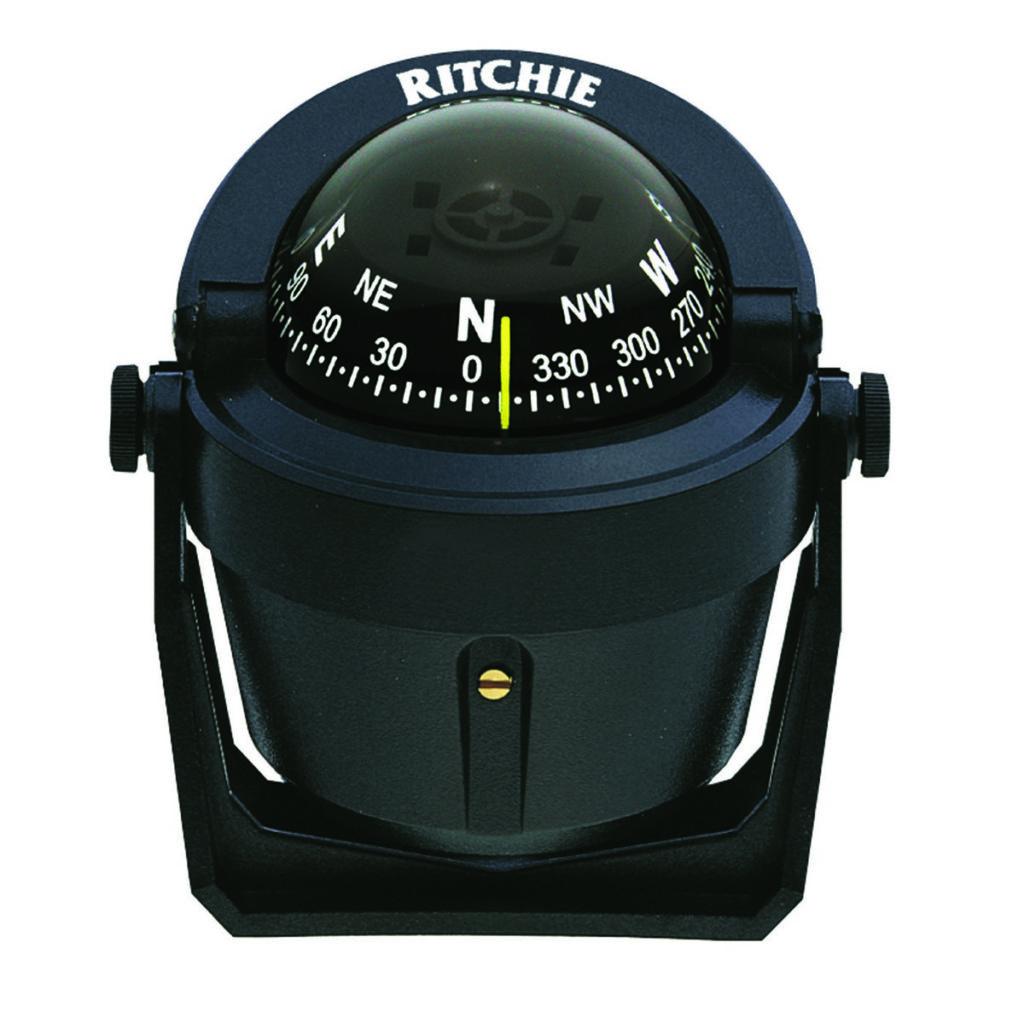
At the helm, a compass earns its place when the shoreline goes flat in rain, the electronic heading begins to wander or I need one clean glance before altering course. The Ritchie Explorer B-51 gives me a 70-millimetre direct-reading dial in a black bracket-mounted body, with a proper sun shield by day and green lighting from the boat’s 12-volt supply at night. At £240, it is the dear option in this comparison. I think the price makes sense because the useful engineering is inside the compass as well as around it.
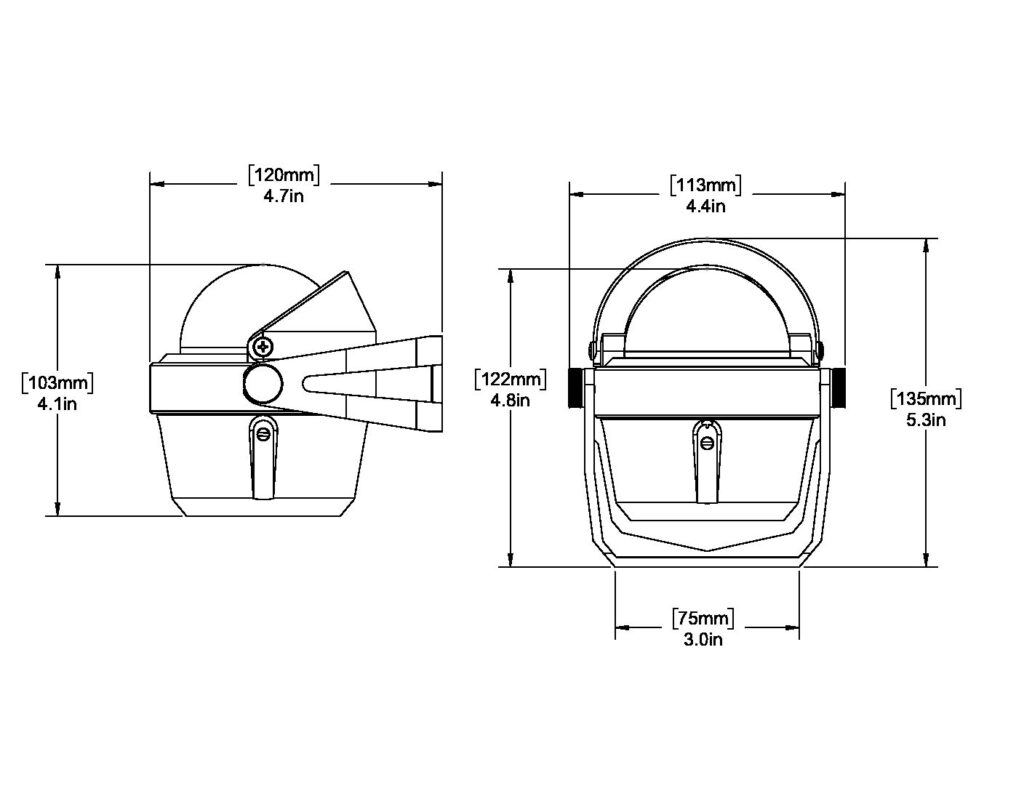
The B-51 is adjustable in its bracket and removable by undoing the two thumbscrews. That sounds simple, and it is, but I value it every time a small helm has to serve more than one purpose. I can set the reading angle for a seated or standing position, remove the unit for secure storage, and replace a bracket or screw without treating the whole compass as disposable. The black body and black dial are tidy rather than showy, which suits the straightforward job.
A heading display built for quick reading
Ritchie describes the apparent dial as two and three-quarter inches, or roughly 70 millimetres. From my position at the wheel, that is large enough to read without turning a compact console into a wall of instruments. The direct-reading layout and adjustable sun shield help in bright, low-angle light, while the internal green illumination keeps the heading visible after dark without asking me to balance a torch near the throttle.
The 12-volt lamp suits the electrical system on most small motor boats. Ritchie also publishes replacement lighting options for 6- and 24-volt installations, so the platform is not tied to one supply forever. I would still mount the compass where the display sits naturally in my sight line and route the lighting cable with strain relief. Good ergonomics start before the first screw goes in.
Why the movement matters
The headline inside the B-51 is Ritchie’s DirectiveForce magnet system. Its purpose is fast heading lock-on, and that matters on a lively small craft where the bow and compass card are rarely granted a quiet conversation. The dial runs on a scientifically matched sapphire jewel and hardened-steel pivot. I read that as deliberate attention to friction, wear and repeatable movement, not decoration for a brochure.
Built-in compensators let an installer correct for deviation created by the boat’s own magnetic influences. I would choose the mounting position away from speakers, heavy cabling, tools and other sources of interference, then have the installation swung and the deviation recorded. A compensator corrects a sound installation; it cannot rescue a poor location by optimism. Once set up properly, the magnetic compass gives me an independent heading reference alongside the plotter and other helm data.
The case uses a high-temperature composite intended to widen the operating range. Ritchie lists the Explorer as fully repairable and backs it with a five-year warranty. Replacement brackets, thumbscrews and lighting parts are published for the range. That ownership detail carries real weight for me. A fixed navigation instrument can see ultraviolet light, vibration, spray and repeated handling for years, so the ability to service the unit is worth more than a small saving on purchase day.
Ritchie Explorer B-51 vs Plastimo Offshore 75 vs Silva 70UNE vs Riviera Artica BA2
| Compass | Current UK price | Difference vs Ritchie | Card and reading | Mounting | Night lighting | Deviation compensation | Movement and stability | Service and support |
|---|---|---|---|---|---|---|---|---|
| Ritchie Explorer B-51 | £240 | — | 70 mm direct-reading dial; adjustable sun shield | Adjustable removable bracket with thumbscrews | Internal 12-volt green lighting; 6- and 24-volt service options published | Built-in compensators | DirectiveForce magnets; matched sapphire jewel and hardened-steel pivot | Five-year warranty; 100% repairable; replacement bracket, screws and lighting listed |
| Plastimo Offshore 75 bracket | £70 | £170 less | 70 mm conical card; five-degree graduations | Removable clip-on bracket | 12- or 24-volt lighting | Compensation kit is optional | International Organization for Standardization (ISO) 25862:2019 Class B listing | Five-year warranty; in stock at price check |
| Silva 70UNE | £90 | £150 less | Dual scales; five-degree graduations | Bracket-mounted or removable for hand-bearing use; floats | Built-in diode light powered by two watch batteries | Integral compensators are not listed in the checked specification | Multi-position steering and hand-bearing design | Portable dual-purpose format; in stock at price check |
| Riviera Artica BA2 | £88 | £152 less | 70 mm flat card; five-degree graduations | Bracket mount | 12-volt standard; 24-volt available on request | Integral compensators | Fluid damping and semi-gimballed cradle | Three-year warranty; fully serviceable; quoted 3–4 week delivery |
The Plastimo costs £170 less and carries a useful five-year warranty plus a current ISO Class B listing, but the compensation kit is an extra rather than part of the checked package. The Silva is £150 less and cleverly doubles as a floating hand-bearing compass, yet its battery lighting and portable brief are different from the permanently powered, compensated helm reference I am choosing here. The Riviera comes closest on the specification sheet: it is serviceable, compensated, lit and semi-gimballed for £152 less. Ritchie still gives me the stronger complete ownership case through the five-year warranty, published replacement hardware, voltage-specific service lighting, high-temperature housing and the documented DirectiveForce, sapphire-jewel and hardened-pivot movement. Those are the reasons the B-51 remains my first choice, not a claim that the alternatives cannot point north.
Installation and daily use
I would dry-fit the bracket while seated and standing, check that the shield clears the sight line, and confirm that the thumbscrews can be reached without leaning across the wheel. I would then test the lighting at the helm’s normal night brightness and complete a proper compass swing. Those steps turn the published hardware into a useful instrument. They also reveal any local magnetic influence while moving the compass is still easy.
In use, I like the separation of duties. The plotter can manage route, chart and position information while the B-51 provides an immediate magnetic heading that is not waiting for a menu or a satellite solution. On a leisure boat that is reassuring. On a patrol, training or high-hour commercial craft, it also gives the skipper a stable reference that another crew member can understand at a glance. I would keep the glass clean, inspect the bracket and cable, and compare the recorded deviation as equipment changes around the console.
My verdict
I rate the Ritchie Explorer B-51 as the strongest overall purchase in this group for an owner who wants a bracket compass to remain part of the boat rather than become a short-lived accessory. The £240 price buys the readable 70-millimetre dial, proper vessel-powered lighting, built-in compensation, a purposeful movement, replaceable mounting parts and a five-year warranty in one installation.
My decision rests on what happens after the first season: the compass can be adjusted, removed, serviced and supported while continuing to do one vital job clearly. See the exact black, bracket-mounted Ritchie Explorer B-51 at Flood Marine.
About this review
Specifications and prices were checked against the live Flood Marine listing, current Ritchie material, official Plastimo and Silva information, the Riviera catalogue and the named current UK competitor listings on 29 September 2026. This is an editorial assessment rather than an instrumented performance, durability or sea test. The independent reviewer is Erin McKee. This article was not written by Flood Marine Services.