Seven-Year Readiness without a Subscription
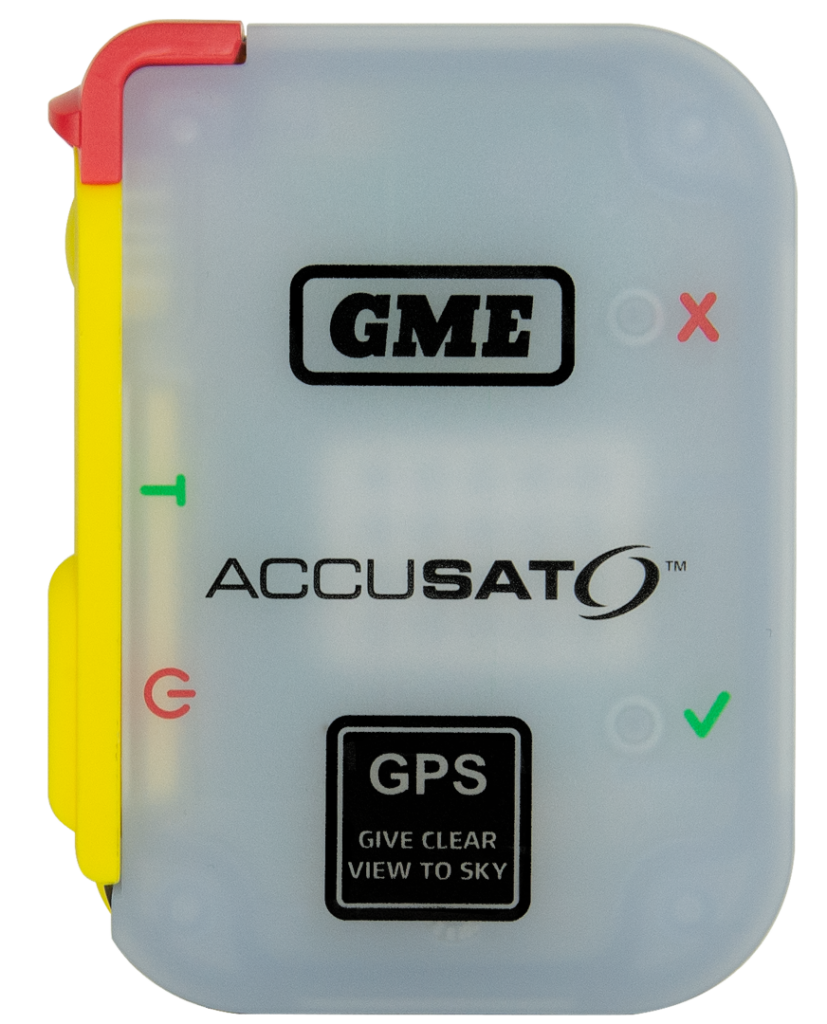
For an owner, skipper or lone worker, the practical point of a personal locator beacon (PLB) is the ability to raise a recognised satellite distress alert when normal communications are unavailable. The GME MT610G UK costs £314 and arrives pre-programmed for UK registration. Its published package combines a seven-year battery storage life, six-year warranty, 72-channel position receiver, inherent buoyancy and an ingress-protection rating of IP68.
I see that as a strong ownership case because an emergency beacon spends almost all its life being carried, checked and kept ready. Long battery dating matters. Clear registration matters. So does a casing that floats without relying on a separate pouch. None of those features replaces proper passage planning, communications or life-saving equipment, but each improves the chance that the beacon is usable when its specific emergency role is required.
How the distress chain works
When manually activated in a grave and imminent emergency, the MT610G sends a 406-megahertz (MHz) alert through the Cospas-Sarsat satellite system. The coded identity links the alert to the beacon’s registration record, which is why I would register the unit promptly and keep the contact and vessel details current. A separate 121.5 MHz transmitter gives rescue units a homing signal once they are in the area.
The integrated 72-channel Global Positioning System (GPS) receiver supplies position data to narrow the search area. GME describes zero warm-up time, meaning the position receiver is ready to begin its work without a separate start sequence. I would still activate it with a clear view of the sky, keep it upright as instructed and follow the manual exactly. A PLB sends a distress alert; it is not a two-way messenger and it does not display a reply from a rescue service.
High-intensity light-emitting diodes provide visible indication around the unit, while the two-step deployment arrangement helps separate normal carriage from emergency use. The supplied safety lanyard, manual and quick-start guide complete the checked package. I value that simple, manual design. In a stressful moment, the user needs a deliberate sequence that can be remembered and confirmed without working through menus.
Battery, buoyancy and day-to-day ownership
The seven-year battery storage life is two years longer than the five-year period published for both ACR alternatives in this comparison. GME backs the beacon with a six-year warranty and uses a non-hazardous battery pack intended to make transport easier. Battery rules can still vary by carrier and journey, so I would check the current transport conditions before flying rather than assume the label settles every itinerary.
Inherent buoyancy is particularly valuable around a small boat because it is part of the beacon itself. The Ocean Signal PLB1 is waterproof, but it needs the separately available flotation pouch for buoyancy. I prefer the MT610G’s built-in approach: one fewer separate component to remember when the unit is transferred between a jacket, grab bag, workboat or shore kit.
IP68 is a strong published ingress rating, but I would still rinse salt contamination as directed, inspect the case and lanyard, observe the battery expiry and perform only the scheduled self-tests described in the manual. Test transmissions consume a small amount of battery capacity, so discipline is better than curiosity. The correct emergency activation is reserved for real distress.
GME MT610G UK vs Ocean Signal rescueME PLB1 vs ACR ResQLink 400 vs ACR ResQLink View
| Personal locator beacon | Current UK price | Difference vs GME | Alert and homing | Position receiver | Battery and operation | Water and visibility | Status feedback | Registration and support |
|---|---|---|---|---|---|---|---|---|
| GME MT610G UK | £314 | — | 406 megahertz satellite alert plus 121.5 megahertz homing | Integrated 72-channel Global Positioning System receiver; zero warm-up | Seven-year battery storage life | Inherently buoyant; IP68; high-intensity light-emitting diodes | Two-step manual deployment and self-test indications | UK pre-programmed; non-hazardous battery pack; six-year warranty |
| Ocean Signal rescueME PLB1 | £298 | £16 less | 406 megahertz satellite alert plus 121.5 megahertz homing | Global Positioning System receiver | Seven-year battery storage life; at least 24 hours operation | Waterproof to 15 m; visible strobe; flotation pouch required for buoyancy | Manual activation and self-test indicators | No subscription; two-year warranty extendable to five after registration |
| ACR ResQLink 400 | £325 | £11 more | 406 megahertz satellite alert plus 121.5 megahertz homing | Global Positioning System and Galileo receivers | Five-year battery; at least 24 hours operation | Buoyant; visible and infrared strobes; waterproof test ratings published | Manual activation with test functions; no display | No subscription; five-year warranty |
| ACR ResQLink View | £360 | £46 more | 406 megahertz satellite alert plus 121.5 megahertz homing | Global Positioning System and Galileo receivers | Five-year battery; 28-hour published operation | Buoyant; visible and infrared strobes; waterproof test ratings published | Digital display shows test, activation and position status | No subscription; five-year warranty |
The Ocean Signal is £16 less and has a seven-year battery, but it relies on its flotation pouch for buoyancy and its registered warranty reaches five years. The ACR ResQLink 400 costs £11 more, adds GPS and Galileo reception plus visible and infrared strobes, yet its published battery and warranty periods are both five years. The ResQLink View adds a useful status display and 28-hour published operation, but it is £46 more and retains those five-year periods. At £314, I think the GME is the strongest overall purchase because it balances the core 406 MHz alert and 121.5 MHz homing functions with inherent flotation, IP68 protection, a 72-channel GPS receiver, seven-year battery dating, six-year warranty and UK programming. It pays attention to the full ownership interval without charging for a display.
Carrying and registering it properly
I would register the UK-coded beacon with the appropriate UK beacon authority as soon as it is bought, record the battery expiry in the vessel’s safety schedule and update the registration after a change of owner, vessel or emergency contact. Registration gives the rescue coordination process useful context. It also helps distinguish a real incident from an accidental transmission, though it should never be treated as a substitute for correct activation and positioning.
On a small boat, I would carry the PLB on the person or securely attached where it remains reachable after an unexpected separation from the vessel. A beacon buried in a locker is beautifully tidy and rather less helpful. For commercial and high-hour work, I would add its self-test and expiry checks to the documented equipment routine. For leisure use, the same habit is sensible before the first trip of the season and before a more exposed passage.
The MT610G can also move between marine, aviation and remote land use, provided the registration and carriage arrangements remain accurate for the activity. That flexibility supports value over seven years. I would not use it to replace a fixed emergency position-indicating radio beacon where one is required, a marine radio, flares or local procedures; I would use it as the personal satellite layer that stays with me.
My verdict
I put the GME MT610G UK first overall. The £314 price is £11 below the ResQLink 400 and £46 below the ResQLink View, while buying longer battery dating and warranty cover than either. Against the slightly cheaper Ocean Signal, inherent buoyancy and the six-year warranty strengthen the complete package.
My conclusion is straightforward: the GME covers the recognised satellite alert, homing and position functions, then makes long ownership easier through UK programming, IP68 protection, flotation and a non-hazardous battery pack. See the exact UK-programmed GME MT610G at Flood Marine.
About this review
Specifications and prices were checked against the live Flood Marine listing, current GME documentation, official Ocean Signal and ACR material, and the named current UK competitor listings on 30 September 2026. The assessment is editorial; it is not an instrumented performance, durability or sea test. The independent reviewer is Neil Duddy. The article is independent editorial work and was not written by Flood Marine Services.