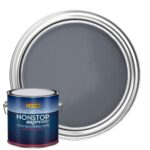
Two-Season Hull Protection
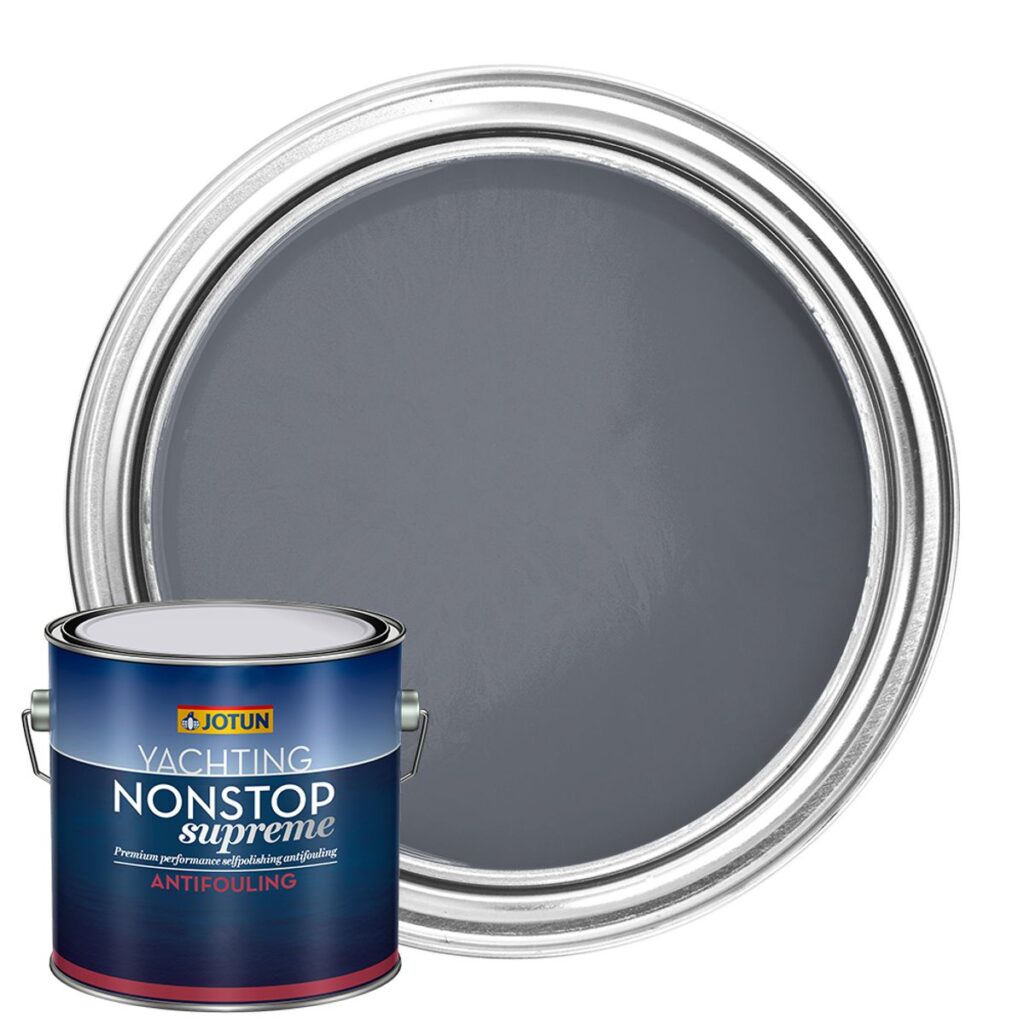
The practical cost of antifouling is not confined to the tin. It is the lift, the wash, the preparation, the days ashore and the lost weekend when the weather turns against the job. That is why I take Jotun NonStop Supreme seriously. This exact dark-grey 2.5-litre pack is £348 at its live whole-pound Flood Marine price, and Jotun publishes a service period of up to 24 months when it is used as part of the complete coating system.
I would begin with that phrase “up to”, because it keeps the decision honest. Water temperature, local fouling pressure, time under way, berth conditions and the quality of surface preparation all affect the result. The Flood Marine listing states the same variables plainly. What the figure gives me is a credible planning interval from a premium ion-exchange, self-polishing product, rather than a vague hope that an ordinary seasonal coat can be stretched.
Published figures that matter at haul-out
The technical data gives 52% solids by volume, with a dry-film range of 40 to 100 micrometres and a corresponding theoretical spreading rate from 13 down to 5.2 square metres per litre. I read those figures together. A 2.5-litre tin can cover a large theoretical area at the lighter published film, but building the heavier film uses more paint. Hull shape, roller loss, surface texture and the extra attention normally given to the waterline, leading edges and appendages must be allowed for before I decide how many tins to buy.
The self-polishing action is central to the product. Jotun’s binder controls the release of the active ingredients as the coating wears, which helps maintain a smoother active surface instead of accumulating a heavy dead layer year after year. I see value there for a regularly used cruising boat because the coating is designed to renew progressively in service. It still needs the correct primer or tie coat where required, sound adhesion beneath it and the specified film above it.
Preparation decides whether the premium is put to work. I would pressure-wash while the old growth is still soft, remove loose or incompatible material, repair damaged areas and follow Jotun’s current system instructions for the existing substrate and coating. I would calculate the wetted area before opening a tin, mix thoroughly and keep a wet edge. Antifouling is a biocidal coating, so the safety data, protective equipment, ventilation and local disposal rules belong in the job plan from the beginning.
The exact colour matters as well. This review covers dark grey. Jotun’s technical data also lists blue, dark blue, red and black, while the Flood Marine guidance says only white is recommended on aluminium within the approved system. I would not put this dark-grey variant on an aluminium hull. It is intended for coated yacht surfaces and for leisure yachts across a wide range of speeds; it is also not recommended for a vessel used only in fresh water.
For glass-reinforced plastic (GRP), timber or steel, I would still match every undercoat and primer to the substrate and the condition of the existing antifouling. A familiar colour underneath is not proof of chemical compatibility. A small adhesion test and the current manufacturer scheme can prevent a full hull of wrinkling or flaking. The paint tin is dear enough without turning it into an elaborate method of removing the previous coat.
Jotun NonStop Supreme vs Hempel Tiger Xtra vs Seajet 033 Shogun vs Nautix A3 Yachting
| Antifouling | Current UK price | Difference vs Jotun | Technology and published service | Pack | Theoretical coverage | Boat use | Published substrates | Application and finish detail |
|---|---|---|---|---|---|---|---|---|
| Jotun NonStop Supreme Dark Grey 2.5L | £348 | — | Ion-exchange self-polishing; up to 24 months in the complete coating system | 2.5L | 13–5.2 m²/L across the published film range | Leisure yachts across a wide speed range | Coated yacht surfaces; this dark-grey variant is not for aluminium | 40–100µm dry film; colour stability; smooth, fast-drying finish |
| Hempel Tiger Xtra 2.5L | £99 | £249 less | Conventional erodible antifouling; all-season protection | 2.5L | 12.8 m²/L | Dry sailing or continuous immersion in cold and temperate waters | Glass fibre, wood, plywood and steel; not aluminium or light alloys | High mechanical strength and crack resistance |
| Seajet 033 Shogun Black 2.5L | £112 | £236 less | Premium slow-polishing antifouling for high-fouling areas | 2.5L | 8.8 m²/L | Pleasure craft up to 40 knots | GRP, wood and steel; not aluminium | Two-coat system; strong slime and weed protection |
| Nautix A3 Yachting 2.5L | £158 | £190 less | Ablative self-polishing antifouling | 2.5L | 10 m²/L per layer | Sail and motor boats below 30 knots | Polyester, wood and steel; not aluminium | Compatible over sound existing antifouling |
Hempel Tiger Xtra is advertised at £99 and brings a robust conventional all-season specification, but the cited material stops at a seasonal protection claim. Seajet 033 Shogun costs £112, suits high-fouling areas and boats up to 40 knots, though its 8.8-square-metre coverage figure is lower than Jotun’s lighter-film figure. Nautix A3 is £158 and gives useful compatibility over sound coatings, but it is published for boats below 30 knots. I put NonStop Supreme first because its official up-to-24-month interval, ion-exchange polishing, colour stability, broad speed use and detailed film specification are the strongest basis here for reducing the frequency of a complete haul-out and repaint cycle.
Why the higher price can repay the owner
The £348 figure is £190 above Nautix, £236 above Seajet and £249 above the Hempel offer. I would not hide that difference. I would set it against the cost of the next lift and the labour of another full bottom preparation. If the boat, berth and application allow NonStop Supreme to reach the longer end of its published interval, one avoided annual paint cycle can outweigh the extra tin cost quickly. The calculation becomes stronger for a larger yacht, a paid yard lift or an owner whose available boating days are scarce.
There is an engineering benefit in a controlled coating build too. A self-polishing film that works as intended can limit the stack of exhausted material that eventually has to be scraped or blasted away. Jotun also publishes colour stability and a smooth, fast-drying finish. Those are not merely cosmetic points: a smooth underwater surface and a predictable overcoating schedule help the yard complete a clean job without adding uncertainty to an already weather-dependent booking.
I would buy only after checking the whole system. The hull material, old coating, primer, planned launch time and local fouling conditions all need to agree with the current Jotun documents. I would also record the batch, coats, dates and remaining paint. That record makes the next inspection more useful because I can compare the actual service against the published scheme rather than rely on memory after two winters.
Owners sometimes judge antifouling by how the hull looks on launch day. I judge it by the condition at the next lift, the ease of cleaning and the amount of sound coating left to manage. NonStop Supreme earns its premium by aiming at that later date. Its value is not the dark-grey finish in the cradle; it is the prospect of keeping the hull protected through a longer, planned service period.
My verdict
I rate Jotun NonStop Supreme as the strongest overall purchase in this group for an owner who wants a premium, carefully specified route to a longer maintenance interval. The up-to-24-month service claim, 52% volume solids, controlled self-polishing action and broad yacht application give the £348 tin a sound ownership case when the full system is followed. See the exact Jotun NonStop Supreme Dark Grey 2.5-litre antifouling at Flood Marine.
About this review
Specifications and prices were checked against the live Flood Marine listing, current official Jotun product and technical data, official Hempel, Seajet and Nautix material, and the named UK retailer listings on 5 October 2026. This is an editorial assessment rather than an instrumented performance, durability or sea test. Neil Duddy is the independent reviewer; the article was not written by Flood Marine Services.