Air on tap for the family day
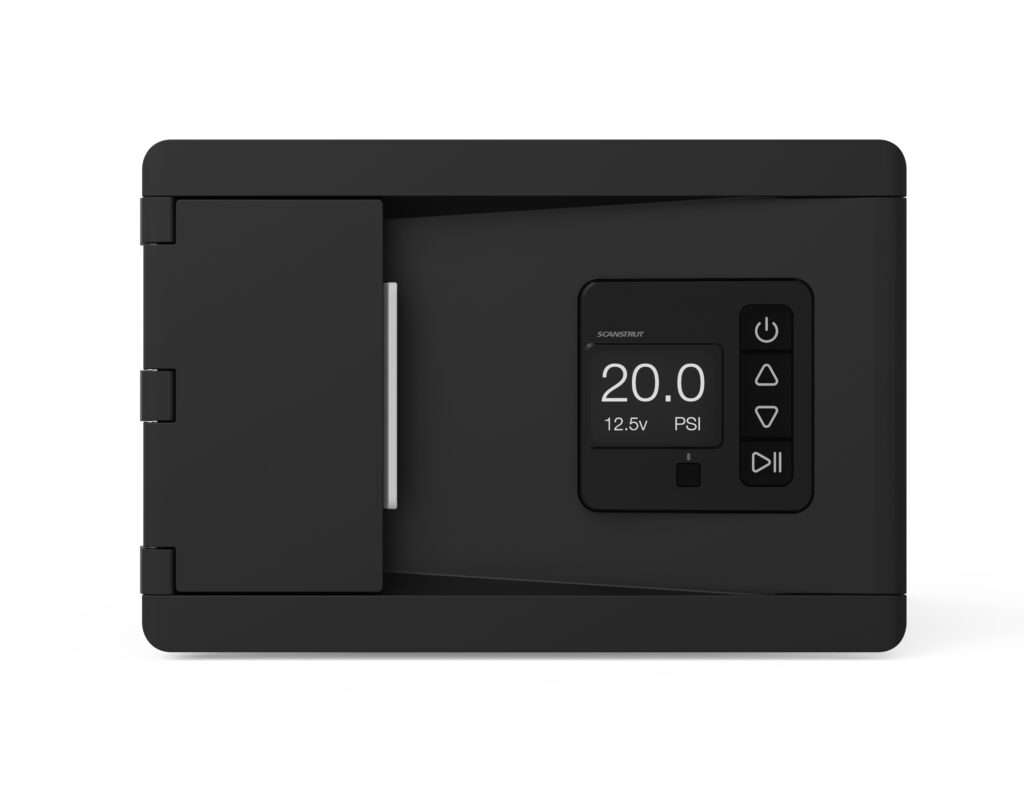
By half ten on a family day afloat, the dinghy is still soft, two stand-up paddleboards (SUPs) are waiting on deck and someone has put the loose pump lead beneath the picnic bag. I know that scene well. The Scanstrut ATMOS changes it by putting inflation into the boat itself: open the door, connect the 2.5-metre hose, choose the pressure and let the air station work while the crew gets ready.
At £540 including VAT, this is a fitted piece of marine equipment rather than another portable accessory. It runs from an 11.5- to 14-volt supply, draws up to 12 amps or 140 watts, and uses two brushless stages. The first moves up to 350 litres per minute (L/min) from zero to one pound per square inch (psi); the second supplies up to 70 L/min from 1.1 to 20 psi. I find that mix more relevant than one peak number because it covers both quick volume and controlled finishing pressure.

Scanstrut ATMOS SC-AOB-A2 vs Bravo GE 20-2 vs Decathlon 0-20 PSI 13.8 V pump vs OutdoorMaster Shark II
| Electric air pump | Current price | Difference | Format and power | Pressure and flow | Inflate and deflate | Control | Installation and protection | Included kit and duty |
|---|---|---|---|---|---|---|---|---|
| Scanstrut ATMOS SC-AOB-A2 | £540 | Reviewed model | Panel-mounted; 11.5-14 V; 12 A / 140 W max | 20 psi; 350 L/min to 1 psi, then 70 L/min | Both through the front connection | Liquid-crystal display (LCD), live voltage, target-pressure auto stop | Ingress Protection rating IPX6 front/rear closed; ignition protected; 110 mm cavity | 2.5 m hose, 6 connectors, sun cover; 25-minute / 3-SUP run guidance |
| Bravo GE 20-2 | £265 | £275 less | Portable; rechargeable 12 V battery; external 12 V options | 22 psi; 125 L/min | Inflate only | Dial setting, automatic stop, diagnostic lights | Polymer case; no fixed panel or published IPX6 rating | Valve fittings and carry bag; 6.65 kg listed weight |
| Decathlon 0-20 PSI 13.8 V pump | £70 | £470 less | Portable; vehicle socket with engine running; 13.8 V / 10 A | 20 psi; 300 L board to 15 psi in about 9 minutes | Both; deflate cycle up to 120 seconds | Digital setting and target-pressure auto stop | Dry-storage portable; 285 x 190 x 90 mm; 1.6 kg | Boston, Mini Boston and SUP fittings; 2-year warranty |
| OutdoorMaster Shark II | £76 | £464 less | Portable; 12 V vehicle socket; 110 W | 20 psi; 300 L board in 9-12 minutes | Both | Digital display, live pressure and automatic stop | Active cooling; no fixed panel or published IPX6 rating | 8 nozzles; stated capacity up to 3 boards; 2-year warranty |
I rate ATMOS the strongest overall purchase for repeated inflation aboard. Bravo is £275 less and carries its own battery, but its 6.65-kilogram portable case still needs stowage and it inflates only. The Decathlon and OutdoorMaster units are £470 and £464 less, yet both are organised around a vehicle socket and dry portable storage. ATMOS earns the higher price by being permanently available at the boat, sealed front and rear to IPX6 when closed, certified for ignition protection, equipped for inflation and deflation, and supplied with a hose and six connectors. That is a different standard of readiness, and it is the one I would want for a family boat used week after week.
The layout benefit begins before the button is pressed
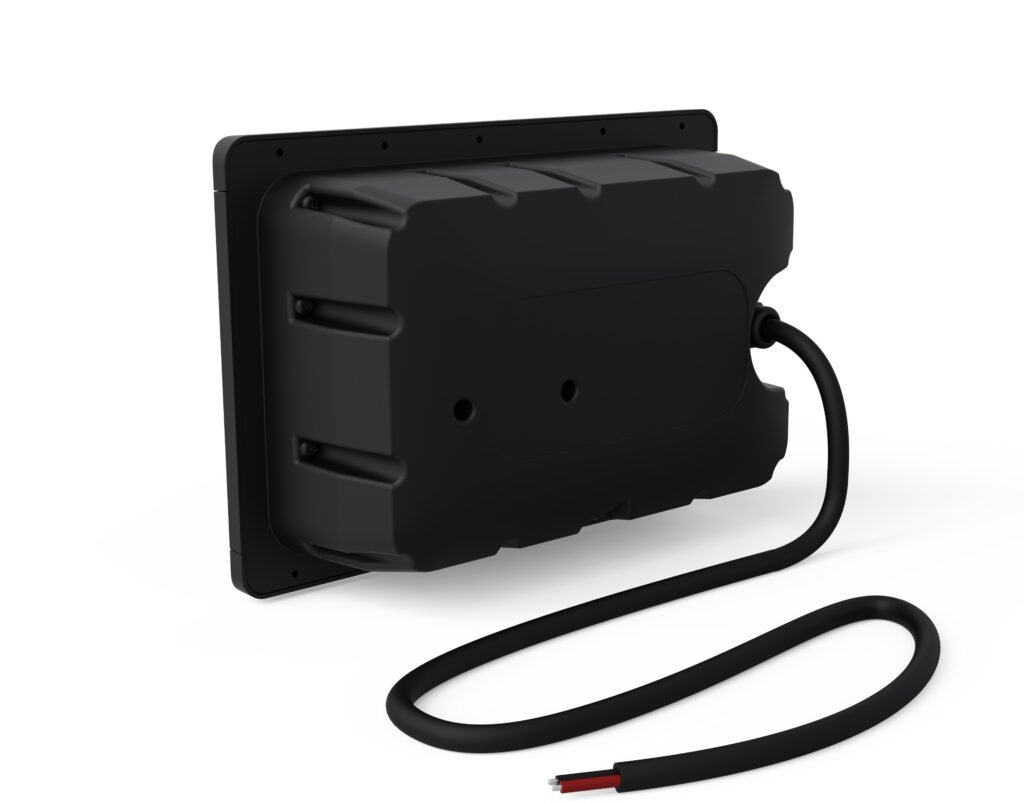
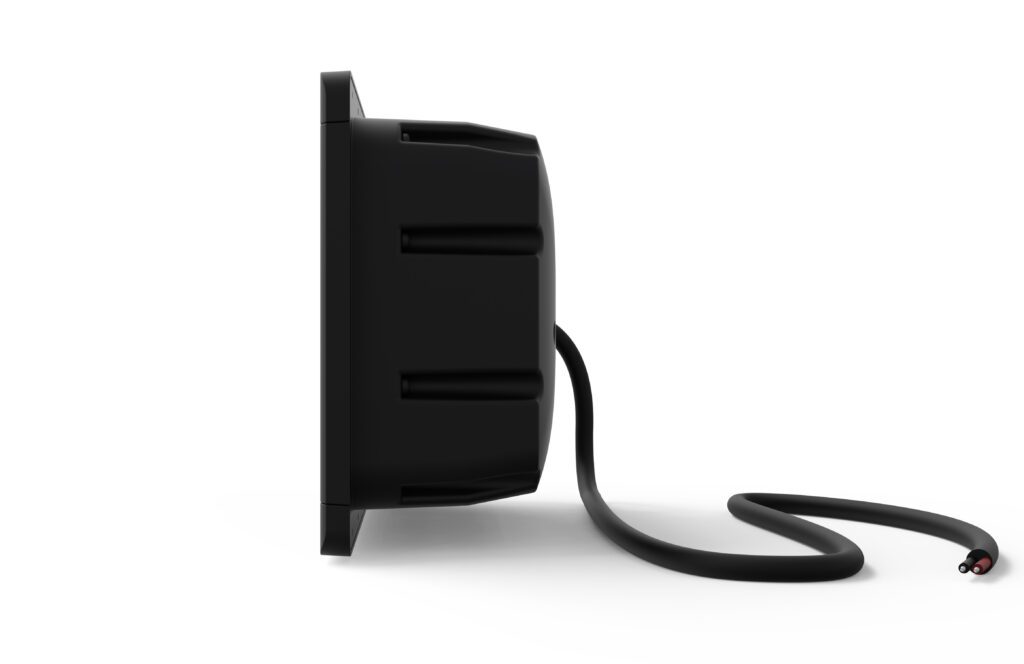
A fitted pump removes a surprising amount of clutter. The ATMOS face is 198 by 297 millimetres, the body depth is 87 millimetres and Scanstrut asks for at least 110 millimetres of cavity. It can sit in seating, a side panel or a console, within an installation angle of ten degrees above to thirty degrees below vertical. I would choose a position where the door opens fully, the display is readable in daylight and the hose can reach a clear patch of deck without crossing the main walkway.
Controls that make sense in a busy cockpit
The LCD shows target pressure and live supply voltage, with soft-touch buttons for adjustment and start or pause. Set the value recommended by the inflatable manufacturer and ATMOS stops automatically when it arrives there. I like being able to glance at both pressure and voltage without juggling a separate gauge. If nobody touches the controls for five minutes, the unit shuts down from standby.
Inflation and deflation use the front of the unit, so the sealed rear can remain inside the panel. Deflation matters at the end of the day, when a firm board has to return to a bag before the rain arrives. A controlled pull-down helps the inflatable fold neatly and returns deck space sooner. Scanstrut gives a maximum run time of 25 minutes, described as sufficient for three SUPs, and I would treat that published duty as the planning limit rather than chase one more item through a hot pump.
Marine engineering under the neat face
The current SC-AOB-A2 uses brushless motors and conformal-coated electronics. Protection covers reverse polarity, short circuit, undervoltage, overload and excess temperature, with a soft motor start. The face and rear are rated IPX6 with the door closed, and the unit has passed International Organization for Standardization (ISO) 8846 and SAE International J1171 ignition-protection tests. Those points distinguish it from a portable pump brought aboard after being designed chiefly around a car socket.
I would still have the circuit installed properly. The 12-amp maximum deserves the correct cable size for the full run, suitable over-current protection and sound marine terminations. The 500-millimetre fitted lead is only the beginning of that route. Scanstrut supplies a foam gasket, while the installer provides the fasteners and the rest of the electrical work. Good access behind the panel is valuable for inspection, even though the unit has no owner-serviceable internal parts.
From towable to tender without a locker search
Six connectors come in the kit, covering common high- and low-pressure valves for boards, tenders, kayaks and towables. I would label or organise the adapters beside the hose because the smallest fitting has a rare talent for hiding under the largest seat cushion. The sun cover protects the face when the station is not in use, and the closed door keeps the air path and display tidier through ordinary spray and washdown.
The two-stage changeover at 1.1 psi suits that variety. A large towable needs volume first, while a SUP needs controlled pressure at the finish. Scanstrut’s examples put a typical ten-foot board at roughly six to eight minutes to 20 psi, a towable at about three minutes to 1.5 psi, and a four-metre platform at around 16 minutes to 5 psi. I treat those as planning figures, since valve, volume, supply voltage and temperature will influence the real time.
What the £540 buys over a season
I also value the permanence for a tender used as transport, not just entertainment. Pressure can be checked and corrected at the berth without bringing extra equipment, and deflation is available when storage or towing plans change. The portable competitors are real products with useful figures, but their low purchase prices omit the installed, waterproof and ignition-protected part of the job. For this application, the ATMOS price buys time, deck order and dependable access each time the hatch opens.
Cara’s verdict
I would fit the Scanstrut ATMOS on a family boat that regularly carries a tender, boards, towables or an inflatable platform. The display is clear, the two-stage output covers both volume and pressure, and the fixed hose point helps the cockpit move from breakfast to water play without a pile of pump gear in the middle.
My verdict is settled: ATMOS is the strongest overall purchase here because it turns inflation from a fetched accessory into part of the boat. Its IPX6 construction, ignition protection, brushless drive, six connectors and deflation function justify the higher price through repeated everyday use. View the Scanstrut ATMOS integrated air station at Flood Marine.
About this review
For this assessment I used Flood Marine’s current product page, Scanstrut’s official ATMOS specifications and installation material, and the cited Bravo, Decathlon and OutdoorMaster listings. I checked every advertised price on 14 September 2026. This article is an editorial assessment rather than an instrumented performance, durability or sea test. I am Cara Donnelly, reviewing independently, and the text was not written by Flood Marine Services.