The £5,500 mid-range engine with the right kind of muscle
A 40-horsepower engine usually lands on a boat that has work to do. Family gear, fishing kit, a console, battery and fuel have all appeared by then. The outboard needs to lift the full boat without becoming coarse at the helm. Yamaha’s F40 has made a long career out of that middle ground.
The range starts at £5,850 including VAT. The listed setup includes electric start, remote control, power trim and tilt, and an aluminium propeller, with shaft, rotation and rigging choices moving the family price up to £6,500. I am more interested in what comes with the engine than in shaving the advert down until the control box has vanished. Boats are poor enough at moving without one.
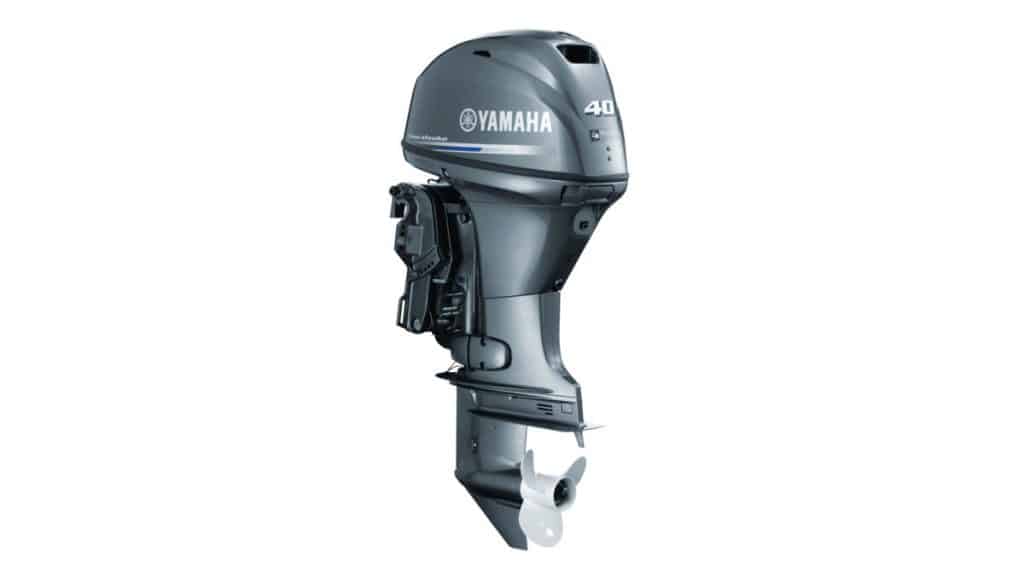
Yamaha F40 vs Suzuki DF40ATL vs Tohatsu MFS40AETL vs Honda BF40
| 40 hp outboard | Advertised price | Engine and weight | Low-speed and trim control | Charging and instruments | Reason it lasts as a purchase |
|---|---|---|---|---|---|
| Yamaha F40 | From £5,850 | 747 cc three-cylinder; 94–106 kg | Power trim and tilt; variable trolling in 50 rpm steps on suitable control | 17 A alternator, 13 A charging; Yamaha digital-network gauge options | Aluminium propeller listed; proven leisure and commercial use; strong used demand |
| Suzuki DF40ATL | £5,499 | 941 cc three-cylinder; about 104 kg | Power trim and tilt; Lean Burn control | Published 19 A alternator; Suzuki monitoring options | Timing chain and offset driveshaft; exact rigging package varies |
| Tohatsu MFS40AETL | £5,589 | 866 cc three-cylinder; about 95 kg | Power trim and tilt; variable idle control | Published 21 A alternator; multifunction tiller option | Low published weight; exact propeller and control contents vary |
| Honda BF40 LRTZ | £7,034 | 808 cc three-cylinder; about 98 kg | Power trim and tilt; trolling control | Published 17 A charging; Honda gauge integration | BLAST and ECOmo systems; established four-stroke ownership record |
Advertised prices and manufacturer data checked 11 September 2026. Control boxes, cables, gauges and propeller contents differ by seller, so the installation specification belongs beside the engine price.
Three cylinders, sensible weight and proper control
The F40 uses a 747 cubic-centimetre three-cylinder engine with multi-point electronic fuel injection. Published dry weight ranges from 94 to 106 kilograms across the family. That is a well-judged balance for the transom, and the three-cylinder layout gives the engine a settled, even delivery through the rev range.
Variable trolling control can adjust engine speed in 50 revolutions-per-minute steps on a suitable installation. That is useful for lure speed, harbour work and holding a steady crawl without tapping the throttle every few seconds. Power trim and tilt takes care of running attitude and shallow-water handling from the helm. Optional Yamaha Customer Outboard Protection adds immobiliser security, while digital-network gauges can show trim, engine speed, fuel information and operating hours.
The Yamaha package adds up properly
Suzuki brings a larger-displacement block, and Tohatsu publishes a strong charging figure. Neither isolated number gives the same overall package as the Yamaha: electric start, remote control, power trim, a listed propeller, fine trolling adjustment, digital instrument choices and a long record on hard-working boats. Honda costs more in the compared specification. Across the features that matter every day, the F40 is the stronger buy.
The 17-amp alternator provides 13 amps of battery charging. On a 40-horsepower boat that is useful capacity for a plotter, very high frequency radio, pumps and lights. It also leaves room for the installation to grow without immediately treating the battery as an unpaid deckhand. The F40’s systems are modern, but the basic engine remains easy to understand and widely known in workshops.
Why working boats keep choosing Yamaha
Yamaha mid-range four-strokes are a common sight on club safety boats, fisheries, estate craft, harbour boats and leisure packages that clock serious hours. Operators value predictable starting, manageable low-speed control and parts availability. A machine still needs scheduled care, of course, but a long commercial record gives the F40’s reliability reputation something solid beneath it.
That reputation follows the engine into the used market. Buyers recognise the model family, understand the digital gauges and can find service support. A clean, documented F40 therefore carries a useful resale argument alongside its working one. The extra purchase cost is not money spent on a badge; it protects refinement, equipment, support familiarity and future demand.
Ciaran’s verdict
The Yamaha F40 is the best-balanced engine in this set. It is light enough for the class, smooth through the working range and supplied with the controls that make a 40-horsepower installation worth owning. The trolling adjustment is useful rather than decorative, and the charging output suits the equipment that modern small boats actually carry.
Suzuki and Tohatsu can post attractive individual figures, while Honda brings a respected package of its own. I would still put the Yamaha on the transom for the whole-life decision: strong daily manners, proven commercial hours, familiar servicing and a resale market that knows what it is looking at. View the Yamaha F40 range.
I also put weight on how an engine behaves after the novelty has gone. A commercial operator or club safety crew notices clean starting, steady low-speed control and charging capacity every working day. The F40 has built its name in exactly that sort of use. Look after it, record the servicing and there is a strong audience for it later. That combination of dependable hours and recognised resale value is worth more than winning one column of a price list.
About this review
I based this review on the product and manufacturer information listed in the sources, together with advertised UK prices checked on 11 September 2026. It is an editorial assessment, not an instrumented performance, durability or sea test. The words and opinions are Ciaran Hughes’s, and the article was not written by Flood Marine Services.