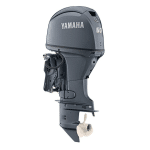
The £8,000 four-cylinder built for years of proper use
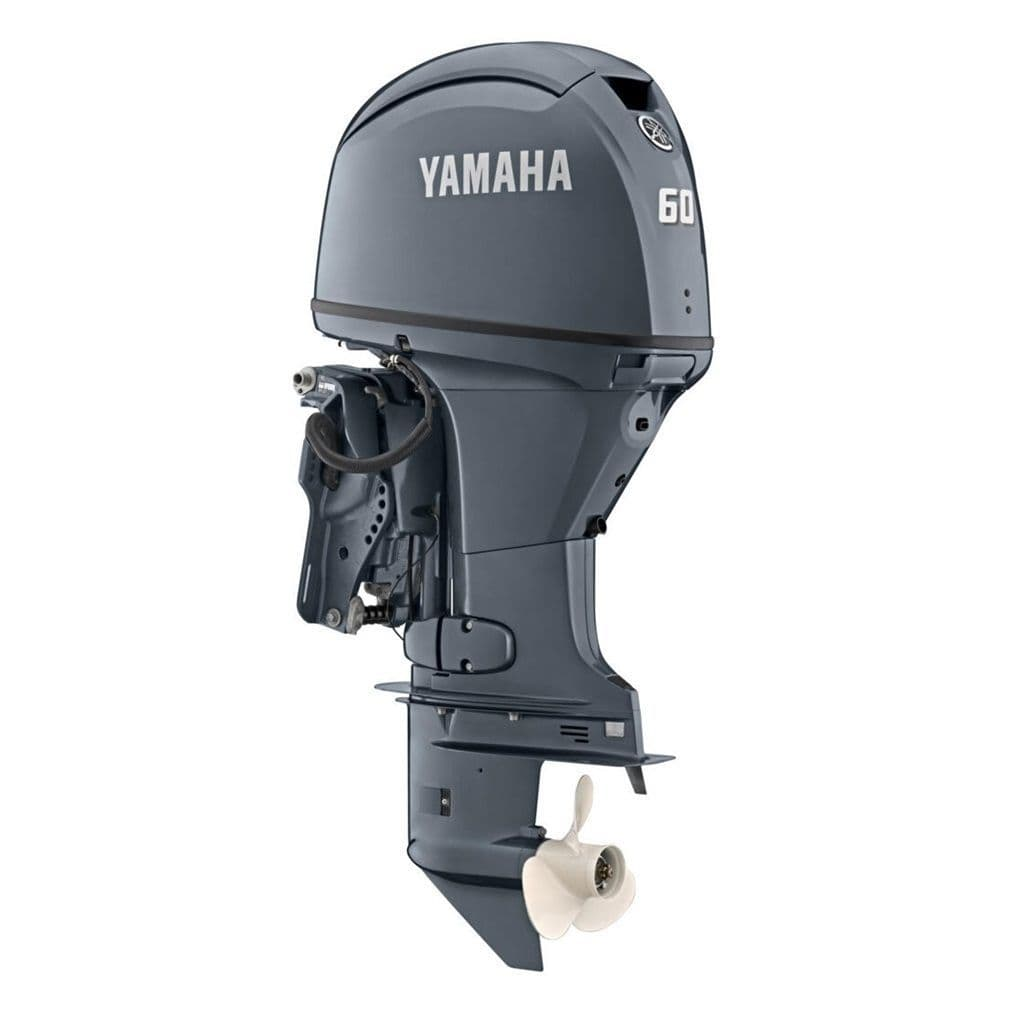
At 60 horsepower, the outboard stops being a loose accessory and becomes the heart of the boat. It decides how the hull lifts with people aboard, how cleanly it settles at low speed and how much confidence an owner has in the package five seasons later. The Yamaha F60 has been doing that job on family boats, fishing boats, club craft and working boats for years. I would judge it on that whole record, not on the price column alone.
The long-shaft F60LC sits at £8,200 including VAT with remote control, electric start, power trim and tilt, and an aluminium propeller. The wider F60 family covers different shaft and rigging requirements, while the related high-thrust FT60 is intended for heavier displacement duties. That matters because “a 60” is not one universal box. The right version has to suit the transom, steering, control position and way the boat will be used.
Four cylinders make a difference you can feel
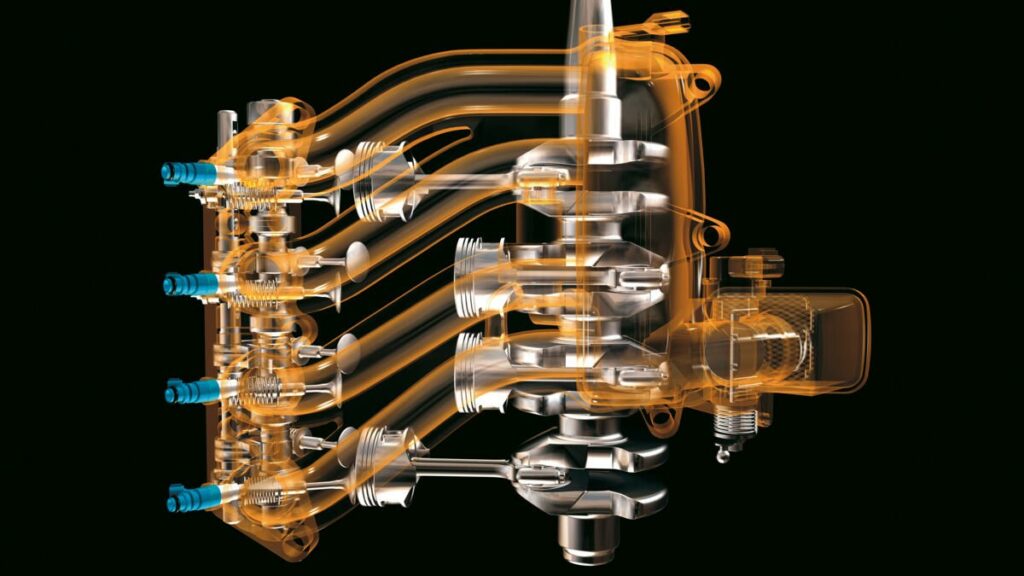
Yamaha builds the F60 around a 996 cubic-centimetre, four-cylinder block with electronic fuel injection. Most direct 60-horsepower alternatives use three cylinders. A fourth cylinder is not a badge for the brochure; it brings closer firing intervals, and that gives the engine its notably smooth character through the middle of the rev range. On a family boat it means less vibration through the helm and seating. On a workboat doing repeated runs, that calmer delivery is appreciated long after the launch-day excitement has worn off.
The family sits in a published dry-weight range of roughly 114 to 119 kilograms depending on shaft and specification. There are lighter 60-horsepower engines, and the table says so, but Yamaha has kept a full-litre four-cylinder within a sensible transom weight. I see that as a useful balance: enough engine capacity and refinement to carry a proper load without turning the stern into an engineering project.
Variable trolling speed adjusts engine speed in 50 revolutions-per-minute steps on a suitable installation. That is a small control with a real use, whether somebody is working lures, holding a steady pace through a harbour or bringing a boat alongside without repeated bursts of throttle. Power trim and tilt deals with load and running attitude from the control box. The propeller in the listed F60LC package also matters. It gives the starting specification a known shape instead of leaving a large, essential component hidden beyond the headline price.
The useful electrical side
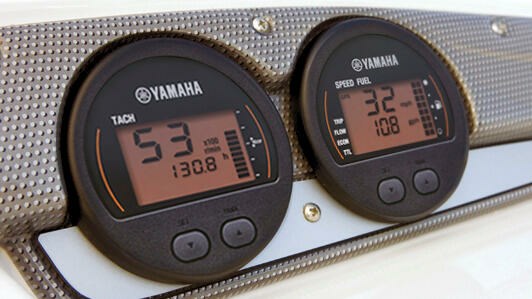
A 16-amp alternator and Yamaha’s digital-network gauge support suit the way mid-sized boats are now equipped. Chartplotters, very high frequency radios, pumps, lighting and instruments all place demands on the battery. The F60 is not pretending to be a generator, but it has the charging and engine-data foundation for a tidy modern helm. Optional Yamaha Customer Outboard Protection, usually known as Y-COP, adds an immobiliser function where security is part of the brief.
I like the fact that these systems sit around a conventional, well-understood four-stroke. The technology improves fuelling, information and control without making the basic proposition difficult to explain. Start it, let the electronic fuel injection meter the fuel, trim the hull properly and the engine gets on with the day.
A record in leisure and commercial service
Yamaha’s strongest argument is not a single laboratory figure. It is the number of F-series engines found doing ordinary, serious hours. They appear on angling boats, sailing-club support craft, harbour launches and commercial inshore boats as well as weekend family packages. That mixed use has given the range an established reputation for dependable service when maintenance is kept on schedule.
Commercial operators notice different things from a leisure buyer. They care about predictable starting, smooth low-speed work, parts availability and an engine that remains familiar to different skippers. A private owner benefits from the same qualities. There is also a healthy used market for recognised Yamaha four-strokes. Nobody can promise a future selling price, but a badge with broad demand and a documented service history tends to be easier to explain when the boat changes hands. Retained value is part of the cost of ownership, even though it never fits neatly on an invoice.
Yamaha F60 vs Suzuki DF60ATL vs Honda BF60 LRTU vs Tohatsu MFS60AETL
| 60 hp outboard | Price including VAT | Engine and published weight | Control at low speed | Charging and integration | What remains after the price |
|---|---|---|---|---|---|
| Yamaha F60LC | £8,200 | 996 cc; four cylinders; 114–119 kg across the family | Remote control, power trim and tilt; trolling adjustment in 50 rpm steps | 16 A alternator; Yamaha digital-network gauges; optional Y-COP | Propeller included; smooth four-cylinder delivery; established commercial use and used-market demand |
| Suzuki DF60ATL | £7,199 | 941 cc; three cylinders; 104 kg | Remote control, power trim and tilt; Lean Burn control | 19 A alternator; Suzuki monitoring options | Timing chain and offset driveshaft; exact propeller and rigging contents follow the seller package |
| Honda BF60 LRTU | £7,794 | 998 cc; three cylinders; about 110 kg | Remote control, power trim and tilt; trolling control | 22 A alternator; Honda gauge integration | BLAST acceleration and ECOmo fuel management; exact propeller and rigging contents follow the seller package |
| Tohatsu MFS60AETL | £7,020 | 866 cc; three cylinders; 98.5 kg | Remote control, power trim and tilt; variable idle control | 21 A alternator; brand-specific instrument options | Lowest published dry weight; exact propeller and rigging contents follow the seller package |
Advertised prices and published specifications checked 10 September 2026. Control boxes, gauges, cables and propellers vary between retailer packages, so the listed contents need to be read with the engine price.
The table is close; ownership separates them
All four engines have proper credentials, and the prices are not identical. The Suzuki is lighter and uses its own fuel-management approach. Honda brings a 998 cubic-centimetre block, strong charging output and useful low-speed control. Tohatsu is the lightest and has variable idle adjustment. Read only those lines and the Yamaha could look like another 60 with a higher figure beside it.
The missing piece is how the features arrive together. Yamaha combines the only four-cylinder layout here with full-litre capacity, an included aluminium propeller, fine trolling adjustment, an established digital-gauge system and a long record across both hard-working and leisure boats. It feels refined without losing the straightforward nature operators value. The alternatives each win an individual number; the F60 puts the numbers into the most rounded engine.
That is why I do not reduce the decision to the initial difference. An engine is bought once and then started hundreds of times. Smooth running, familiar controls, parts support, commercial credibility and resale demand keep contributing after the first payment has been forgotten. The Yamaha case becomes stronger with use, which is exactly when a serious outboard should prove itself.
My conclusion
I would put the Yamaha F60 on a boat that is expected to do more than an occasional lap of the bay. Its four-cylinder smoothness is obvious, its low-speed control is useful and its history on busy leisure and commercial craft gives the specification weight. The family also offers enough shaft, control and high-thrust choice to build the right engine around the hull rather than forcing the hull around one version.
The competitors make respectable 60-horsepower outboards. My choice remains the F60 because it is the strongest complete ownership decision: refined when the family is aboard, credible when the working day is long, and well regarded when the boat eventually reaches the used market. View the Yamaha F60 product page.
About this review
Prices and specifications are based on manufacturer information and live advertised UK listings checked on 10 September 2026. This is not an instrumented fuel-burn, acceleration or durability test. The article was written by Neil Duddy as an independent editorial review and was not written by Flood Marine Services.