The lightweight four-cylinder that earns its premium
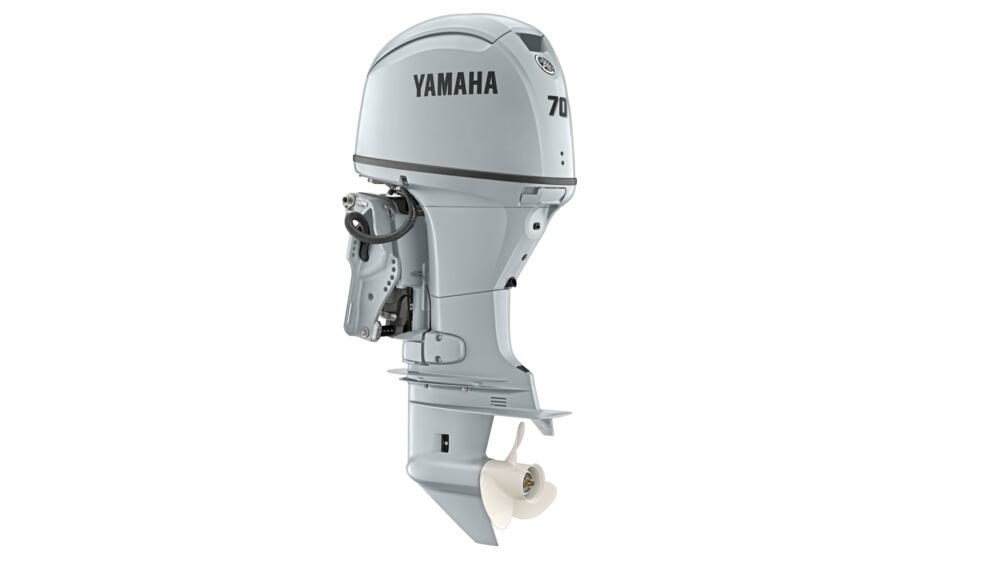
At 70 horsepower, an outboard becomes part of the boat rather than something added for the afternoon. Its weight affects trim, its controls shape every trip, and its service history follows the hull when it is sold. The Yamaha F70 stands out because it brings a smooth four-cylinder engine to boats that cannot sensibly carry the bulk of many 70-to-80-horsepower alternatives.
The current F70 range is priced from £9,390 including VAT, with selectable configurations reaching £9,690. The starting package includes remote control, electric start, power trim and tilt, and an aluminium propeller. Under the cowling are 996 cubic centimetres, 16 valves, electronic fuel injection and a dry weight of 120 to 124 kilograms, depending on shaft length.
Light weight that changes the installation
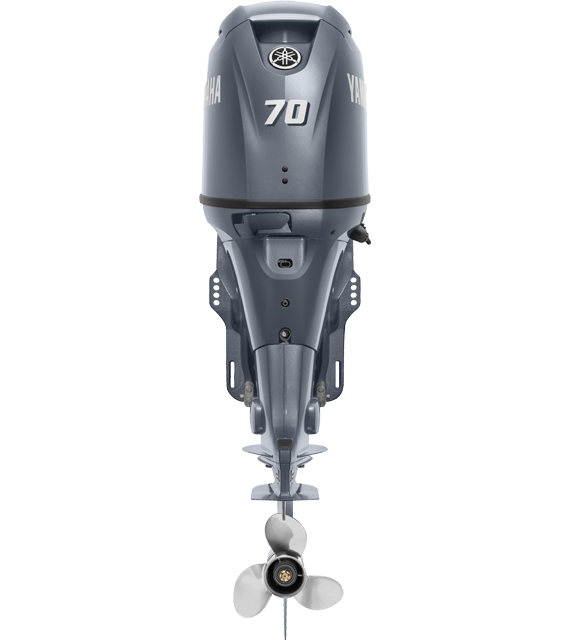
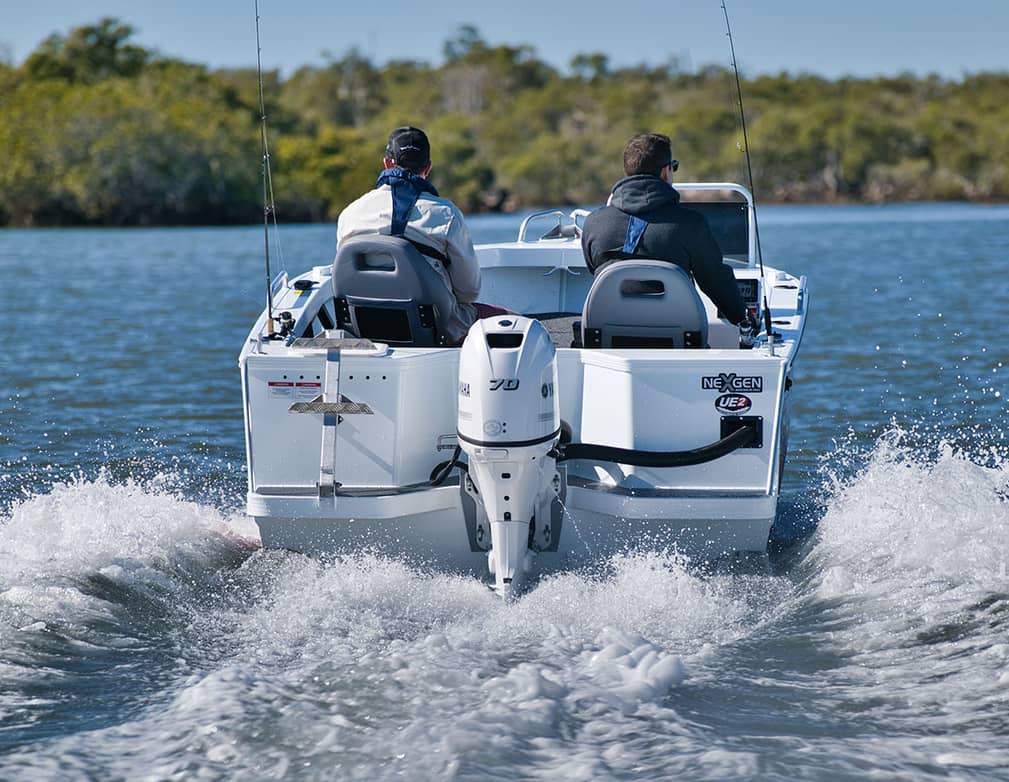
I would begin at the transom. The other engines here weigh between 155 and 178 kilograms. The F70 is at least 31 kilograms lighter and as much as 58 kilograms lighter. That difference stays at the very back of the boat on every trip. On a compact sports boat, fishing hull or working craft, it can help the boat sit more naturally and leave more capacity for people, fuel and equipment.
Yamaha has not achieved that figure with a rough twin. The F70 is an inline four-cylinder engine with a single overhead camshaft and four valves per cylinder. Electronic fuel injection meters the fuel, while PrimeStart handles the starting mixture. Turn the key and let the engine settle itself. The 2.33:1 gear ratio gives useful leverage at the propeller, and variable trolling control adjusts speed in 50-revolution-per-minute steps through compatible Yamaha instrumentation.
The F70 family and the way it can be rigged
I am reviewing the Yamaha F70 family, not pretending one ordering code suits every boat. The current range covers long and extra-long shaft installations, with published transom heights of 534 and 648 millimetres. Remote control is the usual console arrangement, while a multifunction tiller kit is available for layouts where the skipper works at the engine. Gauges, colour and security can then be chosen around the boat.
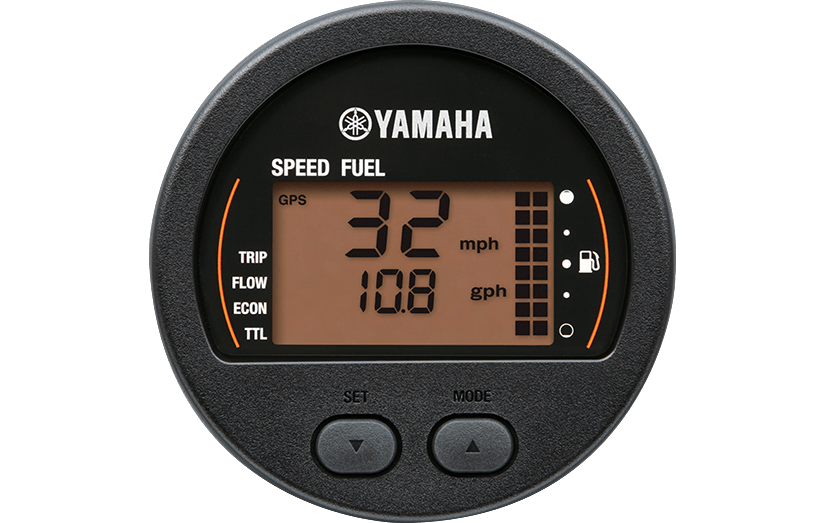
Yamaha’s digital network gauges put engine information in front of the skipper without a row of unrelated displays, and Yamaha Customer Outboard Protection offers an optional security layer. The alternator is rated at 15 amps, with nine amps available for charging. I would plan the battery and equipment properly at installation; on a normal open-boat load of navigation equipment, radio, pumps and instruments, that leaves the F70’s decisive weight advantage intact.
Reliability that matters beyond the first season
Reliability is the result of repeatable starting, controlled temperatures, sensible servicing and an engine that remains familiar as the hours build. Yamaha positions the F70 for leisure and demanding working use, and the family is familiar on fishing boats, club craft, harbour boats and family sports boats. That breadth gives me confidence that it was designed for regular duty, not merely a short demonstration.
A documented maintenance history matters as much as the name. It gives a later buyer something clear to assess, while the F70’s recognition, familiar controls and established parts support make a clean used engine easy to understand. I would not promise a future selling price, but I do put value on an outboard with broad used-market appeal. The purchase has to work for all the years between delivery and resale.
Yamaha F70 vs Suzuki DF70A vs Tohatsu MFS75A vs Honda BF80
| Model | Price including VAT | Difference | Power and displacement | Dry weight | Fuel and valve system | Charging | Gear and low-speed control | Current configuration |
|---|---|---|---|---|---|---|---|---|
| Yamaha F70 | £9,390 | Baseline | 70 horsepower; 996 cc | 120–124 kg | 16-valve single overhead camshaft; electronic fuel injection | 15 A alternator; 9 A charging | 2.33:1; trolling control in 50-rpm steps | Long or extra-long shaft; remote control, electric start, power trim and tilt; aluminium propeller included; optional tiller kit |
| Suzuki DF70ATL | £8,099 | £1,291 less | 70 horsepower; 1,502 cc | 155–156 kg | 16-valve double overhead camshaft; sequential electronic fuel injection; lean-burn control | 27 A alternator | 2.59:1; optional troll mode | Long shaft; remote control, electric start, power trim and tilt |
| Tohatsu MFS75AETL | £9,079 | £311 less | 75 horsepower; 1,995 cc | 178 kg | Four-valve single overhead camshaft; electronic fuel injection; tuned exhaust | 41 A alternator | 2.08:1; variable idle | Long shaft; remote control, electric start, power trim and tilt |
| Honda BF80 LRTU | £10,750 | £1,360 more | 80 horsepower; 1,496 cc | 165 kg | 16-valve single overhead camshaft; programmed fuel injection | 44 A alternator; 35 A charging | 2.33:1; optional trolling control | Long shaft; remote control, electric start, power trim and tilt |
Advertised prices and published specifications were checked on 15 September 2026. Controls, gauges, propellers and fitting requirements vary, so the linked listings remain the authority for each current offer.
What those figures mean on the water
The Suzuki DF70A is £1,291 less and brings more displacement, lean-burn control and a 27-amp alternator. Its specification is strong. The Yamaha answers with roughly 35 kilograms less on the transom, the included aluminium propeller, four-cylinder running and measured trolling control. The saving is visible once; the weight remains aboard for every hour of ownership.
Tohatsu’s MFS75A is only £311 below the Yamaha. Its 1,995-cubic-centimetre block, 41-amp alternator and tuned exhaust give it plenty of substance, but it is 58 kilograms heavier than the lightest F70. On a hull designed around a lighter engine, the small price difference is readily justified by the cleaner weight balance, familiar Yamaha controls and the F70’s resale recognition.
Honda’s BF80 adds ten horsepower and strong charging output at £1,360 more than the Yamaha. The F70 is not chasing the largest number on the cowling. It gives a 70-horsepower hull the power it was designed for while weighing 41 to 45 kilograms less than the Honda. Taken together, the Yamaha’s low mass, smooth delivery, flexible rigging, service familiarity and used-market demand make its premium over the two cheaper engines worthwhile.
Leisure comfort and working hours
On a leisure boat, I like the clean starting, four-cylinder character and the freedom created by lower stern weight. Anglers gain fine trolling adjustment and a tidy route into networked engine data. On a working boat, the same qualities become hours saved from fuss: predictable starting, clear remote operation, power trim from the helm and an engine family familiar to operators and engineers.
High-hour use still asks for scheduled maintenance, the correct propeller and proper cooling-system care. That routine protects the running quality and creates the service record a later buyer wants to see. Yamaha’s reputation is strongest when the paperwork supports the engine, and the F70 gives an owner a recognised, serviceable platform worth maintaining properly.
Neil’s verdict
I would choose the Yamaha F70 for a boat that needs genuine 70-horsepower performance without a heavy engine dictating the hull’s balance. The compact block is the point: it delivers four cylinders, electronic fuel injection, useful gearing, variable trolling and flexible rigging at a weight none of these rivals approaches.
The Yamaha earns its premium through an engineering advantage that cannot be added later, plus a proven place in leisure and sustained working use. Familiar servicing and strong resale recognition carry that value forward. For the right 70-horsepower hull, the F70 is the balanced, dependable choice. See the Yamaha F70 specification and available configurations.
About this review
I’m Neil Duddy, an independent marine-industry reviewer. I used the current product listing, Yamaha’s 2026 fact sheet, official manufacturer specifications and live retailer prices checked on 15 September 2026. I did not conduct an instrumented sea, endurance or fuel-consumption test. The judgement is mine, and the review was not written by Flood Marine Services.