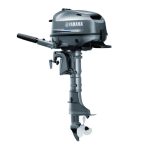
Portable power with long-term sense
The practical question with a five-horsepower outboard is not whether one person can lift it once. It is whether an owner will still be content carrying it, fuelling it and starting it after a wet season of tender runs, fishing days and awkward transfers from shed to transom. At £1,310 including VAT, the Yamaha 5HP asks more than the three engines compared here. I think that extra spend earns its place through the complete Yamaha ownership case, not through one decorative feature.
Flood Marine lists the engine with manual start, tiller control, an internal fuel tank and propeller. Yamaha publishes short- and long-shaft versions, with dry weights of 27 and 28 kilograms and matching transom heights of 435 and 562 millimetres. Both use manual tilt. There is no remote-control, electric-start or power-trim member of this F5 family, so I would choose the shaft that matches the measured transom and rig it as the straightforward portable it is. An optional six-amp regulator is the relevant electrical choice where modest charging matters.
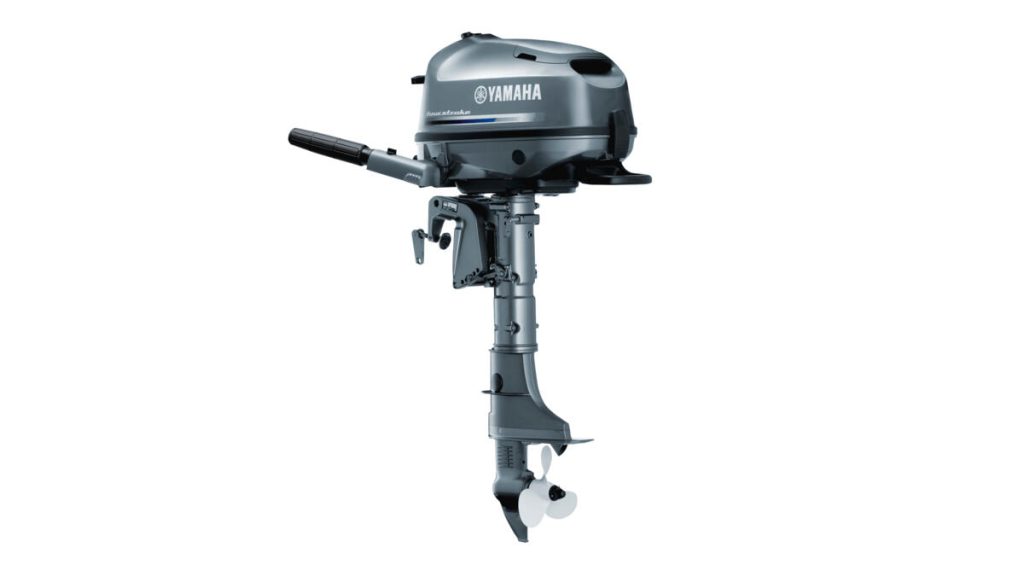
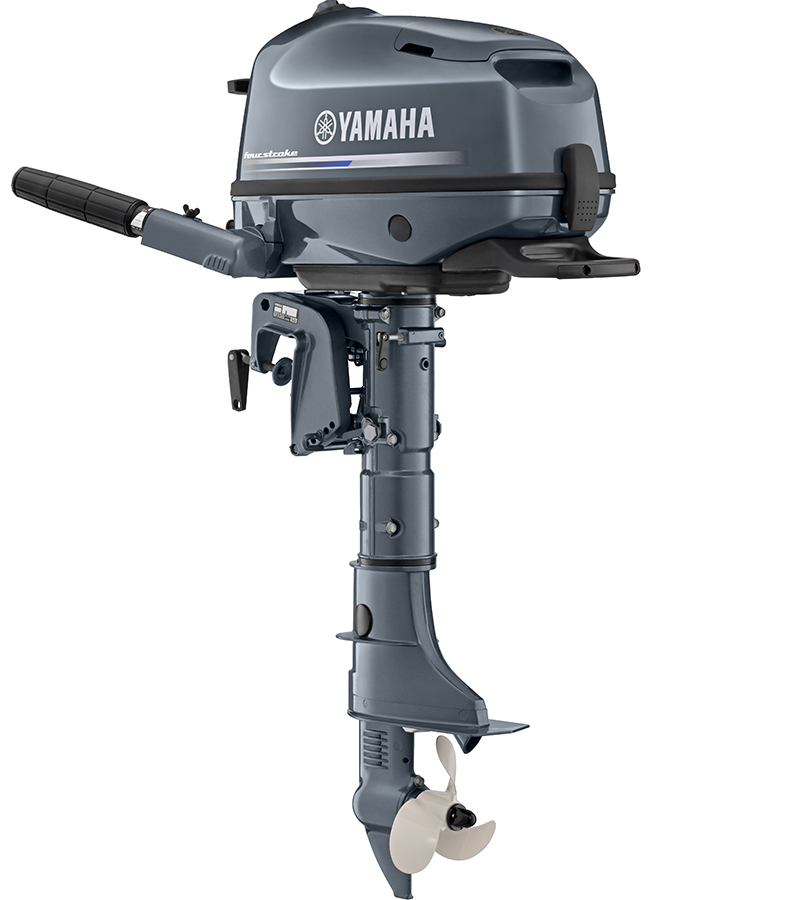
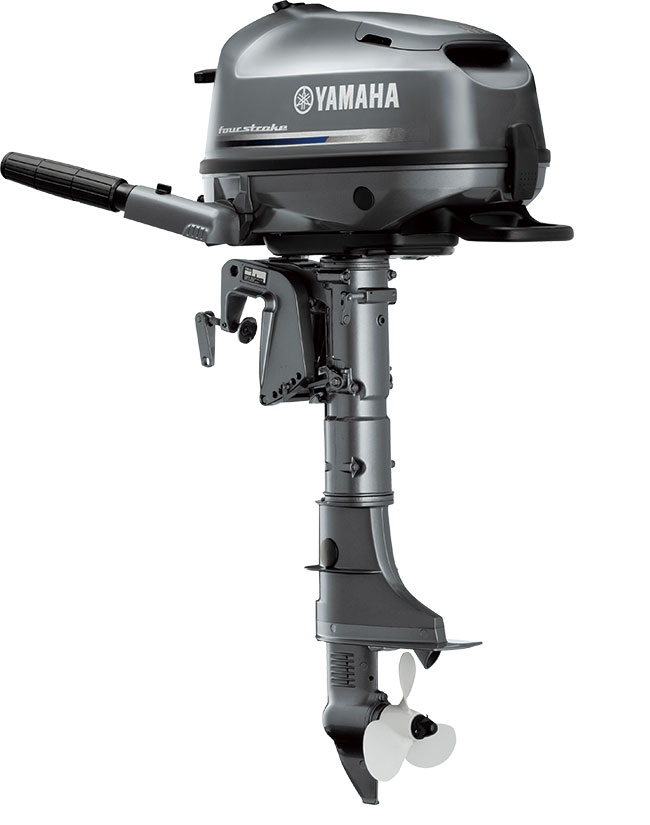
Yamaha 5HP Outboard vs Honda BF5 SHNU vs Suzuki DF5AS vs Mercury F5MH
| Portable outboard | Current price | Difference | Engine output | Weight and shaft choice | Fuel arrangement | Start, steering and trim | Useful ownership details |
|---|---|---|---|---|---|---|---|
| Yamaha 5HP Outboard | £1,310 | Reviewed model | 139 cubic centimetres; 3.7 kilowatts at 5,000 revolutions per minute | 27 kilograms short / 28 kilograms long; 435 / 562 millimetre transom | 1.1-litre built-in tank plus external-tank connector | Manual start; tiller; manual tilt | Propeller included; three-position storage; optional six-amp regulator; established Yamaha support and resale demand |
| Honda BF5 SHNU | £1,196 | £114 less | 127 cubic centimetres; single-cylinder four-stroke | From 27 kilograms; short or long shaft | 1.5-litre built-in tank | Manual start; folding tiller; manual tilt | Oil-alert protection; selected variants support six-amp charging |
| Suzuki DF5AS | £1,148 | £162 less | 138 cubic centimetres; single-cylinder four-stroke | 24 kilograms short / 25 kilograms long; 381 / 508 millimetre shaft | 1.5-litre built-in tank plus external-tank connection | Manual start; tiller; manual tilt | Propeller included; three-position storage; five-year leisure warranty stated |
| Mercury F5MH | £970 | £340 less | 123 cubic centimetres; 3.7 kilowatts; overhead-valve single | 25 kilograms listed; short, long and extra-long variants offered | Integrated tank plus remote-tank capability | Manual start; tiller; manual trim | Through-prop exhaust; multiple trim positions; low-oil and over-rev warnings |
Taken as a whole purchase, the Yamaha is my strongest choice. Honda is £114 lower, Suzuki £162 lower and Mercury £340 lower at the prices checked, but Yamaha combines the largest displacement in this group, the correct short- or long-shaft choice, built-in and remote-fuel flexibility, three-position storage, an included propeller and the support and used-market recognition that matter over years. Those points make the higher Yamaha price worthwhile rather than merely explainable.
A small engine with a properly useful specification
The figures describe a compact but serious little unit. Yamaha rates the 139 cubic-centimetre, overhead-valve single cylinder at 3.7 kilowatts, or five horsepower, at 5,000 revolutions per minute. Capacitor discharge ignition manages the spark, the lubrication system is a wet sump, and the engine uses a carburettor rather than electronic fuel injection. I see sense in that specification at this scale: it is clear, well understood and suited to an outboard that can spend part of its life stored away from the boat.
Steering movement is 90 degrees each way, which gives the tiller real authority in a tight harbour turn and makes the engine useful for reversing a tender into a short space. The standard manual start keeps weight and rigging down. Manual tilt is equally appropriate here, provided the owner selects the correct transom length before ordering. I would rather have an accurately matched manual system than add mechanisms that do little for a 27-kilogram portable.
Fuel for the tender run and the longer day
The built-in 1.1-litre tank is the tidy arrangement for repeated short passages between mooring and shore. Yamaha also provides an external-tank connector, which changes the engine’s usefulness for a fishing dinghy, small workboat or longer river day. I can leave a fuel hose and separate tank out of a quick tender trip, then add range when the job warrants it. That choice is more valuable in practice than a single headline tank figure.
Three-position storage matters for the same reason. A portable four-stroke carries oil, and it must be laid on an approved side or front face to control where that oil goes. Yamaha’s published storage arrangement gives an owner sensible options in a locker, van or shed, while the handles and compact 750 by 403 millimetre footprint help with the lift. I would still drain or isolate fuel as the manual directs and secure the engine properly in transport; convenient storage works best when the basic routine is respected.
Reliability has an engineering and a service side
Yamaha’s reputation in portable outboards comes from more than the paint on the cowling. This F5 uses a simple single-cylinder layout, wet-sump lubrication and a widely understood manual control system. In leisure use, that means a calm tender motor, an auxiliary for a small sailing boat or a dependable engine for an angling day. In commercial and high-hour use, it means the same machine can face frequent starts, low-speed running and repeated handling without asking an operator to learn an elaborate system.
I do not treat that record as permission to miss oil changes, cooling checks, fuel care or winter preparation. Proper servicing is what lets proven engineering deliver its value. Yamaha’s dealer and parts coverage also counts when hours accumulate: scheduled work, a replacement consumable and accurate service history are easier to manage when the engine family is familiar. For an owner or operator, reliability is the combination of sound design, correct use and support that remains available after the first season.
Why the premium survives into resale
The price gap is clearest against Mercury, but purchase price is only the opening line of the ledger. A used buyer can readily identify a Yamaha F5, understand its shaft and control arrangement, and place value on documented maintenance. I regularly see that recognition turn a clean Yamaha portable into an easier engine to describe and sell. The brand cannot replace condition, yet demand for a familiar, supported model gives good ownership a stronger chance of being rewarded later.
For a family tender, the appeal is easy starting, predictable tiller control and fuelling that changes with the length of the day. For a club, yard or commercial operator, it is the ability to standardise servicing and put a known engine back to work. My judgement is that the extra £114 to £340 over these advertised alternatives buys the best blend of displacement, practical rigging, service confidence and resale demand. That is value an owner can use, not a badge surcharge.
Neil’s verdict
I would choose the Yamaha 5HP for an owner who wants one portable to cover short tender trips, longer days on an external tank and repeated seasons of proper use. Its short- and long-shaft forms are clear, its manual-start tiller layout keeps the installation honest, and the 139 cubic-centimetre engine sits at the strong end of this group. The higher price is justified by the complete working and ownership picture.
My conclusion is firm: the Yamaha costs more because it carries more long-term sense. It has the specification to work, the support to keep working and the resale demand to retain meaning when the next engine is due. View the Yamaha 5HP Outboard at Flood Marine.
About this review
I used Flood Marine’s live product page, Yamaha’s official specifications and owner’s manual, official Honda, Suzuki and Mercury information, and the named UK retailer listings. Prices were checked on 14 September 2026. This is an editorial assessment rather than an instrumented performance, durability or sea test. I am Neil Duddy, an independent reviewer, and this article was not written by Flood Marine Services.