Automatic bilge control in the narrowest spaces
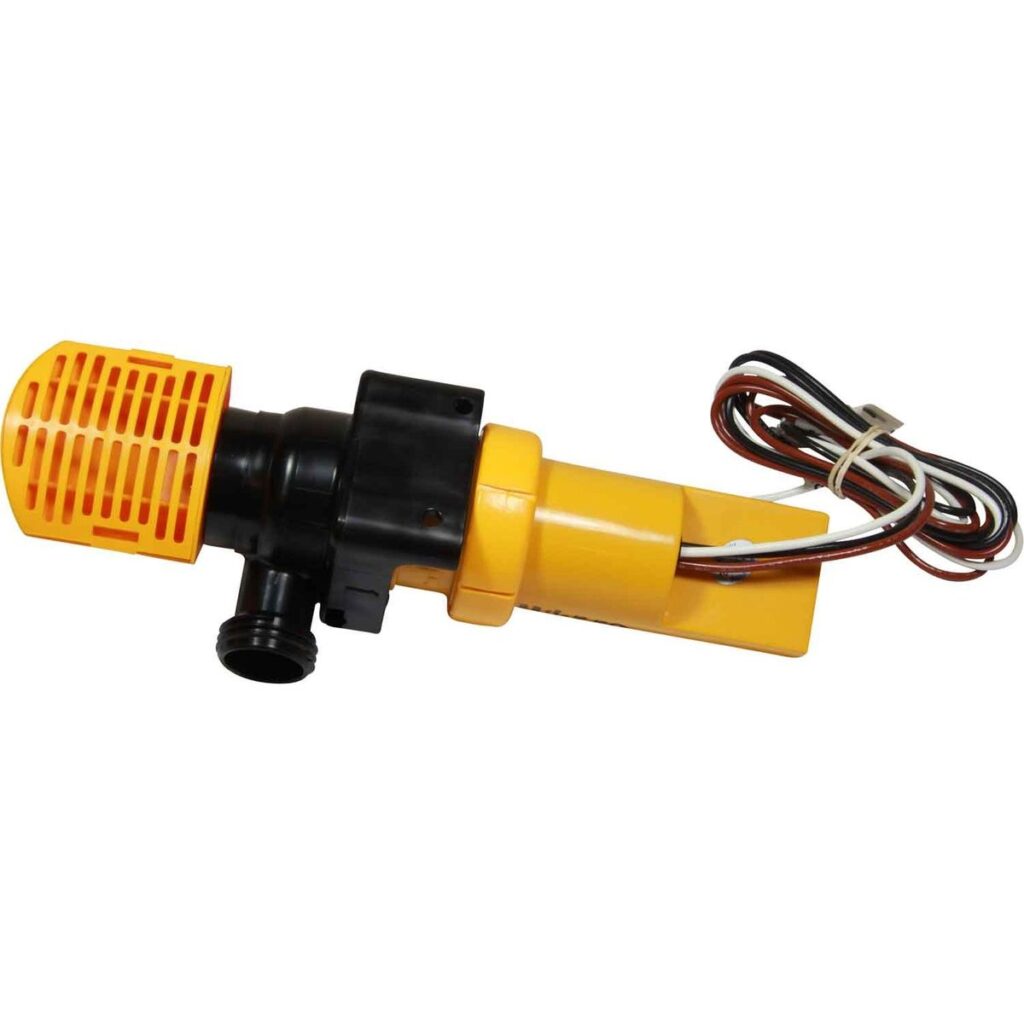
When water gathers in a shallow bilge, the practical consequence is not merely finding a pump with enough headline flow. The unit has to fit at the lowest useful point, sense water reliably and move it through the actual hose run. I see the Whale SuperSub Smart 650 as a particularly complete answer for a narrow leisure-boat bilge because its long, low body and automatic solid-state switch deal with the two problems together. Flood Marine lists this 12-volt model at 41 litres per minute (LPM) and £109 including VAT.
The published figures deserve a close look. Whale identifies this model as SS5212, with a weight of 0.3 kilograms, a 5-amp fuse and a three-metre maximum discharge head. The current catalogue gives 40 litres per minute in an open-flow test and 34 litres per minute at one metre of head, while Flood’s 41-litre figure is stated at the 13.6-volt design voltage. I find the 34-litre figure more useful for planning because a fitted pump must lift water, not simply move it across a bench.
Before the comparison, two standards matter. The pump is listed to International Organization for Standardization (ISO) 8849 for electrically operated bilge pumps and ISO 15083 for small-craft bilge systems. Whale also cites American Boat and Yacht Council (ABYC) H-22 and ignition protection.
Whale SuperSub Smart Automatic Submersible Bilge Pump (12V / 41 LPM) vs SHURflo 700 vs Rule 20DA 800 vs Rule LoPro LP900D
| Bilge pump | Current price | Difference | Published flow | Automatic control | Installation | Discharge and head | Protection and standards | Useful extras |
|---|---|---|---|---|---|---|---|---|
| Whale SuperSub Smart 650 | £109 | Reviewed model | 41 L/min at 13.6 V on Flood listing; 34 L/min at 1 m head in Whale catalogue | Integrated solid-state water sensing; no separate float switch | Low-profile body; rotating body and outlet; supplied mounting wedge | Stepped outlet; 3 m maximum discharge head | Ignition protected; ISO 8849 and ISO 15083; CE; 5 A fuse | Bleed ball; non-return valve; 3-year warranty |
| SHURflo 700 | £64 | £45 less | 44 L/min | External switch required for automatic operation | Conventional upright submersible body; 3 ft tinned wire | 19 mm hose connection | Water-cooled motor; marine installation listing | Anti-airlock design |
| Rule 20DA 800 | £85 | £24 less | 50 L/min; recommended to 2 m head | External switch required for automatic operation | Compact upright body; base fits existing Rule 20R holes | 19 mm threaded discharge | ISO 8846 and ISO 8849; thermal cut-off | Quick-release strainer; check valve; concealed air vents |
| Rule LoPro LP900D | £106 | £3 less | 56 L/min | Separate Rule float switch required | Low-profile; horizontal or vertical; body rotates 180° | 19, 25 or 28 mm ports; straight and elbow options | Leisure-craft primary use listed to 24 m | Non-return valve in straight outlets |
I make the Whale the strongest overall purchase for an automatic pump in a cramped bilge. The £64 SHURflo and £85 Rule 20DA have respectable published flow and useful conventional features, but each needs separate switching for automatic operation. The £106 Rule LoPro comes closest in shape and price, yet a separate float switch is still required. For £109, the Whale combines the sensor, low-profile pump, rotating installation, bleed protection and non-return valve in one unit. That £3 gap to the LoPro is decisive once I account for the extra switch, wiring and mounting space the Rule needs.
The low profile earns its place
A conventional upright pump can leave the owner choosing between the true low point and the only spot with enough headroom. The SuperSub approaches the job horizontally. Its narrow body reaches under sole boards and into shallow compartments, while the pump body and outlet can be rotated to suit the route. I would still measure the hose bend, electrical leads and room needed to remove the strainer.
Whale supplies a mounting wedge for the automatic models, and the installation guide gives alternative positions for retrofitting. I like that practical detail because an existing screw pattern or an angled surface can otherwise turn a small replacement into a long afternoon. The guide is equally clear that the unit belongs on a bulkhead or additional mounting board, not screwed directly into the hull. The pumped water must leave through a correctly arranged skin fitting above the waterline, with the hose run protected against siphoning.
Automatic sensing without a loose float
The integrated solid-state sensor is the feature that justifies the Whale premium for me. There is no hinged float to find space for and no separate switch body to foul on loose gear. When the sensor detects water, the automatic model uses a short delay before starting, so an ordinary slosh across the bilge is less likely to trigger a needless cycle. The manufacturer’s guide then allows the pump to continue briefly after the sensed level falls, helping it draw the bilge down.
I would wire the three-way control exactly as shown by Whale, retaining automatic, off and manual-override functions and the specified fuse protection. Automatic equipment still needs a visible test routine. The guide suggests touching the sensor area to confirm activation, then checking that the pump stops after the sensor clears. That simple check tells me more than a reassuring lamp at the panel because it tests the sensor, motor and control logic together.
Flow through a real installation
Open-flow numbers make the Rule alternatives look quicker, but plumbing decides what reaches the outlet. Lift, hose length, tight bends, voltage at the pump and restrictions all reduce delivery. Whale’s published 34 litres per minute at one metre of head is therefore a valuable figure. I would keep the discharge route short and rising, use the correct smooth-bore hose, secure every connection and avoid a loop that traps air.
The integrated bleed ball is intended to prevent an air lock, while the non-return valve limits water falling back after the cycle. Both are useful in a low installation, although neither excuses poor hose routing. I also value the current Whale statement that automatic sensors switch on at roughly 50 millimetres and that a SuperSub installation can drain to about 9 millimetres, with the final level dependent on the installation. It gives the owner a realistic picture rather than an empty promise of a perfectly dry bilge.
Cleaning, inspection and ownership
Bilges collect hair, cable offcuts, leaves and the small mysteries that arrive on every working boat. I would keep the intake clear, wipe the sensor clean and check the impeller and hose route on a regular schedule. Whale’s twist-and-release arrangement is useful here, provided enough service room was left at installation. Fresh-water rinsing after dirty or salty exposure also makes sense before deposits harden around the strainer.
The SS5212 is specified for normal bilge water in leisure craft. Whale states that it can serve as a sole or primary pump only on vessels up to 24 metres, but pump selection must still reflect the boat, likely ingress points and applicable regulations. I regard any electric bilge pump as one part of a wider system that includes sound plumbing, battery capacity, alarms where appropriate, manual backup and regular inspection. The three-year warranty is welcome, but disciplined access and testing are what make the installation useful on a wet morning.
Neil’s verdict
I recommend the Whale SuperSub Smart 650 where low height and true automatic control are both central to the job. It gives up a little headline flow to the two faster Rule models, yet it puts a proven solid-state sensor, low-profile body, rotating installation and useful anti-airlock details into one tidy package. That is the engineering case, not a badge or a brochure claim.
At £109, my judgement is firm: the Whale is the best purchase in this group for an automatic pump in a confined leisure-boat bilge. The modest premium buys fewer separate components, a cleaner installation and published performance at one metre of head. See the Whale SuperSub Smart 650 at Flood Marine.
About this review
I based this editorial assessment on the live Flood Marine pages for the Whale, SHURflo and Rule pumps, Whale’s current official bilge-pump page, catalogue and installation guide. My price check was completed on 21 September 2026. This is an editorial assessment, not an instrumented performance or durability test and not a sea test. I wrote it independently as Neil Duddy; Flood Marine Services did not write it.