Seventeen rollers that take the fight out of recovery
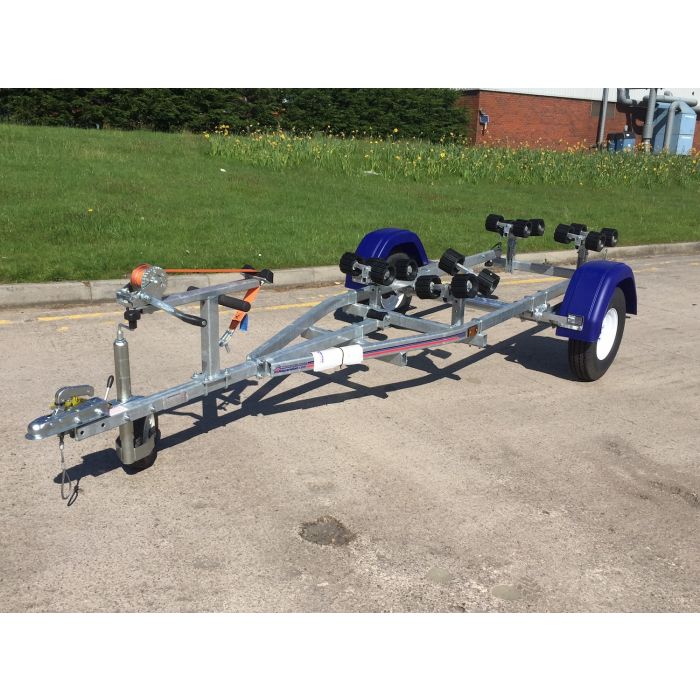
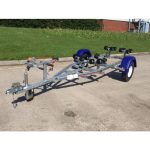
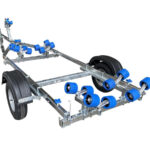
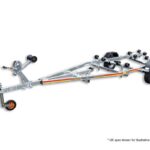
A trailer shows its quality when the boat is coming back out. Wind on the bow. A shallow slip. Nobody standing in the right place. A poor setup can turn an ordinary recovery into twenty minutes of pointing, pulling and pretending the wind is not winning. If the rear of the trailer does not guide the hull, the whole recovery becomes harder than it needs to be. The Indespension Coaster Mini Swing is built around that moment, with 17 adjustable rollers on swinging rear assemblies that help centre and support a small boat as it is winched forward.
It is priced at £1,560 including VAT. The current specification includes a manual winch and strap, adjustable jockey wheel and removable lighting board on a fully welded, hot-dip galvanised chassis. Gross weight is 710 kilograms and carrying capacity is 575 kilograms. I like a trailer specification that states the useful number clearly: 575 kilograms is what remains for the boat and everything travelling on it. The trailer itself cannot be left at home to improve the arithmetic.
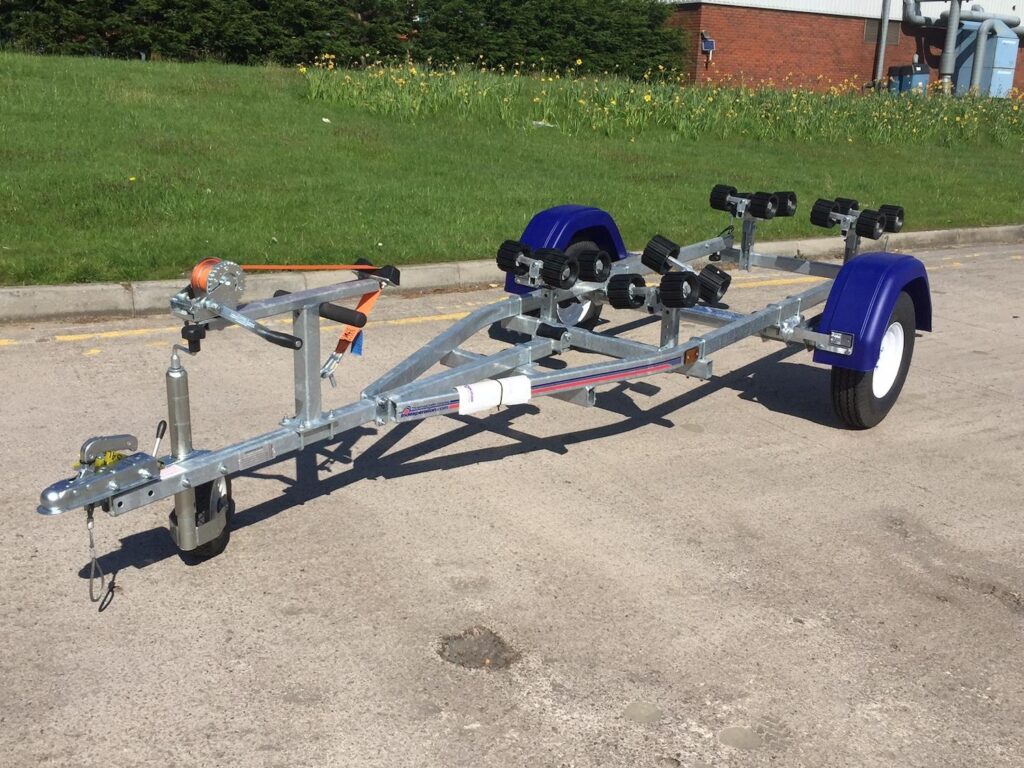
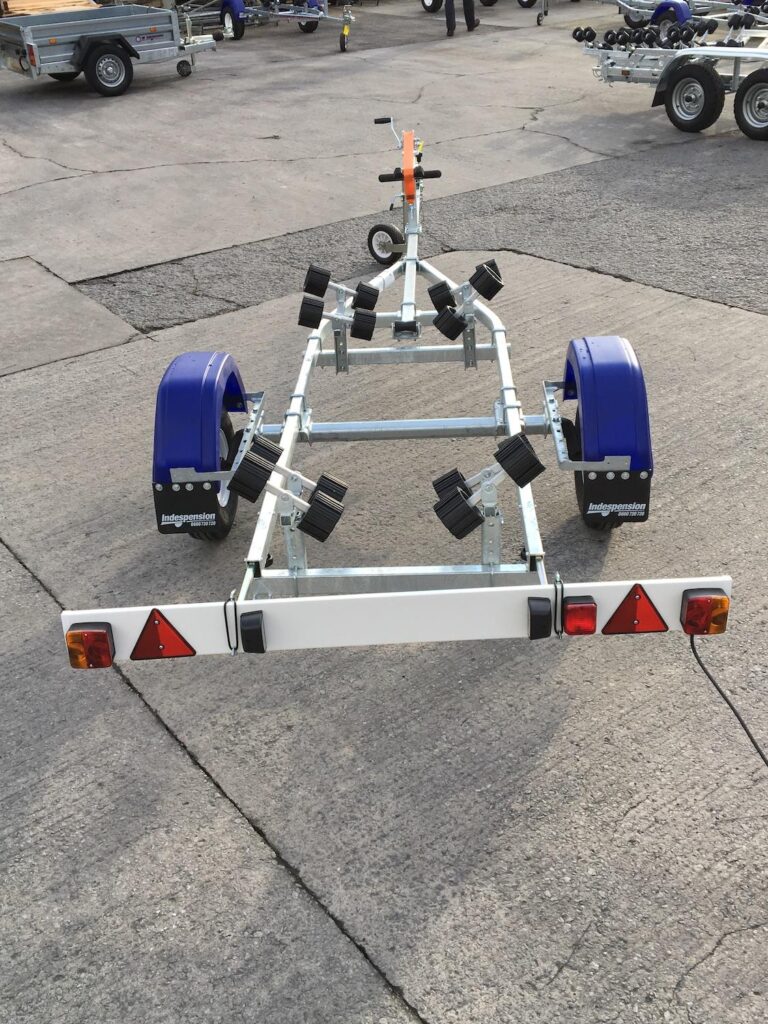
Seventeen rollers make recovery repeatable
The swing assemblies meet the hull at the rear and move to follow its shape. As the winch draws the boat forward, the rollers guide it towards the middle instead of leaving one fixed point to do all the work. That is helpful with a crosswind, but it is just as useful on a calm day because the boat settles into the same support pattern each time. When it works properly, nobody notices—which is about the highest compliment a boat trailer ever gets.
There are enough adjustment points to suit a range of hull shapes. The banks can be set around the boat so support is shared rather than concentrated on a badly placed roller. The winch post moves to meet the bow. Once the setup is right, launching and recovering stop feeling like a new experiment on every trip.
Indespension lists the trailer for hard boats up to 4.5 metres and rigid inflatable boats up to 5 metres. The carrying capacity includes the hull, outboard, fuel, battery, anchor, covers and the gear that stays aboard for the road. On many compact outfits, 575 kilograms gives enough room for a properly equipped boat without pushing the trailer to the end of its useful range.
The rest of the trailer is equally sensible
Ten-inch road wheels suit normal towing and rough access better than tiny trolley tyres. The jockey wheel has a solid rubber tyre. The lighting board and supports remove before immersion, and the winch gear is already part of the listed package. It is an unbraked trailer, which keeps the running gear straightforward within this weight class.
Hot-dip galvanising covers the welded chassis after fabrication. That is the right foundation for a trailer which will see wet slipways and salt water. Bearings, hubs, coupling, tyres, rollers and lighting still need ordinary care, but the main frame begins with proper marine protection and a layout that leaves the working parts accessible.
Payload without the guesswork
Gross weight and payload are often mixed up in trailer adverts. Here the figures are plain: 710 kilograms gross and 575 kilograms available to carry the outfit. The difference accounts for the trailer itself. That makes it much easier to total the real travelling package and leaves no need to infer capacity from the boat length.
The Coaster Mini Swing also gives room to keep the finished rig balanced. Moving the winch post and setting the roller banks around the hull helps bring the bow support, transom position and nose weight into line. A trailer should not merely be long enough. It should hold the boat properly between the slip and the road, and the Coaster provides the adjustment needed to do that.
Indespension Coaster Mini Swing vs Extreme 750 Maxi Roller vs SBS R2/750EL vs De Graaff SB750/2 ADJ
| Trailer | Price including VAT | Difference | Gross / payload | Roller arrangement | Published boat length |
|---|---|---|---|---|---|
| Indespension Coaster Mini Swing | £1,560 | — | 710 / 575 kg | 17 adjustable rollers on swing assemblies | Hard boat 4.5 m; rigid inflatable boat 5 m |
| Extreme 750 Maxi Roller | £1,525 | £35 less | 750 / 605 kg | 16 wobble rollers plus keel rollers | Model-specific fit |
| SBS R2/750EL | £2,131 | £571 more | 750 / 570 kg | 12 wobble rollers | 4 m bow eye to transom |
| De Graaff SB750/2 ADJ | £1,837 | £277 more | 750 kg gross; payload not stated | Adjustable multi-roller swing beam | Model-specific fit |
Advertised prices and published specifications checked 8 September 2026. Delivery and model-specific setup are excluded unless the listing states otherwise.
The Coaster is the best-balanced package
The figures make the choice fairly clean. Extreme is only £35 lower and lists 30 kilograms more payload, but the Coaster brings 17 adjustable rollers, a fully welded galvanised chassis and the main road-and-launch equipment in a familiar complete package. A £35 difference disappears quickly over years of easier setup and recovery.
The SBS is the weakest buy in this group. It is £571 dearer than the Coaster, carries five kilograms less and uses 12 wobble rollers rather than 17. Its own listing gives a four-metre bow-eye-to-transom length, while Indespension states 4.5 metres for a hard boat. There is no extra payload, roller support or published length to explain the higher figure.
De Graaff also costs more, and the compared listing does not publish a payload that beats the Coaster’s 575 kilograms. Taken together, the Indespension delivers the strongest mix: a sensible purchase figure, plenty of adjustable hull support, clear capacity and a chassis protected for marine use. It does not need one oversized claim. The whole trailer makes sense.
What it changes at the slip
Good trailer design removes drama. The rear swing rollers begin guiding the boat before it reaches the fixed centre of the chassis. Multiple contact points share the support. The winch pulls forward rather than being asked to pull sideways as well. A solo user has less to fight, and a crew spends less time pushing the hull by hand.
That benefit is there on every recovery. Frequent users save effort week after week. Occasional users get a trailer that helps even when their slipway routine is not polished. In the yard, the adjustable jockey wheel and clear hardware keep the package manageable. On the road, correct support and balance help the boat and trailer behave as one outfit.
I also prefer the way the Coaster leaves its workings visible. Rollers, brackets, winch, coupling and running gear can be inspected without dismantling decorative covers. Rinse it after salt water, keep the bearings and tyres in order, and watch the wear items. Nothing about the routine is mysterious.
Ryan’s verdict
For a compatible small hard boat or rigid inflatable boat, my money goes on the Coaster Mini Swing. Seventeen rollers give the hull proper guidance, the 575-kilogram payload is clearly stated, and the galvanised welded chassis comes with the equipment needed to get from road to water and back again.
The small saving on the Extreme does not outweigh the Coaster’s complete, well-proven layout. The dearer De Graaff does not show a payload advantage, and the SBS asks much more money for less payload, fewer rollers and a shorter stated fit. The Indespension is the trailer here that adds up. View the Indespension Coaster Mini Swing.