Stainless Pull with the Full Installation Kit
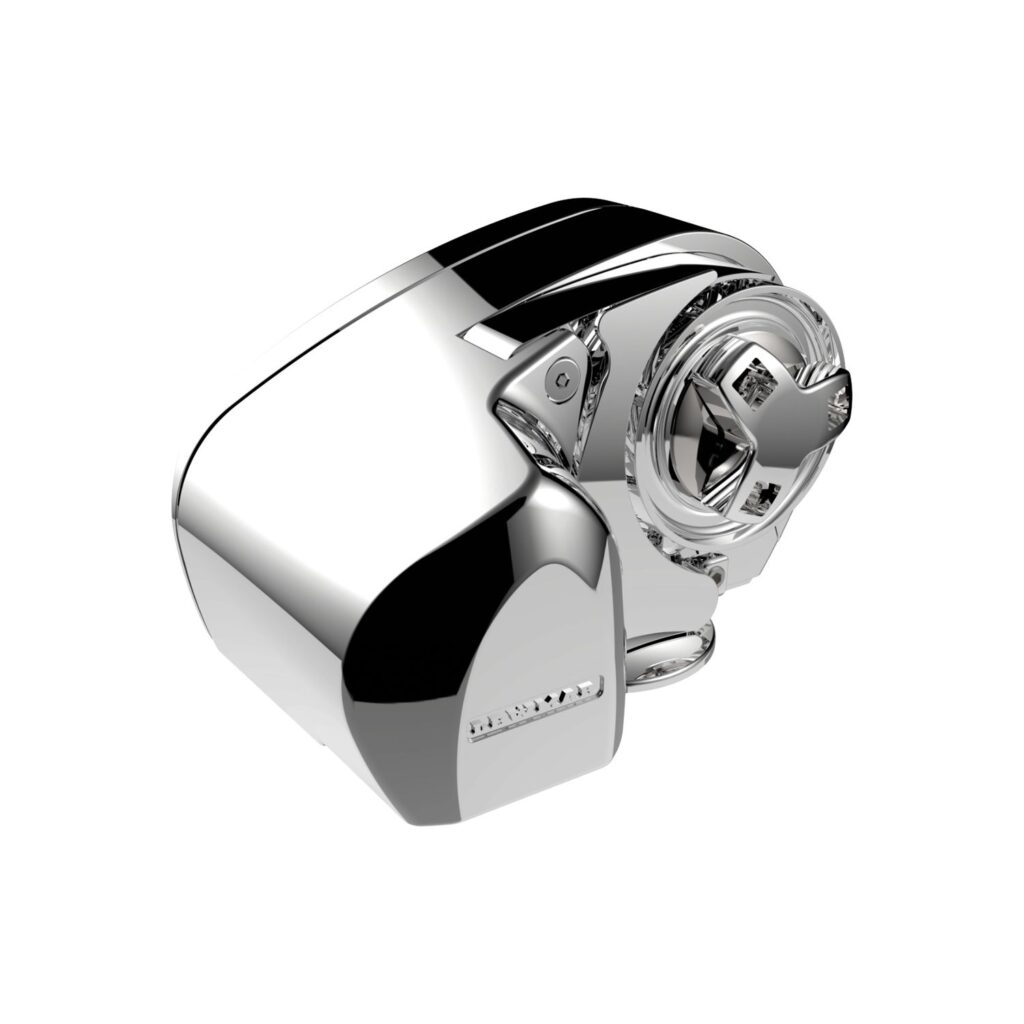
The nuisance starts when the anchor is coming up, the bow is pitching and the chain decides it would rather build a small mountain in the locker. That is when I want a windlass with enough pull, a clean rode path and controls that make sense with cold hands. The Lewmar Pro-Series 1000 kit costs £1,692 and puts a 700-watt, 12-volt direct-current (DC) motor in a compact horizontal unit for boats from 6 to 11.5 metres.
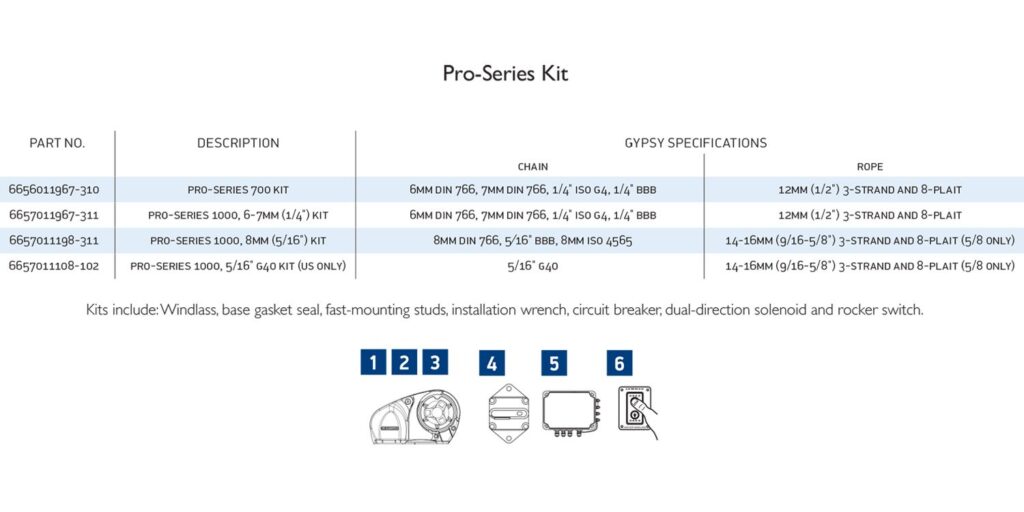
I am reviewing the 454-kilogram-pull version matched to 6 or 7 millimetre chain and 12 millimetre rope. It is not merely the polished machine on deck. The listed kit brings the windlass, mounting gasket, studs, wrench, 70-amp circuit breaker, dual solenoid and rocker switch. That matters. A windlass without the switching and protection sorted is only an expensive foredeck ornament, and anchors already provide enough ornaments of their own.
Load, speed and the right rode
Lewmar publishes a 454-kilogram maximum pull and a 114-kilogram working-load limit for this model. Maximum pull is the short, hard figure; working load is the figure I use when judging the normal job. The published maximum line speed is 32 metres per minute, with a normal current figure of 50 amps. Those numbers give useful reserve for a mid-sized cruiser without pretending the windlass should drag the boat against wind and tide.
I would still motor gently towards the anchor, break it out with the boat and use a chain stopper or snubber when lying to the hook. The windlass retrieves rode; it is not the overnight mooring point. Good handling reduces shock loads, keeps the gypsy engaged and gives the motor a fair life. Mud arrives for free. There is no reason to add avoidable strain to the delivery.
The gypsy match is critical. This version accepts 6 millimetre German Institute for Standardisation (DIN) 766 chain, 7 millimetre DIN 766 chain and listed quarter-inch International Organization for Standardization (ISO) G4 or BBB patterns, paired with 12 millimetre three-strand or eight-plait rope. I would check the markings and measure a representative length of chain before ordering. Nominal size alone is not enough; pitch and link shape decide whether the chain seats properly instead of jumping under load.
Stainless construction and deck layout
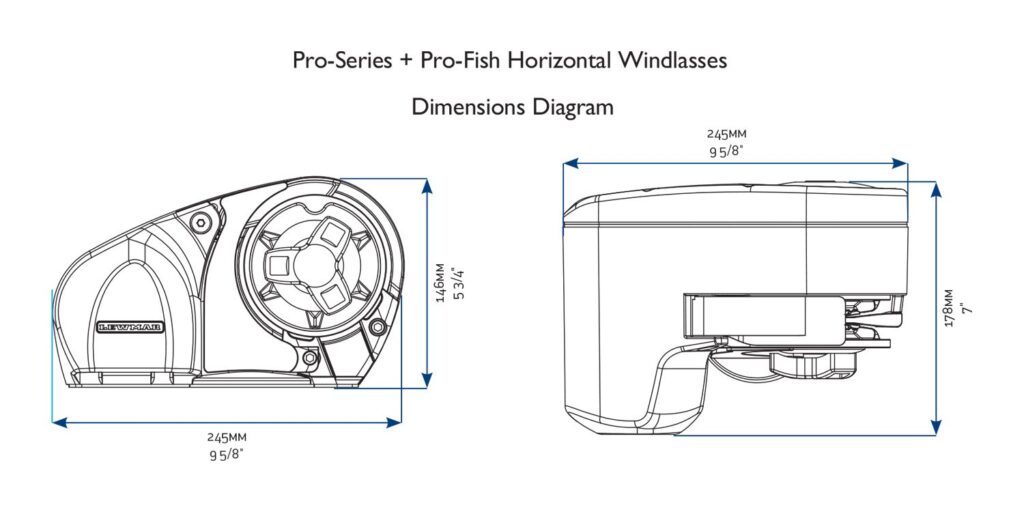
The Pro-Series is built from 316 stainless steel, including the control arm and stripper. I like that material choice on a component that lives where salt water, wet rope and anchor muck meet. The complete unit weighs 9.5 kilograms and the published envelope is about 245 millimetres long by 178 millimetres high. Its motor remains above deck, so the locker does not have to surrender the deep volume demanded by a motor hanging below a vertical windlass.
Above-deck installation also keeps the principal machinery visible for rinsing and inspection. I would still make a proper backing arrangement, seal the deck penetrations, route heavy cable without sharp bends and keep the breaker accessible. The cable run must be sized for distance and current, not whatever happens to be left on the reel. Bow wiring has a talent for turning simple arithmetic into a personal matter.
Push-button operation covers the normal work. If electrical power is lost, Lewmar provides manual emergency recovery using a common half-inch socket wrench. That is a sensible fallback because the tool is easy to carry and recognise. An optional free-fall conversion is available for owners who want a faster drop. I would commission the standard powered system first, confirm the locker clears the incoming rode, then decide whether free fall suits the anchoring routine.
Lewmar Pro-Series 1000 vs Lofrans Cayman 88 vs Quick Hector HC3 1012 vs Maxwell HRC10-8
| Windlass | Current UK price | Difference vs Lewmar | Motor and supply | Rode match | Pull and working load | Retrieval | Construction and weight | Boat and installation fit | Included equipment and useful extras |
|---|---|---|---|---|---|---|---|---|---|
| Lewmar Pro-Series 1000 | £1,692 | — | 700-watt, 12-volt DC | 6 mm or 7 mm chain with 12 mm rope | 454 kg maximum pull; 114 kg working load | Up to 32 m/min; 50-amp normal current | 316 stainless steel; 9.5 kg | 6–11.5 m boats; compact above-deck installation | Breaker, dual solenoid, rocker switch and manual recovery; optional free-fall conversion |
| Lofrans Cayman 88 | £1,819 | £127 more | 1000-watt, 12-volt DC | 8 mm chain; separate rope drum | 900 kg maximum pull; published 50 kg speed figure | 20 m/min at 50 kg; 70–100-amp draw | Anodised marine alloy; 21 kg | Boats to about 13 m; larger foredeck footprint | Handle and control box included; independent rope drum |
| Quick Hector HC3 1012 | £2,033 | £341 more | 1000-watt, 12-volt DC | 8 mm chain with 12.7–15.8 mm rope | 400 kg maximum working pull; 130 kg working load | 32.4 m/min maximum; 17.8 m/min at load | Anodised aluminium base and composite jacket | 10–13 m boats; 373 mm overall depth | Integrated solenoids and chain-counter sensor; breaker listed separately |
| Maxwell HRC10-8 | £1,710 | £18 more | 1000-watt, 12-volt DC | 8 mm chain with 14–16 mm rope | 700 kg maximum pull | 24 m/min chain; 20 m/min rope | Two-part motor and drive case; 19 kg | Above-deck gypsy with motor and drive below deck | Automatic rope/chain handling and cone-clutch manual free fall |
Lofrans asks £127 more and gives substantially greater maximum pull, an 8 millimetre gypsy and a separate rope drum, but it weighs 21 kilograms and is aimed at the larger end of this group. Quick costs £341 more; its integrated solenoids, chain-counter sensor and 130-kilogram working load are useful, though the compared package is 8 millimetre, gypsy-only and lists the protection breaker outside the supplied contents. Maxwell sits only £18 above Lewmar and brings automatic 8 millimetre rope-and-chain handling with 700 kilograms of maximum pull, but its 19-kilogram installation places the motor and drive below deck. I put Lewmar first for the reviewed 6 or 7 millimetre job because it combines the lowest advertised price, the lightest unit, 316 stainless construction, 32-metre-per-minute maximum speed and the most complete electrical installation kit.
Installation, use and ownership
I would begin with the rode, not the catalogue photograph. Confirm the chain standard, splice, locker fall and bow-roller alignment. Then I would check the deck laminate, backing, cable length, battery condition and isolation arrangement before drilling. A smooth vertical fall beneath the gypsy helps the chain clear itself. If the locker is shallow, even a powerful windlass can end up feeding the same heap repeatedly. Chain is stubborn. Gravity is merely persistent.
Once fitted, the ownership routine is plain: rinse salt and grit away, inspect the stripper and gypsy, watch the splice, keep terminals clean and tight, and test manual recovery before it is needed. Lewmar backs the range with a five-year warranty. I take that as useful manufacturer support, while still treating installation quality and routine inspection as part of the machinery.
My verdict
I would choose the Lewmar Pro-Series 1000 kit at £1,692 for a correctly matched 6 or 7 millimetre rode on a 6–11.5 metre boat. It is compact, light, stainless, fast and supplied with the breaker, solenoid and switch needed to finish the job properly. The 454-kilogram maximum pull and 114-kilogram working limit are clear, usable figures. See the exact Lewmar Pro-Series 1000 windlass kit at Flood Marine.
About this review
Specifications and prices were checked against the live Flood Marine listing, current official Lewmar material and manual, official Lofrans, Quick and Maxwell information, and the named UK competitor listings on 2 October 2026. This editorial assessment is based on published material; it is not an instrumented performance, durability or sea test. The independent reviewer is Ciaran Hughes, and this article was not written by Flood Marine Services.