The family rowboat that stays useful all day
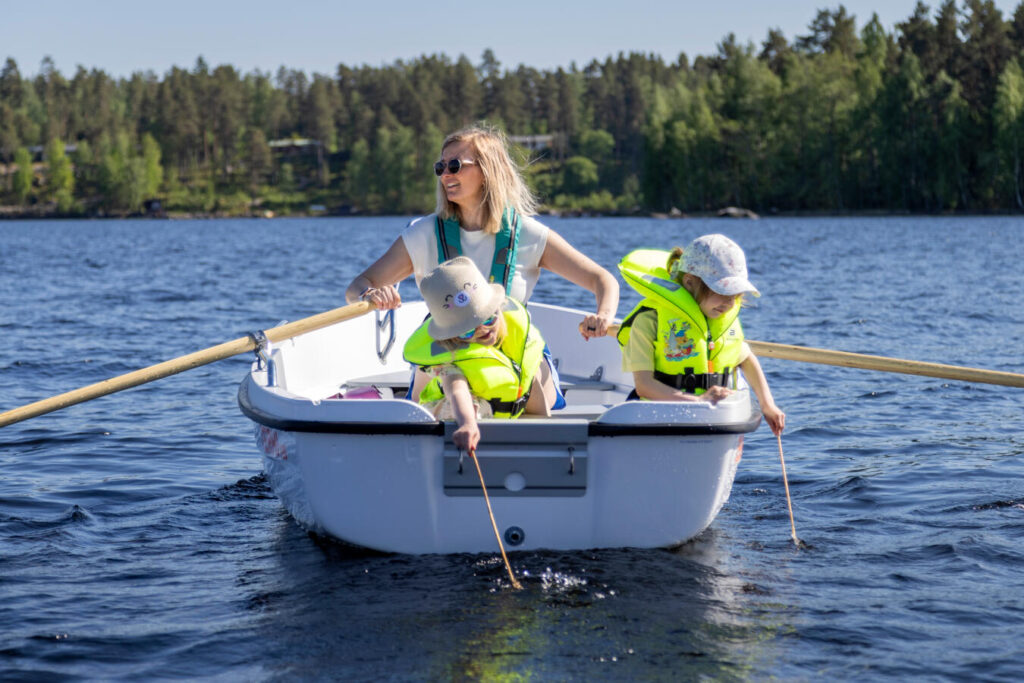
A family day in a small boat rarely stays as one tidy activity. I may begin with two children, a picnic bag and oars, add fishing gear after lunch, then finish with tired legs and a battery to lift ashore. The Terhi 390 makes sense because its layout can change with that day. At 3.80 metres long, 1.50 metres wide and 100 kilograms, it is small enough to manage while still carrying four people.
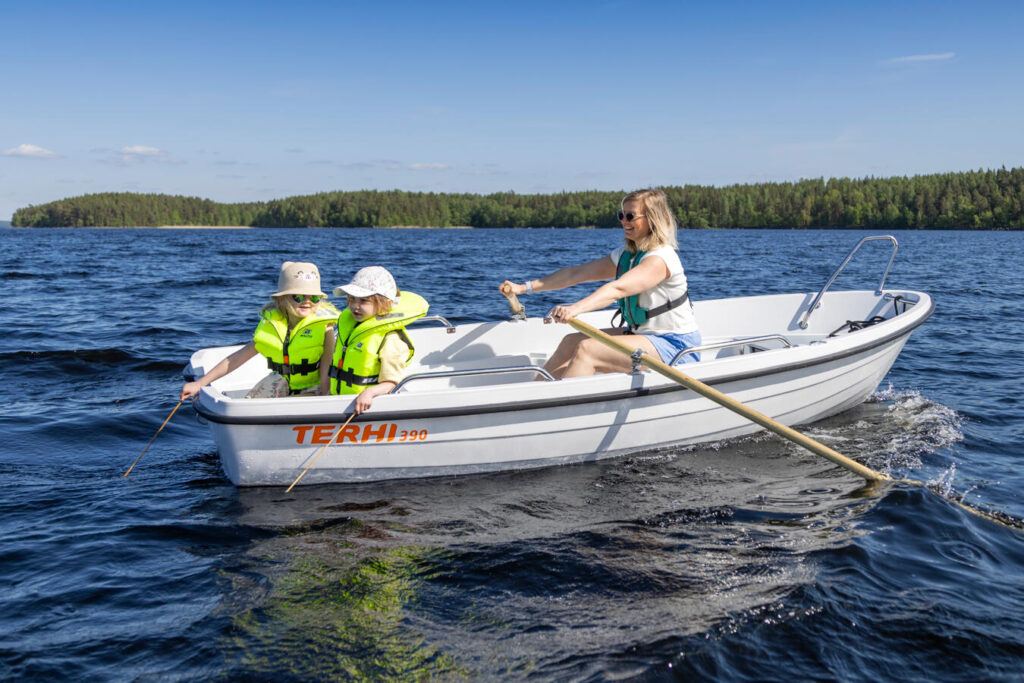
The first thing I notice is how the seating works for rowing. I can row from the middle or the bow seat, there are several footrest positions, and the middle bench can be moved. That matters when the crew changes size or I want to trim the boat with bags and people. Terhi also moulds resting gaps for the oar blades into the transom. It is a modest detail, but it keeps wet blades settled instead of having them slide about whenever hands are needed for a child or a line.
A small hull with useful spaces
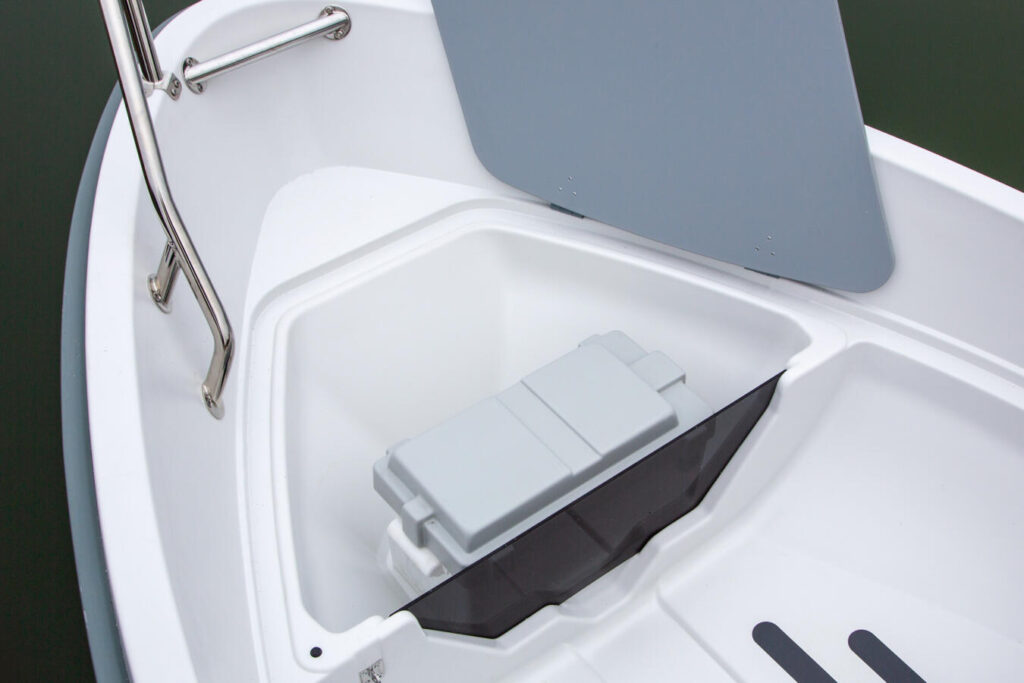
The bow-seat bulkhead creates generous storage forward, while the stern has a lockable compartment and open side spaces. I like that separation. Soft bags and spare clothing can go forward, frequently used items remain within reach aft, and the lockable area gives me somewhere more deliberate for equipment. An optional removable middle storage seat can hold a battery as large as 110 amp-hours and includes a small place for cups or a phone. On a boat of this length, every box must earn the space it occupies; this one adds a seat as well as storage.
There are four possible positions for a battery box and a cable duct running from the middle towards the stern. That gives me options when fitting an electric outboard and balancing the boat. Terhi also offers an optional bow motor mount, while the transom accepts either an electric motor or a combustion outboard up to six horsepower, with a maximum recommended engine weight of 27 kilograms and a short shaft. I can rig the boat for quiet fishing, simple rowing or easy family motoring without making the basic hull feel like a compromise.
The rainwater-draining, self-draining arrangement is another owner-friendly feature. A small open boat often sits between outings, and water management affects how welcoming it feels when everyone arrives. I would still check the boat before departure, secure the bung arrangements correctly and bail as conditions require, but a hull designed to clear rain helps reduce the familiar chore of finding a miniature pond where the picnic was meant to sit.
Why the construction matters
Terhi builds the deck and hull in acrylonitrile butadiene styrene (ABS) and fills the space between them with polyurethane foam. The result is a stiff sandwich structure that Terhi describes as unsinkable. I value that construction because the foam is part of the hull design, not loose buoyancy tucked wherever it will fit. The moulded inner surfaces are also easy to understand around children: there are proper seats, clear foot spaces and a solid rubrail rather than an improvised collection of sharp-edged fittings.
At 100 kilograms bare, the 390 remains realistic for a modest trailer or organised shore storage. I would still plan the lift, use a suitable trailer and count the outboard, battery, fuel and gear in the full towing calculation. The bare figure is useful because it leaves room to build a manageable package. Two oars and rowlocks are standard, so the boat arrives ready for its simplest form of propulsion rather than making rowing an extra-shopping exercise.
Four-person capacity is important in a boat this compact. I can take two adults and two children without immediately moving to a larger, dearer hull, while the 1.50-metre beam provides a sensible footprint for boarding and sitting. The published design category is intended for sheltered waters and modest conditions, which is exactly how I would plan its use: lakes, rivers, estuaries and protected coastal water with weather, load and local conditions considered before launch.
Terhi 390 vs Buster Mini vs Linder Fishing 410 vs Pioner 12 Maxi
| Model | Current UK price | Price difference vs reviewed product | Size and hull weight | Capacity and power | Construction | Water management | Rowing and storage | Electric-motor preparation |
|---|---|---|---|---|---|---|---|---|
| Terhi 390 | £2,890 | — | 3.80 × 1.50 m; 100 kg | 4 people; up to 6 hp; short shaft | Foam-filled acrylonitrile butadiene styrene sandwich; unsinkable structure | Rainwater draining / self-draining | Oars and rowlocks included; movable middle bench; lockable stern and generous bow storage | Four battery-box positions, cable duct and optional bow motor mount |
| Buster Mini | £3,000 | £110 more | 3.88 × 1.49 m; 104 kg | 3 people; 2–8 hp; long shaft | Aluminium; unsinkable | EasyBail drainage system | Oars and rowlocks optional; standard seats, composite floor and cleats | No comparable four-position battery plan published |
| Linder Fishing 410 | £3,510 | £620 more | 4.03 × 1.56 m; 75 kg | 3 people; up to 3.5 hp | Aluminium; floats waterlogged with three people aboard | Drain plug | Oars, rowlocks and rescue ladder included; storage detail limited on checked listing | No comparable battery routing published |
| Pioner 12 Maxi | £4,175 | £1,285 more | 3.81 × 1.65 m; 160 kg | 4 people; 8–15 hp; long shaft | Rotationally moulded polyethylene | Self-draining | Oars listed among extra equipment; storage lockers built into hull | Primarily arranged around the higher-power outboard range |
The Buster Mini is only £110 more and allows up to eight horsepower, but its published capacity is three people and the rowing equipment is optional. The Linder is impressively light at 75 kilograms and includes a rescue ladder, yet it also carries three people, is rated to 3.5 horsepower and costs £620 more. The Pioner matches the Terhi’s four-person capacity and accepts much more power, though that shifts it towards motor use: it weighs 160 kilograms, its oars are listed as extra equipment and the checked basic price is £1,285 higher. For the job I am judging—rowing, low-power family outings and a tidy electric setup—the Terhi gives the best-balanced package at the lowest price, with included oars, planned battery routing, useful storage and four seats.
Comfort through the whole day
I would add only what the crew actually uses. Seat cushions can make a slow afternoon more comfortable, and the optional middle box suits an electric installation, but the open boat is appealing because the standard layout stays uncluttered. A child can move from a middle seat to the bow under direction, fishing gear can be kept away from lunch, and the movable bench helps me recover usable floor space. That flexibility is more valuable to me than a feature list that fills every corner before the family climbs aboard.
The green, orange and white colour choices give the same underlying 390 layout a different character. Whichever finish I pick, I would protect the hull from dragging, secure it properly in transport and follow the manufacturer’s limits. Tough construction supports ordinary use, but good family boating still begins with suitable personal flotation devices, a weather check, balanced loading and a clear plan for where everybody sits.
My verdict
I find the Terhi 390 unusually complete for a small, friendly boat. It rows from more than one position, drains rainwater, carries four, includes the basic rowing kit and has genuine thought behind its battery and storage locations. The foam-filled ABS sandwich gives the hull a reassuring structure, while the 100-kilogram bare weight keeps launching and storage within a sensible scale.
Most of all, the layout grows through the day instead of fighting it. I can begin under oars, add quiet electric power, move the bench as the load changes and still find a proper place for coats, lunch and the battery. At £2,890, it is the strongest overall purchase in this group for family rowing and low-power boating. See the exact Terhi 390 at Flood Marine.
About this review
Product specifications were checked against the live Flood Marine listing, official Terhi material and the named official or current UK competitor sources on 27 September 2026. I have treated the article as an editorial assessment; it is not an instrumented performance, durability or sea test. The independent reviewer is Cara Donnelly, and the article was not written by Flood Marine Services.
More detail