The premium that earns its keep
A 100-horsepower repower has consequences long after the engine is bolted on. The transom carries the weight, the helm inherits the controls and gauges, and the owner depends on the engine through every return passage and every future sale. I therefore judge the Yamaha 100HP as a complete ownership decision. At a current starting price of £10,960 including VAT, it costs more than three keenly advertised rivals, but its engineering, rigging range, working reputation and resale demand make that premium worthwhile.
The published core is strong. Yamaha uses a 1,832-cubic-centimetre inline four with 16 valves and a single overhead camshaft, producing 100 horsepower at 5,500 revolutions per minute. Dry weight runs from 162 to 166 kilograms across long- and extra-long-shaft versions. Electronic fuel injection (EFI), electric start, power trim and tilt and a 35-amp alternator are joined by a current Flood Marine listing that includes an aluminium propeller. I like that the main numbers are substantial without turning the engine into an awkward transom load.
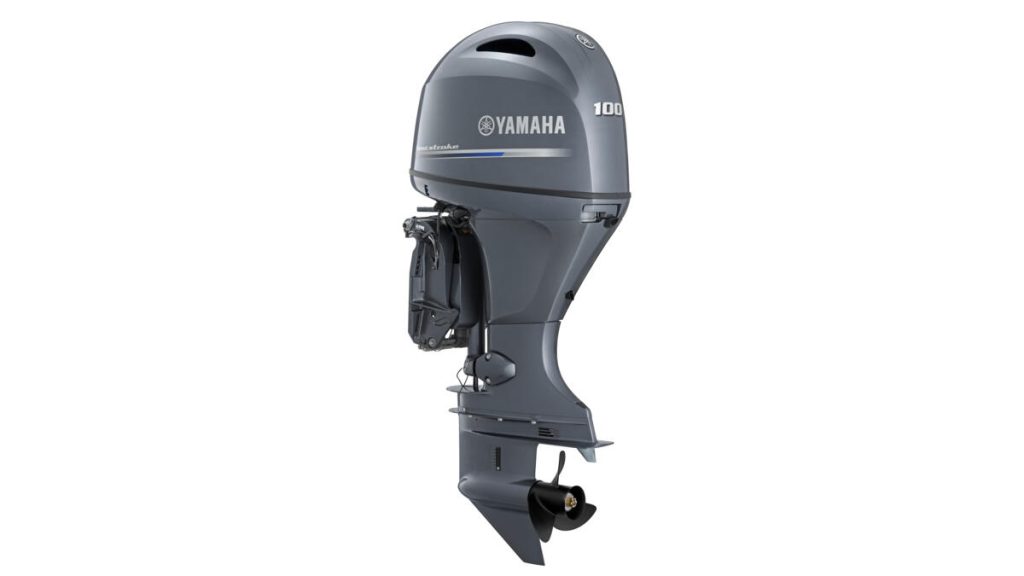
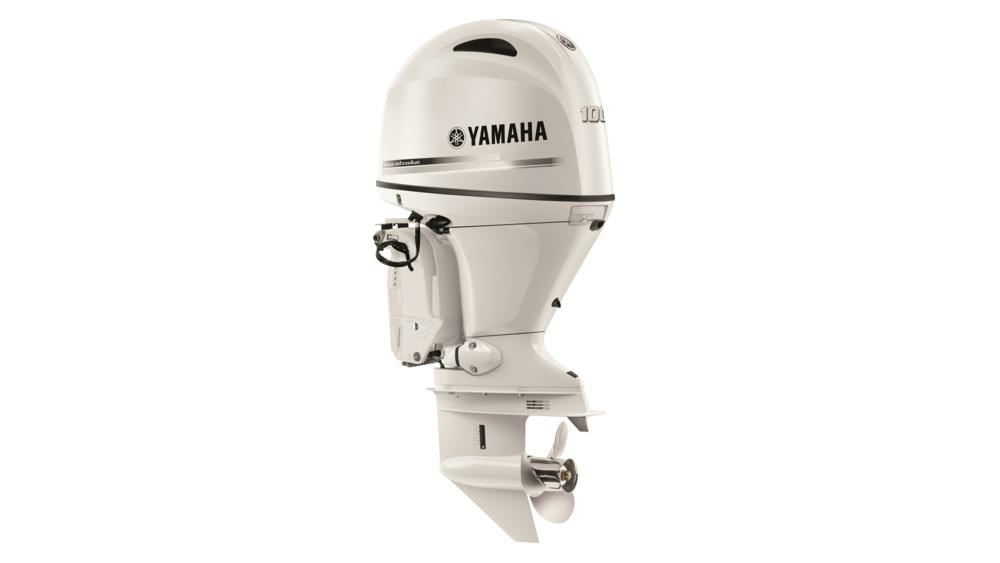
Yamaha 100HP Outboard vs Honda BF100 vs Suzuki DF100B vs Mercury 100 FourStroke
| 100-horsepower outboard | Current price | Difference | Engine architecture | Published dry weight | Shaft, start and control | Trim | Alternator | Package and useful features |
|---|---|---|---|---|---|---|---|---|
| Yamaha 100HP Outboard | £10,960 | Reviewed model | 1,832 cc; inline four; 16-valve single overhead camshaft | 162–166 kg | 516 or 643 millimetre transom; electric start; remote or optional multifunction tiller | Power trim and tilt | 35 amps; 21 amps published battery charging | Aluminium propeller included; configurable Yamaha gauges and control boxes; fuel injection |
| Honda BF100 | £10,400 | £560 less | 1,496 cc; inline four; 16 valves with variable lift and timing | 166–172 kg | 537 or 664 millimetre transom; electric start; remote control | Power trim and tilt | 44 amps; 35 amps battery charging | Programmed fuel injection, low-speed torque control and optional trolling control |
| Suzuki DF100B | £9,399 | £1,561 less | 1,502 cc; inline four; 16-valve dual overhead camshaft | 157–161 kg | 508 or 635 millimetre transom; electric start; remote control | Power trim and tilt | 27 amps | Lean Burn control, 2.59:1 gearing, water-in-fuel alert and dual flush ports |
| Mercury 100 FourStroke | £9,720 | £1,240 less | 2,064 cc; inline four; 8-valve single overhead camshaft | 163 kg lightest published model | 508 or 635 millimetre versions; electric start; remote or tiller forms listed | Power trim and tilt on advertised long-shaft variants | 35 amps / 441 watts | Standard and Command Thrust variants; operator warning system |
I consider the Yamaha the strongest overall purchase once the full installation and ownership cycle are included. Honda’s advertised entry is £560 lower and its charging output is higher, Suzuki is £1,561 lower and slightly lighter, and Mercury is £1,240 lower with greater displacement. The Yamaha answers with a useful 1.8-litre, 16-valve powerhead at 162 kilograms in long-shaft form, a propeller in the advertised package, and a particularly broad path through shaft, steering, tiller, gauge and control choices on the live configurator. I would pay the difference for that well-developed rigging route, the F-series record in leisure and high-hour service, strong parts and service familiarity, and the demand a correctly maintained Yamaha retains when the boat is sold.
The family matters more than one model code
I would not discuss this Yamaha as though one suffix fits every boat. The live product family covers a 516-millimetre long shaft and a 643-millimetre extra-long shaft, with published dry weights of 162 and 166 kilograms. Shaft choice must follow the boat builder’s transom specification; the wrong length changes water flow, trim range and propeller position. That is a measurement job before it is an ordering job.
Electric start and power trim and tilt are part of the current family. Remote control suits a conventional wheel-steered leisure boat or rigid inflatable boat (RIB), while Flood Marine’s configurator also lists a Yamaha multifunction tiller and fitting kit for an appropriate workboat installation. I value that choice. A console boat benefits from a side-, flush- or top-mount control, whereas a harbour or club craft can keep a direct tiller layout where deck access matters. Rotation, colour and the final control specification still need to be confirmed for the selected boat.
Rigging that can grow with the boat
The gauge choices are practical rather than cosmetic. The listing offers Yamaha 6Y8 digital-network instruments, a round 6VM colour gauge and the CL5 colour touch display, alongside several control-box arrangements. I would choose the simplest display that gives the skipper the engine information actually needed, then leave space and network capacity for any later electronics. A clean installation with visible revolutions, trim, speed and fuel data helps an owner operate the engine intelligently and gives a technician better context at service time.
I would also price the entire job before comparing invoices. Steering, harnesses, control box, gauges, cables, battery arrangement, fuel filtration, propeller suitability and labour all affect the installed result. The current Yamaha headline includes an aluminium propeller, but the right pitch still depends on hull, load and expected use. I want the engine to reach its published 5,000-to-6,000-revolutions-per-minute operating band at full load without being propped too heavily or too lightly.
What the engineering means underway
Power trim and tilt earns its keep throughout a normal day. I can tuck the leg in for a cleaner launch, trim the bow as load and water change, and raise the gearcase for inspection or shallow handling within the boat’s limits. At the helm, 35 degrees of steering each way gives the installation designer a clear envelope. The 35-amp alternator, with 21 amps published for battery charging, supports a properly planned modest electrical system; battery capacity and electronics demand still need their own calculation.
Reliability for leisure and high-hour work
Yamaha’s higher price makes most sense to me where the engine will accumulate real hours. The F-series has a long, visible record on leisure boats, club craft, harbour launches and commercial boats, so owners, engineers and used buyers understand what they are looking at. That familiarity supports parts planning, fault diagnosis and resale. It also means maintenance history carries weight: a stamped schedule, correct fluids, clean fuel practice and documented impeller and anode work strengthen both reliability and future value.
I never read “proven reliability” as permission to neglect an outboard. High-hour use makes routine care more important. I would flush as the operating environment requires, monitor cooling and charging, keep the fuel system dry and clean, inspect the propeller and gearcase, and follow Yamaha’s service intervals. The engine’s wet-sump lubrication, fuel injection and transistor-controlled ignition are established systems, but their durability is protected by disciplined servicing and correct rigging.
Why the higher price pays back
That last point is commercial as well as emotional. When a boat changes hands, a recognisable Yamaha model with the correct shaft, tidy rigging and documented maintenance is easy for a buyer or surveyor to understand. Resale demand cannot erase the original premium, but it can reduce the sting of it while making the boat easier to present. I would rather invest in the engine and installation that I expect to value through use and again at disposal.
Neil’s verdict
I recommend the Yamaha 100HP for an owner or operator who wants one outboard family to cover a carefully rigged leisure boat, a practical tiller-led workboat or a high-hour club and commercial role. Its 162-to-166-kilogram weight, 1.8-litre 16-valve engine, EFI, electric start, power trim and broad Yamaha instrument choice form a strong technical base.
My conclusion is firm: the higher Yamaha price is worth paying. The F100 combines proven high-hour credibility, useful variant and rigging choices, an included aluminium propeller, strong service recognition and sustained resale demand better than the three alternatives as a complete purchase. Configure the Yamaha 100HP Outboard at Flood Marine.
About this review
I based this editorial assessment on the live Flood Marine product page, Yamaha’s published specifications, current Honda, Suzuki and Mercury manufacturer material, and the cited UK advertised-price pages. I checked the prices on 15 September 2026. My assessment is editorial and is not an instrumented sea, performance or durability test. I am the independent reviewer, Neil Duddy; the article was not written by Flood Marine Services.