Two-mile visibility with a modest power draw
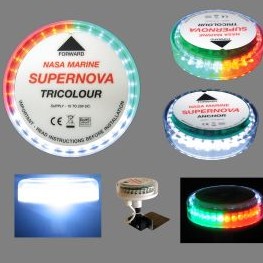
At the helm after sunset, I want the boat’s lights to be easy to interpret before I look at any other number. A masthead tricolour has one plain job: show the sailing vessel’s red, green and white sectors from a high, unobstructed position without taking an unreasonable bite from the battery. The NASA Supernova Tricolour keeps that job tightly defined, and for a private sailing boat up to 12 metres it combines a two-nautical-mile published range, low current draw and a compact sealed housing at a current Flood Marine price of £94 including VAT.
This is the standalone tricolour version, not the Supernova Combi that adds an all-round anchor light. Its sectors are published as 112.5 degrees red, 112.5 degrees green and 135 degrees white. NASA specifies 10 to 20 volts for full brightness and a draw of 200 milliamps at 12 volts, equal to 2.4 watts. I like that clarity because it lets an owner work out the night-time load without optimistic arithmetic. Across a ten-hour passage, the nominal consumption is about two amp-hours at 12 volts.
Useful information before the mast is climbed
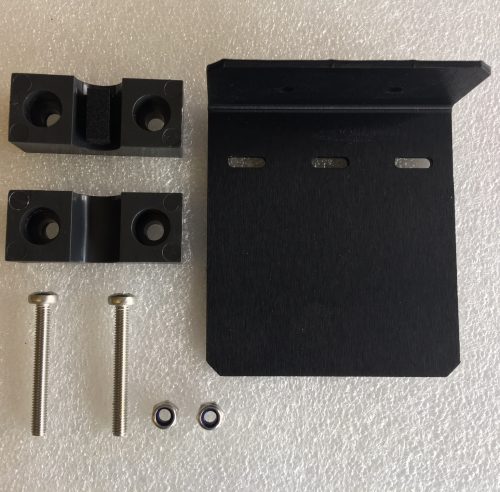
The housing is 91 mm in diameter and 113 mm high including its mount. NASA uses a tough polycarbonate shell and a Gore-Tex membrane vent to equalise pressure on the seals. Ingress Protection (IP) ratings are published as IP65 for water jets and IP67 for temporary submersion. A mounting bracket is supplied. Those details make the installation easy to picture: it is a small, self-contained unit, but the cable route, fasteners and sector alignment still need planned carefully where access is awkward.
The light-emitting diode (LED) source has the practical advantage of modest current demand and no filament to shake at the masthead. I would still treat the installation as a complete circuit rather than as a light screwed to a bracket. Cable size must allow for the full run up and down the mast, connections must stay dry and strain-relieved, and the switch and fuse need to be labelled plainly. Voltage measured beside the battery tells only half the story if a tired connector is dropping it before the light.
Visibility, heel and the stated use
NASA publishes a minimum night-time visibility of two nautical miles and a vertical visibility sector 25 degrees above and below the centreline. That vertical figure matters on a sailing boat because the light heels with the mast. I would mount it level, keep sails and mast fittings out of the sectors and confirm the installation from several bearings once darkness arrives. A sound lamp can only show what the rig allows it to show.
The manufacturer states that Supernova navigation lights are intended for vessels up to 12 metres. It also states that they comply with generic European Conformity electromagnetic compatibility (EMC) standards, while the product has no national navigation-light approvals. That distinction belongs in the buying decision. For the stated private sub-12-metre application, the published sectors, range and weather protection form a strong practical specification. Owners working under a coding, survey, race or commercial regime should match the exact approval requirement to their vessel before fitting any light.
A simple family with a clear choice
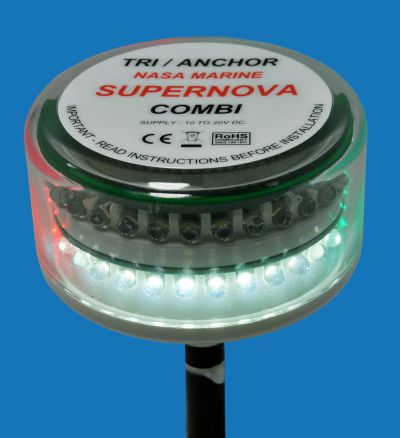
NASA offers anchor, tricolour and Combi forms in the Supernova family. The reviewed model is the straightforward red-green-white sailing tricolour. If an existing separate anchor light is staying aboard, I prefer this version because the wiring and switching remain conventional and the purchase is focused on the underway signal. The related Combi reverses polarity to select tricolour or anchor operation and includes its own switch, but it is a different product and should not be confused with this listing.
That separation also helps fault-finding. A dedicated tricolour circuit can be tested at the panel, mast connection and lamp without a mode-selection arrangement in between. The supplied bracket is worth noting because it avoids turning a £94 purchase into a search for the correct support after the old fitting is removed. Small installation details tend to reveal themselves when the mast is already down and the weather has decided the yard has had enough comfort.
NASA Supernova Tricolour vs Aqua Signal Series 34 vs Hella NaviLED Trio vs Mantagua Tiny Tri
| Model | Price including VAT | Difference vs NASA | Light function | Published range | Supply and draw | Protection and size | Approval and installation detail |
|---|---|---|---|---|---|---|---|
| NASA Supernova Tricolour | £94 | — | Standalone red/green/white tricolour | 2 nautical miles; ±25° vertical sector | 10–20 V; 200 mA at 12 V (2.4 W) | IP65/IP67; 91 × 113 mm | For vessels up to 12 m; generic CE EMC compliance; no national approvals; bracket supplied |
| Aqua Signal Series 34 | £260 | £166 more | Standalone red/green/white tricolour | 2 nautical miles | 12/24 V; 1.9 W | IP67; about 85 × 102 mm | Quick-Fit mount; Marine Equipment Directive approval for vessels up to 20 m |
| Hella NaviLED Trio | £347 | £253 more | Tricolour plus all-round anchor light | 2 nautical miles | 9–33 V; maximum 2 W | IP67 sealed housing | International collision regulations, United States Coast Guard and Registro Italiano Navale approval claims; boats up to 20 m; seven-year warranty |
| Mantagua Tiny Tri | £180 | £86 more | Tricolour plus anchor light | 1 nautical mile | 12 V; 1.8 W | IP67; 40 × 30 mm body plus bracket | For boats up to 12 m; 15 m cable supplied |
Advertised UK prices checked 25 September 2026. Seaware’s Aqua Signal price was advertised before VAT and has been converted to a VAT-inclusive whole-pound figure.
Aqua Signal and Hella bring higher-level approval claims and extend the stated vessel size to 20 metres, but the price rises by £166 and £253 respectively. Hella also includes anchor-light operation, which is additional equipment rather than an improvement to the NASA’s deliberately standalone brief. Mantagua packages tricolour and anchor functions in a very small housing and includes a long cable, yet its published range is one nautical mile and it costs £86 more. For the defined job of a separate tricolour on a private sailing boat up to 12 metres, NASA gives the strongest balance: two-nautical-mile range, very modest 12-volt demand, IP65/IP67 protection, a supplied bracket and a purchase price well below every alternative.
How I would specify the finished job
I would begin with the vessel’s legal and survey requirements, then confirm that the standalone configuration suits the existing anchor-light arrangement. With that settled, I would use a dedicated fused supply, calculate cable size for the complete circuit length and renew any suspect deck or mast connector while access is available. Before the mast goes back into service, I would power the unit, verify each coloured sector from outside the boat and record the circuit current. Clear information at the helm starts with careful work at the masthead.
The 200 mA figure is particularly appealing on a small yacht that spends long nights under sail. It leaves more battery capacity for instruments, radio and cabin essentials without making the navigation signal an afterthought. The polycarbonate shell, pressure-equalising membrane and supplied mount round out a package that feels designed around real masthead constraints rather than around a long list of modes.
My verdict
I would choose the NASA Supernova Tricolour when the boat needs a dedicated tricolour, falls within the maker’s stated 12-metre scope and has no national-approval condition in its specification. It is compact, economical with power, properly specific about its sectors and visibility, and much less expensive than the three live alternatives. That combination makes the buying decision unusually clean once the vessel’s approval requirement has been checked.
For a planned mast job, the sensible moment to replace the light is while every cable and fixing can still be reached. View the NASA Supernova Tricolour Light.
About this review
I used the live Flood Marine listing, NASA Marine’s published technical material and the named UK competitor listings, with prices checked on 25 September 2026. The assessment is editorial; it is not the result of an instrumented performance, durability or sea test. The independent reviewer is Erin McKee, and this article was not written by Flood Marine Services.
More detail