One Rig from Launch to Recovery
The nuisance starts at recovery. The kayak is half afloat, the sounder cable is still looped around something useful, and the transducer arm is hanging where the bank can have a go at it. The RAILBLAZA Kayak and Canoe Sounder & Transducer Mount puts the display and transducer on one removable assembly. At £71, it is a complete rigging kit rather than a lone arm.
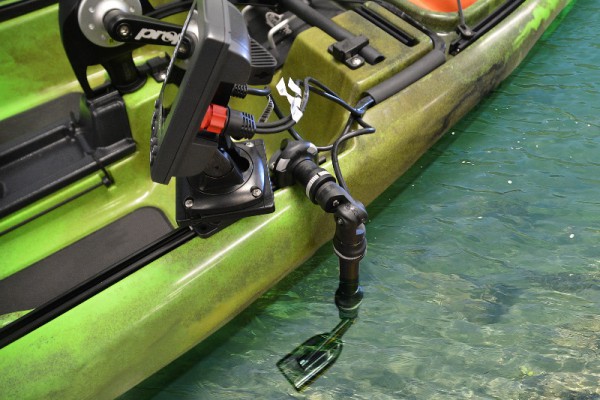
I get a rotating sounder platform, SwivelPort, adjustable knuckle joint, fixed StarPort extender, cheek-mount adaptor and cable ties. The arm drops the transducer into clear water beside a kayak or canoe, which avoids asking the signal to pass through the hull. One slide lock releases the whole setup from a compatible StarPort. That is the bit that earns its keep.
One assembly instead of loose pieces
The platform takes the fishfinder display while the articulated arm carries the transducer. Both move as a unit. I can rig the sounder before launching, lower the arm once afloat, then lift and remove the lot for transport. Kayak rigging has a talent for turning one tidy idea into six loose bits before tea. This kit keeps the important pieces together.
The adjustable knuckle and SwivelPort let me set the display where it is readable without blocking the paddle stroke. The fixed extender raises the working joint above the deck interface, and the cheek adaptor gives the transducer its fixing point at the bottom. Cable ties are included for a clean lead run. Modest things, cable ties, but a loose lead can invent a fresh nuisance on every stroke.
The mounting StarPort itself is sold separately, so I would choose the base for the craft: a surface-mounted, track-mounted or other compatible RAILBLAZA port where the structure can take the load. That is an honest part of the fit, not a hidden afterthought. Once the base is installed, the slide lock gives one-click removal and lets the assembly move between compatible craft.
Depth, shallows and the launch sequence
The transducer needs clean water below it, not bubbles rolling along the hull. I would set the arm deep enough for a steady reading while keeping drag and exposure sensible. If more depth is needed, RAILBLAZA says an extension can be added. The factory-set friction joints let the arm lift when entering shallow water, which is much quicker than reaching for a spanner while drifting towards gravel.
That lift also helps during landing. Raise the transducer before the hull meets the slip, weed or beach, then release the entire assembly after coming alongside. A dangling arm during recovery has all the grace of a garden gate in a gale. The kit gives it a proper parked position and a quick way off the boat.
I would route the cable with a service loop at each moving joint, enough slack for adjustment and no loose section near feet, paddle or pedal drive. The display lead and transducer connector should remain supported and within their manufacturer’s bend limits. A neat route makes the whole assembly easier to lift away and avoids using the plug as a handle.
Materials and practical durability
The main mouldings are ultraviolet-stabilised, glass-reinforced nylon, with stainless-steel fasteners. That is a sensible material mix for a light craft because it avoids a heavy metal frame while keeping the joints stiff. I would still rinse the assembly after salt water, inspect the fasteners and slide lock, and check the joint tension before a trip. Tough gear lasts longer when grit is not invited to live in every moving part.
The modular layout matters for working use too. A guide, club boat or angler who moves electronics between hulls can leave compatible ports fitted and carry the valuable display and transducer away together. The same logic helps storage in a shed or vehicle. Nothing electronic needs to stay exposed on the deck, and the low-profile port is all that remains.
RAILBLAZA Sounder & Transducer Mount vs YakAttack SwitchBlade vs Scotty 141 vs Berkley Fish Finder Holder 29–52 cm
| Mount system | Current UK price | Difference vs RAILBLAZA | Sounder display support | Transducer support | Deck interface | Recovery and transfer | Shallow-water adjustment | Materials and included extras |
|---|---|---|---|---|---|---|---|---|
| RAILBLAZA Sounder & Transducer Mount | £71 | — | Rotating sounder platform included | Adjustable articulated arm with cheek adaptor | SwivelPort and fixed StarPort extender; mounting StarPort sold separately | Whole display-and-transducer assembly releases with one slide lock | Factory-set friction joints let the arm lift clear | Ultraviolet-stabilised glass-reinforced nylon, stainless fasteners and cable ties |
| YakAttack SwitchBlade | £63 | £8 less | No sounder platform included | Folding hydrodynamic arm; length can be altered | Fits CellBlok, deck mounts or compatible track systems | Arm articulates in and out of the water | Multi-pivot folding arm | Arm-only package; separate display support and compatible base required |
| Scotty 141 | £45 | £26 less | Separate fishfinder mount required | Composite arm with gear-head adaptor | Uses Scotty mounting hardware | Arm pivots and swivels; display remains a separate mounting job | Pivoting arm can be raised | High-strength non-corroding composite; compact arm package |
| Berkley Fish Finder Holder 29–52 cm | £55 | £16 less | Rotating top plate for larger fishfinders | Telescopic aluminium arm adjusts from 29 to 52 centimetres | Berkley locking base included | Display and arm share one base | Telescopic rather than friction-lift arm | Glass-reinforced nylon, grade-304 stainless fasteners and aluminium arm |
YakAttack is £8 less and offers a tidy folding, low-drag arm, but the sounder platform and compatible mounting interface remain separate jobs. The Scotty costs £26 less and provides a compact composite arm with gear-head adaptor, though the display needs its own mount. Berkley is £16 less and comes closest as a combined package, with a locking base, rotating platform and 29–52-centimetre telescopic arm. I still put the £71 RAILBLAZA first because its included rotating platform, articulated transducer support, SwivelPort, extender and cheek adaptor form one removable module, while the friction joints deal naturally with shallow water and the StarPort slide lock releases both display and transducer in one action. It is the strongest package for quick launch, recovery, storage and transfer rather than merely the lowest purchase price.
How I would set it up
I would sit in the kayak on dry land first and mark a position that keeps the screen inside easy reach without crowding the paddle or entry area. Then I would confirm that the transducer clears the hull through the full range of adjustment. Only after that would I fit the selected StarPort base. Measuring twice remains cheaper than becoming philosophical about an extra hole.
Next I would attach the display, secure the transducer, dress the cable and test every joint. On the water, I would lower the arm, check for spray or vibration and compare the sounder reading at rest and under way. If the picture deteriorates, I would adjust depth and angle rather than force the arm farther down. The goal is clean water around the transducer and a screen position I can read without twisting away from the course ahead.
My verdict
I would buy the RAILBLAZA kit at £71. It solves the complete small-craft job: support the screen, place the transducer in the water, lift it in the shallows, remove the entire rig quickly and leave only the chosen StarPort behind.
The alternatives all offer useful mounting parts, but this kit joins the launch, fishing and recovery stages most convincingly. Firm, simple and worth the extra pounds. See the exact RAILBLAZA Sounder & Transducer Mount at Flood Marine.
About this review
Specifications and prices were checked against the live Flood Marine listing, current RAILBLAZA material, official YakAttack and Berkley information and the named current UK competitor listings on 30 September 2026. This is an editorial assessment rather than an instrumented performance, durability or sea test. The independent reviewer is Ciaran Hughes. The article was not written by Flood Marine Services.