A small centre-console that makes room for the whole day
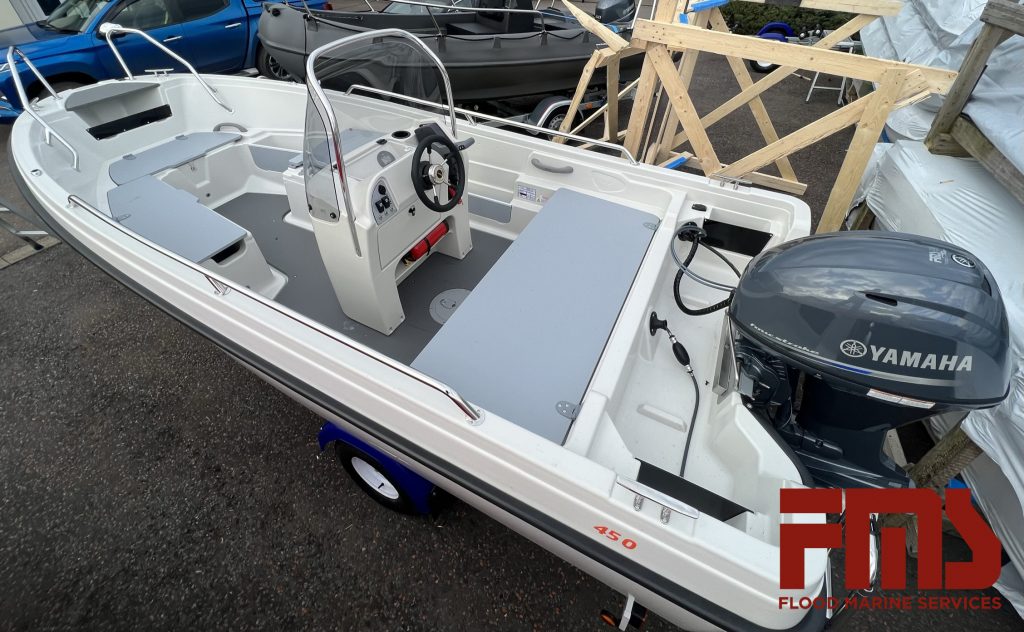
A day boat fills up before anybody steps aboard. Coats, fuel, a cool box, fishing gear and the bag that was definitely packed “light” all need somewhere to go. Add five people and the clever part is not making a 4.45-metre boat look spacious in a photograph. It is keeping the deck easy to move around once real life arrives.
At £6,190 including VAT, the Terhi 450 CC includes its centre console, windscreen and steering position before the outboard and trailer are added. The open self-draining deck and four lockable storage spaces are standard too. I think that is the right place for this boat to begin. The useful layout is already moulded into it, then the engine and equipment can be chosen around the days it will actually have.
The console belongs in the middle
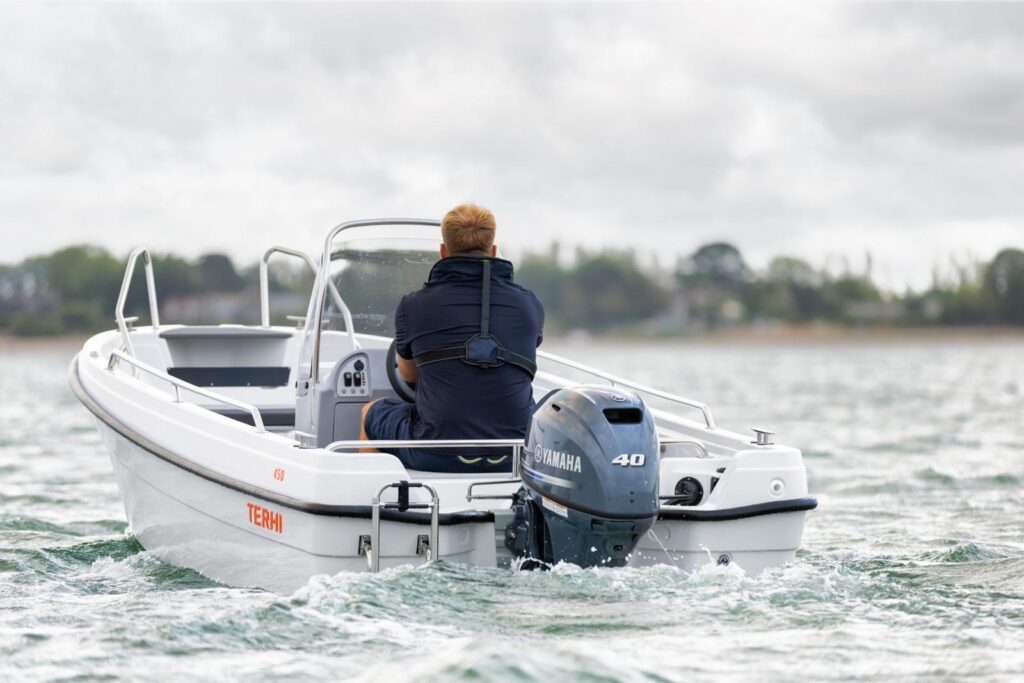
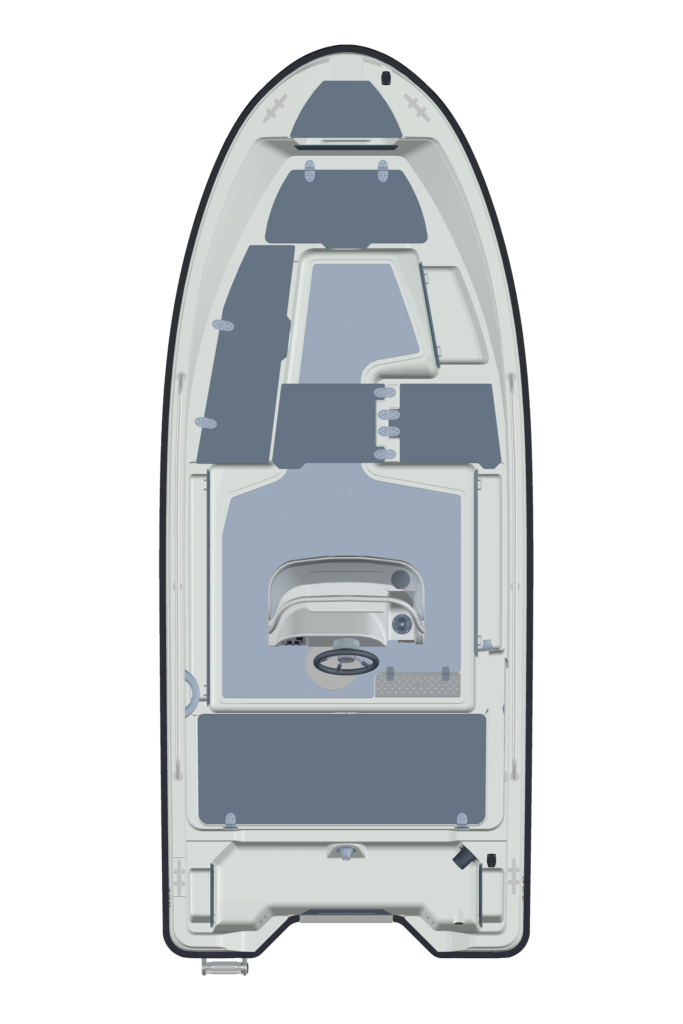
A central helm leaves a clear route along both sides. That sounds obvious until two people try to pass a side console while another is dealing with a rope. On the Terhi, the driver can stand or sit close to the centreline and passengers can move fore and aft without squeezing through one narrow passage. Weight is easier to spread as well, particularly when the boat is being used by one person.
The windscreen is modest but properly placed, and stainless handrails give people something solid to take hold of around the helm. There is no attempt to turn a small open boat into a cabin cruiser. Instead, the console provides shelter for the driver, a proper home for controls and instruments, and a lockable place for the battery and main switch. The rest of the boat stays open.
I can see the 450 CC working particularly well for a family that fishes one weekend and heads to a beach the next. The forward seating can take people on a calm run, then becomes useful working space when rods or bags come out. The aft bench gives everybody a settled place without filling the middle with fixed furniture. It feels like a boat designed to change its mind during the day, which is very often what families do.
Storage that prevents the usual heap
Terhi provides four lockable storage areas, including a long dedicated space for oars. That last locker is better than it sounds. Oars left across the floor are always under the foot that needs to move next; putting them away keeps the deck clear without leaving them ashore. The other lockers take safety equipment, mooring gear and personal bags out of the weather and away from wet feet.
The deck drains by itself when the boat is afloat and correctly loaded. On a small open boat, that is part of everyday comfort rather than a glamorous specification. Rainwater and spray have somewhere to go, the floor is easier to wash down, and a wet afternoon does not turn every loose item into part of a puddle.
What sits beneath the easy-clean surface
Terhi thermoforms an inner and outer shell from acrylonitrile butadiene styrene, normally shortened to ABS, then fills the space between them with closed-cell polyurethane foam that does not absorb water. The result is a stiff, buoyant sandwich structure. It also takes away much of the hollow noise that can make a small boat tiring in a short chop.
The transom is reinforced, and the product listing gives a 20 to 40-horsepower range with a maximum engine weight of 105 kilograms. Terhi’s current factory page now recommends 40 horsepower. I would build the normal all-round package around that 40-horsepower position when five people and their kit are likely to be aboard. It gives the hull useful authority without moving beyond the weight and power for which it was designed.
The boat weighs 310 kilograms before the engine and equipment. That is not featherweight, but the construction, deep internal sides and settled feel account for the mass. On the trailer it remains a compact package, while on the water it has enough substance that people are not constantly adjusting themselves around every movement.
Terhi 450 CC vs Pioner 14 Active vs Pioner 15 Allround vs Rigiflex CAP 400 Console
| Centre-console boat | Price including VAT | Size and bare weight | People and power | Helm and deck | Storage and hull |
|---|---|---|---|---|---|
| Terhi 450 CC | £6,190 | 4.45 × 1.85 m; 310 kg | 5 people in category C; listing 20–40 hp; current factory recommendation 40 hp | Central console and windscreen; clear access both sides; self-draining open deck | Four lockable stores including oar space; foam-filled ABS double shell; reinforced transom |
| Pioner 14 Active Special Edition | £9,800 | 4.11 × 1.73 m; 220 kg | 4 people in category C; maximum 30 hp | Console, windscreen, rails, backrest and ladder | Rotomoulded polyethylene; storage beneath seats |
| Pioner 15 Allround Special Edition | £11,975 | 4.70 × 1.80 m; 310 kg | 5 people in category C; maximum 40 hp | Console, windscreen, rails, backrest and ladder | Rotomoulded polyethylene; practical seating lockers |
| Rigiflex CAP 400 Console | £6,895 | 4.00 × 1.90 m; 200 kg | 4 people in category C; maximum 40 hp | Side console and windscreen; open working deck | Rotomoulded polyethylene; forward, side and rear lockers |
Advertised boat prices and published specifications checked 10 September 2026. Engines, trailers and optional equipment are not treated as included unless the named package says so.
The useful differences appear in the last two columns
The Terhi is not simply the lowest figure in a row. Against the Pioner 14, it is longer, carries one more person in category C and accepts another 10 horsepower, while the central walkway and four lockable stores are already part of its everyday usefulness. The Pioner 15 comes closest on size, headcount and power, but it starts £5,785 higher. Rigiflex has a broad, tough open hull, though its category C allowance is four and its side console does not give the same balanced movement around the helm.
Look at the whole day and the Terhi keeps winning small arguments. Five people have rated capacity. Gear has lockable homes. Oars disappear below deck. The driver sits centrally. Both sides remain passable. The 40-horsepower ceiling suits a properly loaded family boat. None is a dramatic party trick, and that is exactly why the package feels convincing. These are the details used every trip.
I also prefer where the price leaves the finished package. The boat starts with the layout and safety structure complete, so the remaining spend can concentrate on a Yamaha outboard, trailer, cover and electronics chosen for the owner. The dearer boats do not suddenly make the Terhi’s centre-console arrangement less useful. If anything, they show how much function is already present.
Where I land
I would choose the Terhi 450 CC for a family that wants one small boat to do several jobs well. It is easy to walk through, straightforward to clean and organised enough that bags and oars do not take over the floor. The foam-filled hull, reinforced transom and five-person category C rating give the friendly layout proper substance.
What stays with me is how settled it feels on paper before an engine is even fitted. Nothing important has been chased to one side, and nobody’s seat has stolen the working deck. It is a compact boat with the manners of a larger one. View the Terhi 450 CC product page.
About this review
Prices and specifications are based on manufacturer information and live advertised UK listings checked on 10 September 2026. This is an editorial assessment rather than an instrumented sea test. The article was written by Cara Donnelly and was not written by Flood Marine Services.