Compact hull, hard-working manners
The nuisance with a small tender is that it gets treated as small. Then the fuel can, two bags, a coil of line and a pair of boots arrive at once. I want the hull beneath that lot to feel like proper equipment. The Whaly 210 does. It is only 2.10 metres long, yet its one-piece, double-walled polyethylene build is aimed at repeated use, rough handling and the ordinary knocks that come with a marina, club or working shore.
At £723 including VAT, I see it as a compact hard boat rather than a disposable dinghy. Whaly publishes a 42-kilogram hull weight, 1.16-metre beam, 0.15-metre draft, two-person limit and 165-kilogram maximum load. Power is capped at 2.5 horsepower on a short shaft, with a 20-kilogram engine-weight limit. Those are modest numbers. They are also clear numbers, which is useful when a tiny boat is expected to do an honest job.
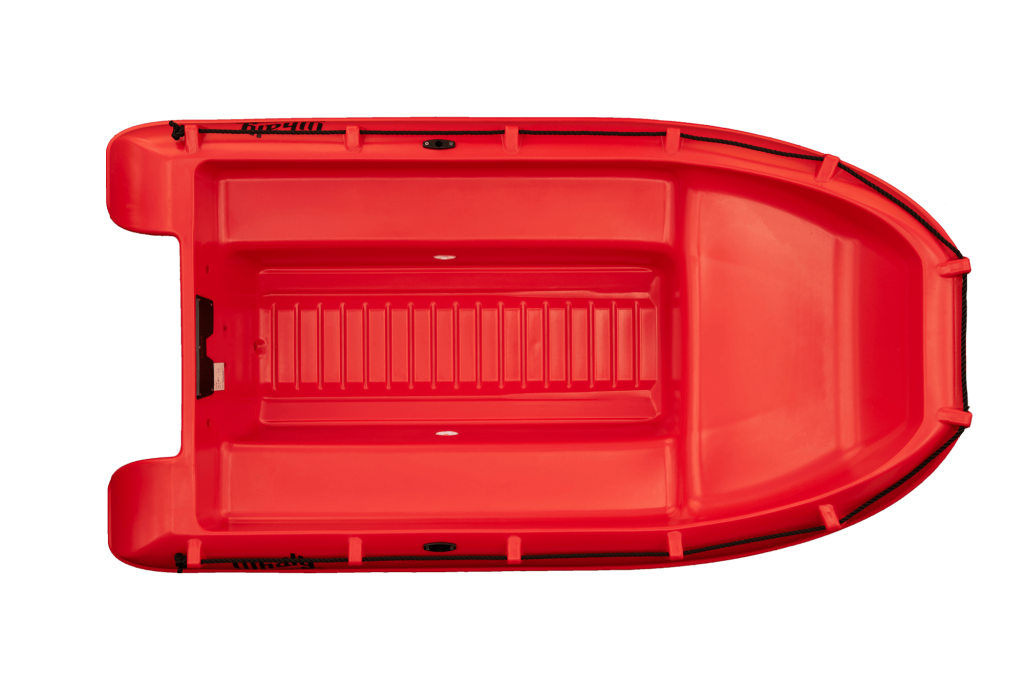
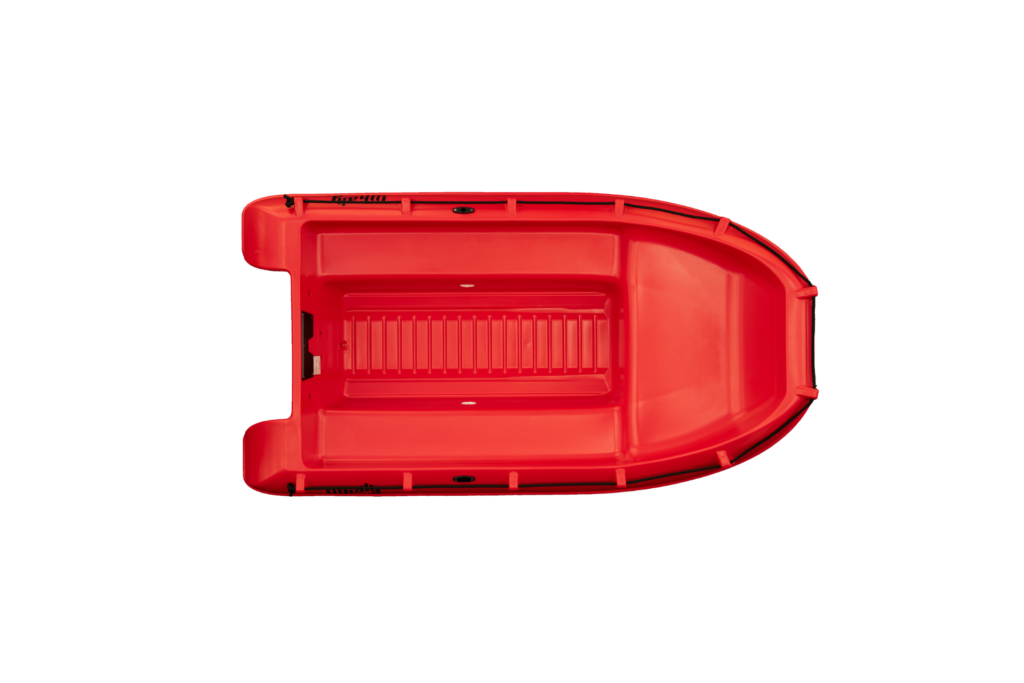
Whaly 210 vs TAHE Sportyak 213 vs Fun Yak FY220 Helix vs Pioner 8 Mini
| Compact tender | Current price | Difference | Length × beam | Hull weight | Persons and load | Outboard limit | Construction | Practical fit |
|---|---|---|---|---|---|---|---|---|
| Whaly 210 | £723 | Reviewed model | 2.10 × 1.16 m | 42 kg | 2 people; 165 kg manufacturer limit | 2.5 horsepower; short shaft; 20 kg engine maximum | One-piece, double-walled rotomoulded polyethylene | Integrated bow/stern towing eyes, lifting eyes and round bench; oars, rowlocks and rowing seat optional |
| TAHE Sportyak 213 | £625 | £98 less | 2.13 × 1.15 m | 23 kg | 2 people; 170 kg | 2 horsepower through an optional removable motor mount | Hollow twin-sheet polyethylene catamaran hull | Two oars, two rowlocks, three holders and grab line included |
| Fun Yak FY220 Helix | £799 | £76 more | 2.20 × 1.30 m | 35 kg | 3 people; 225 kg distributed load | 4 horsepower; short shaft; 13 kg engine maximum | Double-rotomoulded polyethylene, double-concave hull | Engine panel, rowlocks, bait locker, bench, ball wheels, drain and deck lashing; oars optional |
| Pioner 8 Mini | £2,065 | £1,342 more | 2.42 × 1.34 m | 54 kg | 2 people; certified category-D rating | 3.5 horsepower; short shaft | One-piece recyclable polyethylene, double-hull design | Pair of 1.8 m oars standard, longitudinal seating and oar-retaining straps |
I rate the Whaly 210 as the strongest overall purchase for the compact hard-use job. The TAHE is £98 less and 19 kilograms lighter, but its motor needs an optional mount and is limited to 2 horsepower; the Whaly gives me a defined short-shaft transom, a 20-kilogram engine allowance and built-in lifting and towing eyes. The Fun Yak costs £76 more and carries more people and load, but its larger footprint and 13-kilogram engine limit point to a different balance. The Pioner is a sound, larger certified tender with oars included, yet it is 32 centimetres longer, 12 kilograms heavier and £1,342 dearer. For repeated lifting, short harbour transfers and hard shore work, the Whaly combines the useful structure, compact size and price most convincingly.
A hull made for the unglamorous jobs
I start with the polyethylene because it explains the boat. The hull is rotomoulded in one piece and uses a double wall. That gives it buoyant volume and a substantial skin without seams, fabric tubes or a painted gelcoat surface taking the first contact. I would still handle any boat with care, but I would be far less anxious about a routine rub on a timber pontoon, a gravelly launch edge or boots grinding a little sand into the floor.
That matters in commercial and high-turnover use. A sailing club tender can make the same short run dozens of times. A marina boat gets pulled, pushed and tied by different hands. A hire or training operation needs a hull that tolerates repeated knocks and returns to work after an ordinary wash and inspection. Whaly’s colour is carried through the ultraviolet-stabilised plastic, while the simple open form leaves few decorative parts to nurse. For me, that is reliability in a work tender: robust structure, few delicate parts and an easy visual inspection before the next run. A tender rarely meets a pontoon with the manners promised in the brochure.
Stability and safety in a very small footprint
At 1.16 metres across, the Whaly 210 is broad for its length. I like the low, rounded seating position because it keeps weight down and leaves a straightforward route for boarding. The double wall adds reserve buoyancy, and the shallow draft suits sheltered slips, river edges and short approaches to a mooring. None of that changes the published limits. I would work to two people and 165 kilograms, distribute bags low and evenly, and read the boat’s own plate and manual before loading.
Whaly lists the model in category D without a Conformité Européenne (CE) certificate. In plain terms, I treat it as a sheltered-water tender, not a little offshore boat. Its safety comes from using the strong, stable hull inside the conditions and capacity intended for it. I also like having proper towing eyes at bow and stern plus lifting eyes. They give a club or yacht owner defined attachment points, which is better than inventing a lifting arrangement with whatever rope happens to be dampest.
Launching, carrying and stowing
Forty-two kilograms is light enough for two fit adults to manage sensibly, but it is not a suitcase. I would plan the lift, clear the route and use a small trolley where the distance warrants it. The tide keeps no diary, and the trolley wheel normally chooses that moment to sulk. The hull’s short length helps on a foredeck, a davit arrangement or a compact yard rack, while the lifting eyes make repeat handling more orderly.
Rowing or small Yamaha power
The 210 can be set up with optional oars, rowlocks and a rowing seat. I would specify those for a tender even if a small outboard is fitted, because rowing remains the quiet, direct answer over a short distance. The alternatives include more standard rowing gear, particularly the TAHE and Pioner, but the Whaly lets the buyer build the simple package around the actual job rather than carry fittings that will sit unused.
For power, the short-shaft transom and 2.5-horsepower ceiling suit gentle displacement running. I would match engine weight as carefully as power: Whaly’s maximum is 20 kilograms. A compact Yamaha variant within both limits makes sense where petrol power is wanted, and any visible outboard imagery used with this review should remain Yamaha. Correct trim, secure fuel stowage and balanced loading matter more here than chasing speed. Small boats collect rope ends as if paid by the knot, so I would keep the stern and propeller area particularly clean.
What earns the price
The TAHE’s included oars and very low weight are clear facts. The Fun Yak brings capacity and wheels. The Pioner brings more size and certification. I still come back to the Whaly because it sits in the middle where a working tender needs to be: more structurally prepared for powered and lifted use than the lightest alternative, less bulky and costly than the larger choices, and backed by Whaly’s established focus on polyethylene work and leisure craft.
Ciaran’s verdict
I would buy the Whaly 210 for a marina, club, yacht or shore base needing a small tender that will be used often and handled firmly. Its 42-kilogram hull remains manageable, the two-person layout is stable and honest, and the double-walled polyethylene construction is built for repeated knocks and hard work.
My verdict is firm: the Whaly 210 is the best overall buy in this group for compact, dependable tender duty. It puts strength, safe stability, lifting points and low-fuss ownership ahead of frills, while keeping the price at £723. View the Whaly 210 at Flood Marine.
About this review
I based this editorial assessment on the live Flood Marine product page, Whaly.com and its current manufacturer specification, plus current TAHE, Fun Yak and Pioner manufacturer material and the cited UK price listings. I checked the advertised prices on 15 September 2026. I have written this as an editorial assessment, not as an instrumented sea, performance or durability test. My name is Ciaran Hughes and I am the independent reviewer; Flood Marine Services did not write the article.