The £9,000 workboat built for a hard life
A workboat gets knocked. Not because the crew is careless, but because pontoons move, fenders ride up and a box of gear has never once apologised for landing hard. The Whaly 500R Professional is built with that life in mind. It is a broad, open polyethylene boat for harbours, fisheries, clubs, rescue support and commercial crews that expect the hull to turn up again tomorrow looking ready for another day.
The open hull costs £9,056 including VAT. Engine, console, benches and trailer are chosen around the job. I prefer that to paying for a fixed leisure layout and removing half of it. The 500R Professional begins as a tough platform, and every fitting has to explain what useful work it will do. Decorative cushions are charming until somebody puts a creel on them.

The strength is in the hull, not the adjectives
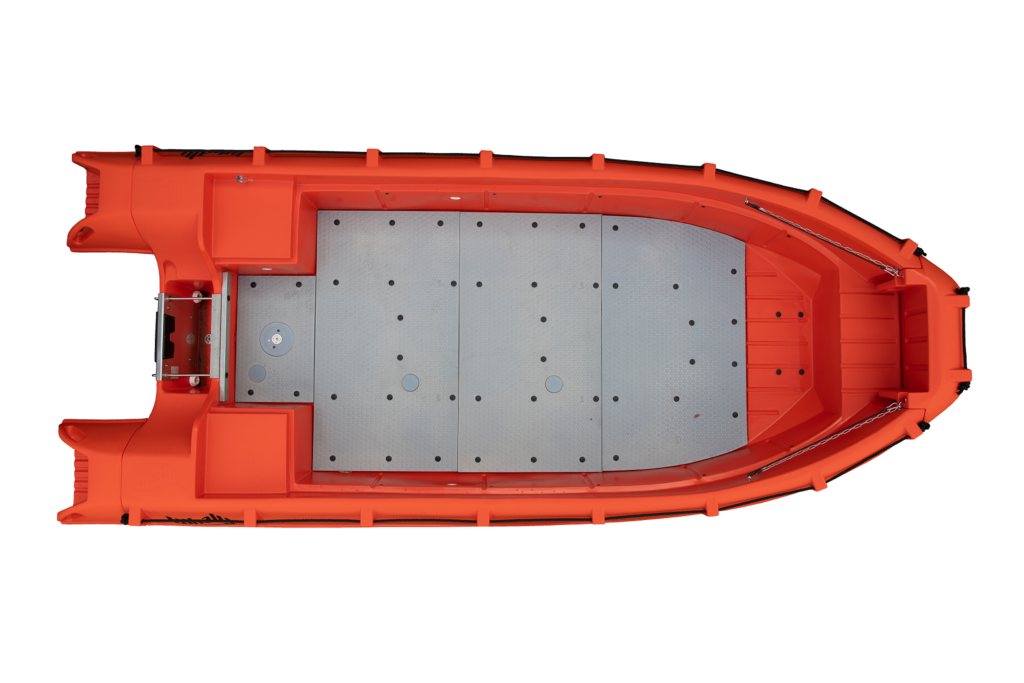
Whaly moulds the inner and outer structure from high-grade ultraviolet-stabilised polyethylene and puts a foam layer between them. The resulting double-wall hull is thick, buoyant and highly tolerant of impacts. Scrapes do not expose a contrasting gelcoat layer, and the material is well suited to repeated contact with rough landing places. This is why Whaly boats turn up in commercial, harbour and safety work: they are made to take a beating and carry on with the job.
The hull measures 4.99 metres by 2.10 metres and weighs 450 kilograms before machinery and equipment. Official current figures give it capacity for ten people in category C and twelve in category D, with a maximum load of 1,050 kilograms in category C and 1,200 kilograms in category D. The maximum outboard is 60 horsepower with an engine-weight limit of 120 kilograms.
Those are unusually serious carrying figures for a boat under five metres. More important, the load can be used on an open deck rather than squeezed between moulded seats. Crew can move, equipment can be lashed where it belongs, and the helming position can be planned around the work. A number on a plate is useful. A deck that lets the number make sense is better.
Stable space for untidy jobs
The broad beam and squared working shape give the 500R a settled stance when people shift around. That is valuable for lifting pots, moving stores, coaching from the side or helping somebody aboard. The professional model has added reinforcement for demanding use, while the removable and optional furniture lets a buyer decide how much open floor is more valuable than seating.
I would keep the arrangement simple: a clear route to the bow, secure places for the crew and no fitting added merely because there is room for it. On this hull, empty deck is working capacity. It gives ropes somewhere to run, boxes somewhere to sit and people somewhere to put a foot when the boat moves.
A central console keeps routes open on both sides and suits a mixed crew. A tiller arrangement preserves even more deck and reduces fittings. Benches can create secure places for passengers or storage. There is no single correct layout because a harbour launch and a rescue-support boat do different days. The hull leaves that decision open until the job is clear.
Power is similarly straightforward. A Yamaha in the recommended part of the range gives the boat dependable control with load aboard, while the 60-horsepower ceiling leaves enough authority for tide and commercial gear. The finished setup still depends on weight distribution and propeller choice, but the hull has the capacity and transom rating to become a proper working package rather than an oversized tender.
Whaly 500R Professional vs Pioner Multi III vs Highfield Patrol 500 vs Rigiflex CAP 400
| Workboat | Price including VAT | Size, weight and load | Crew and power | Hull protection | Working layout |
|---|---|---|---|---|---|
| Whaly 500R Professional | £9,056 | 4.99 × 2.10 m; 450 kg; 1,050 kg category C load | 10 people category C / 12 category D; maximum 60 hp | UV-stabilised polyethylene double wall with internal foam layer | Open reinforced deck; console and benches positioned around the job |
| Pioner Multi III | £17,660 | 5.30 × 2.15 m; 466 kg | 8 people category C / 10 category D; maximum 80 hp | Rotomoulded polyethylene | Bow door and broad working deck; console and equipment selected around use |
| Highfield Patrol 500 | From £20,461 | 5.00 × 2.28 m; about 441 kg | Up to 10 people; maximum 100 hp | Aluminium deep-V hull with inflatable tubes | Console package, self-draining deck, keel guard and 90 L under-deck fuel tank |
| Rigiflex CAP 400 Console | £6,895 | 4.00 × 1.90 m; 200 kg | 4 people category C / 7 category D; maximum 40 hp | Rotomoulded polyethylene | Side console, open deck and lockers; one metre shorter than the Whaly |
Advertised prices and published specifications checked 10 September 2026. Open hulls and fitted console packages are identified separately; engine and trailer contents follow each seller’s listing.
The Whaly keeps the comparison on the job
Pioner’s Multi III has a very useful bow door and accepts more horsepower, but it costs £8,604 more and its published category C headcount is lower. Highfield brings deep-V aluminium construction, tubes, a fuel tank and a faster 100-horsepower package, at more than twice the Whaly’s starting figure. Rigiflex is less money, but it is a full metre shorter, carries four people rather than ten in category C and stops at 40 horsepower.
That leaves the Whaly in a strong and quite specific place. It offers the five-metre working area, ten-person category C rating, foam-backed double wall and 1,050-kilogram category C load without moving the buyer into a heavily equipped £17,000–£20,000 platform. The lower-priced Rigiflex does not reproduce the capacity. The dearer boats add specialised features, but neither makes the Whaly’s strength, stability and load figures look second-rate.
I would spend the difference on the parts that determine whether a workboat earns its keep: the right Yamaha, a console where the skipper needs it, secure seating for the actual crew, heavy-duty fittings and a trailer matched to the finished load. The 500R lets that money go into the job rather than into a layout chosen by somebody else.
What life with it looks like
The Whaly will not need polishing every time it brushes a fender, and muddy decks are dealt with by a hose rather than a family meeting. Fittings still need inspection. The engine still needs serviced. Any commercial boat needs its safety equipment and loading managed properly. None of that changes the central advantage: the hull itself is robust, stable and happy around repeated knocks.
For leisure use, those qualities are reassuring rather than excessive. Children, dogs, fishing boxes and beach gear can all be hard on a boat in their own inventive ways. The professional character means an owner can concentrate on the day instead of guarding the finish. For commercial use, it means fewer reasons for the boat to be standing idle.
Ciaran’s verdict
I like the Whaly 500R Professional because there is very little pretending involved. It is strong, carries a serious load and gives ten people category C capacity on an open deck that can be arranged properly. The foam-layered polyethylene hull is built for punishment, and the broad shape gives a working crew the stable space it needs.
The table contains boats with more power, more equipment and a lower starting price. None matches this particular combination of toughness, carrying capacity and five-metre working room for £9,056. The Whaly is the one I would send back out when the forecast, the gear and the crew all have notions of their own. View the Whaly 500R Professional product page.
About this review
Prices and specifications are based on manufacturer information and live advertised UK listings checked on 10 September 2026. This is an editorial assessment rather than an instrumented sea or load test. The article was written by Ciaran Hughes and was not written by Flood Marine Services.