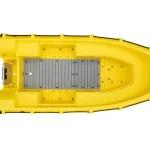
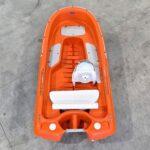
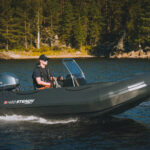
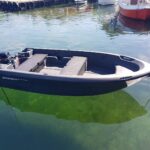
A four-metre boat built for a hard working life
A working boat should be ready for work. Wet ropes. Muddy boots. Tools dropped on the deck. A bump against a pontoon when the wind catches it. The Whaly 400 is built for that sort of life, and that is why it makes sense for harbour jobs, fishery work, clubs, estates, rescue support and families who want a boat they can use hard. If a boat needs a quiet word every time a toolbox lands badly, it has chosen the wrong career.
It is priced at £4,652 including VAT as an open hull, before the outboard, trailer and chosen console or seating are added. There is no polished interior pretending to be useful and nothing aboard needs a velvet rope around it. The middle is open, the sides are high and the double-wall polyethylene hull is made to take knocks. I judge a workboat by what it will put up with on the fiftieth launch, not by how shiny it looks on the first.
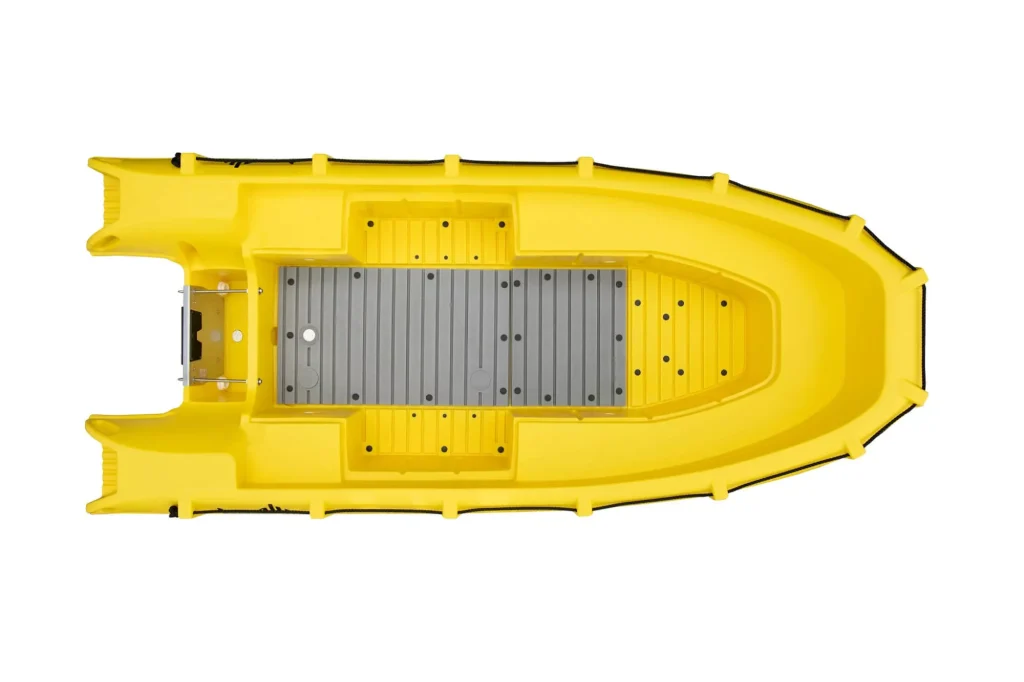
Made to take a beating
The Whaly 400 is moulded in one piece from ultraviolet-stabilised polyethylene. Inner and outer walls form the hull, giving it the solid feel and built-in buoyancy that have made Whaly boats common in demanding commercial and safety roles. Whaly describes the construction as almost unsinkable and virtually indestructible. Sensible words are still needed around any boat, but the basic point is sound: this hull is designed to be strong, reliable and difficult to upset with ordinary hard use.
Polyethylene handles the knocks that come with pontoons, trailers and working gear very well. Colour goes through the material rather than sitting in a thin painted layer. Scrapes do not become an afternoon spent matching gelcoat. The inside washes down easily. There are fewer delicate panels and finishes to damage. That all matters when a boat has to go back out tomorrow. There is no useful prize for being the cleanest boat tied to the pontoon.
It is 3.95 metres long, 1.75 metres wide and about 210 kilograms as a bare hull. The current Whaly specification lists six people in CE categories C and D, a maximum load of 522 kilograms and a maximum outboard of 50 horsepower, with 20 to 40 horsepower recommended. Those are strong figures for a four-metre boat. More importantly, the broad floor and high sides make the capacity usable.
There is room to do a job
Open deck space is not an absence of features. On the Whaly it is the main feature. Fishing boxes can sit where they are easy to reach. A rescue crew can move without stepping around fixed lounge seats. Dive kit, mooring gear or tools can be secured around the task. A family gets a boat that will carry beach bags and wet clothing without anybody worrying about the upholstery.
The 400 can remain a straightforward tiller boat or be fitted with a console, benches and a frame. A tiller keeps the deck as open as possible. A console gives a more sheltered driving position and a proper place for instruments. Both setups begin with the same hard-wearing hull, so the boat can be arranged around its use instead of having the use dictated by moulded furniture.
Power for leisure and commercial use
The recommended 20 to 40 horsepower range covers most normal setups. A lighter tiller package suits sheltered work and simple transport. The upper end gives useful authority when people, equipment and tide arrive together. The hull is approved for up to 50 horsepower in the current manufacturer specification, leaving a good range of Yamaha choices for leisure, rescue and commercial duties.
Commercial use is where the Whaly character is clearest. Repeated short runs, gear coming aboard, people stepping over the side and regular contact with rough landing places are all ordinary parts of the day. The strong double wall, stable beam and uncluttered deck suit that routine. For leisure owners, the same toughness brings peace of mind. A robust boat is no less useful because the cargo happens to be children and fishing rods.
Whaly 400 vs Rigiflex New Matic 400 vs Pioner 400 Steady vs Pioner 14 Active
| Boat | Price including VAT | Difference | Length × beam | Bare weight | Capacity / power |
|---|---|---|---|---|---|
| Whaly 400 | £4,652 | — | 3.95 × 1.75 m | About 210 kg | 6 people; 522 kg load; maximum 50 hp |
| Rigiflex New Matic 400 | £4,450 | £202 less | 4.00 × 1.90 m | 180 kg | 4 people in CE category C; maximum 40 hp |
| Pioner 400 Steady | £5,705 | £1,053 more | 4.00 × 1.80 m | 200 kg | 6 people; maximum 40 hp |
| Pioner 14 Active | £6,285 | £1,633 more | 4.11 × 1.73 m | 220 kg | 3 or 4 people; maximum 25 hp |
Advertised prices checked 8 September 2026 for open hulls or standard boats. Engines, trailers and optional consoles are excluded unless the listing states otherwise.
The numbers favour the Whaly
The Rigiflex is £202 less, but its published CE category C limit is four people and its maximum power is 40 horsepower. The Whaly carries six, takes up to 50 horsepower and brings the thick, double-wall construction that gives it such a strong commercial reputation. That is a great deal of extra boat for a small difference.
The two Pioners do not improve the case. The Pioner 400 Steady is roughly the same size and weight. It is more than £1,000 dearer, yet it still carries six people and takes up to 40 horsepower. The Pioner 14 Active costs £1,633 more, carries fewer people and stops at 25 horsepower. Across the four boats, the Whaly gives the best mix of strength, carrying ability, power choice and price.
That comparison is not won by one isolated number. It is won by the full working picture. The Whaly has a stable footprint, useful freeboard, a clear deck and a hull that does not need pampered. It can be set up for a job, knocked about during the job, washed down and sent out again. The alternatives do not put that same combination on the water at a better figure.
Simple ownership is part of the appeal
There is less cosmetic fuss with a Whaly. Rinse the hull, clear the drainage, look after the fittings and keep the engine serviced. The material does not need polishing to stay useful. If a polyethylene repair is ever required, it needs the correct plastic-welding process, but everyday scuffs and bumps are exactly what this construction is meant to tolerate.
The safety benefit is practical too. The deck is easy to see and keep clear. Crew have room to move. High sides and the broad stance make the boat feel steady for its length. The double wall adds reserve, while the load and power figures leave room to build a useful package. None of that is decorative. It is the reason these boats earn their keep in commercial fleets as well as at family moorings.
Ciaran’s word on it
I would take the Whaly 400 from this group without making a meal of it. It is strong. It is stable. It carries six people, accepts a useful range of Yamaha outboards and leaves the deck free for whatever needs done. Most of all, it can take a beating without turning every mark into a crisis.
For work, rescue support, training or tough family use, that reliability is worth more than polished trim. The Whaly gets on with the job and comes back ready for the next one. View the Whaly 400.