Faster Automatic Control
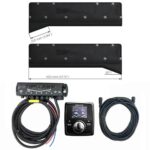
At the helm, trim control proves its value when the load moves, the wind comes onto the beam and the bow begins to hide the water ahead. I want the correction to arrive before I start chasing the boat with switches. The Zipwake Series S 450S Chine kit brings automatic pitch, active roll and balanced-turn control into one package, and its live Flood Marine whole-pound price is £3,567.
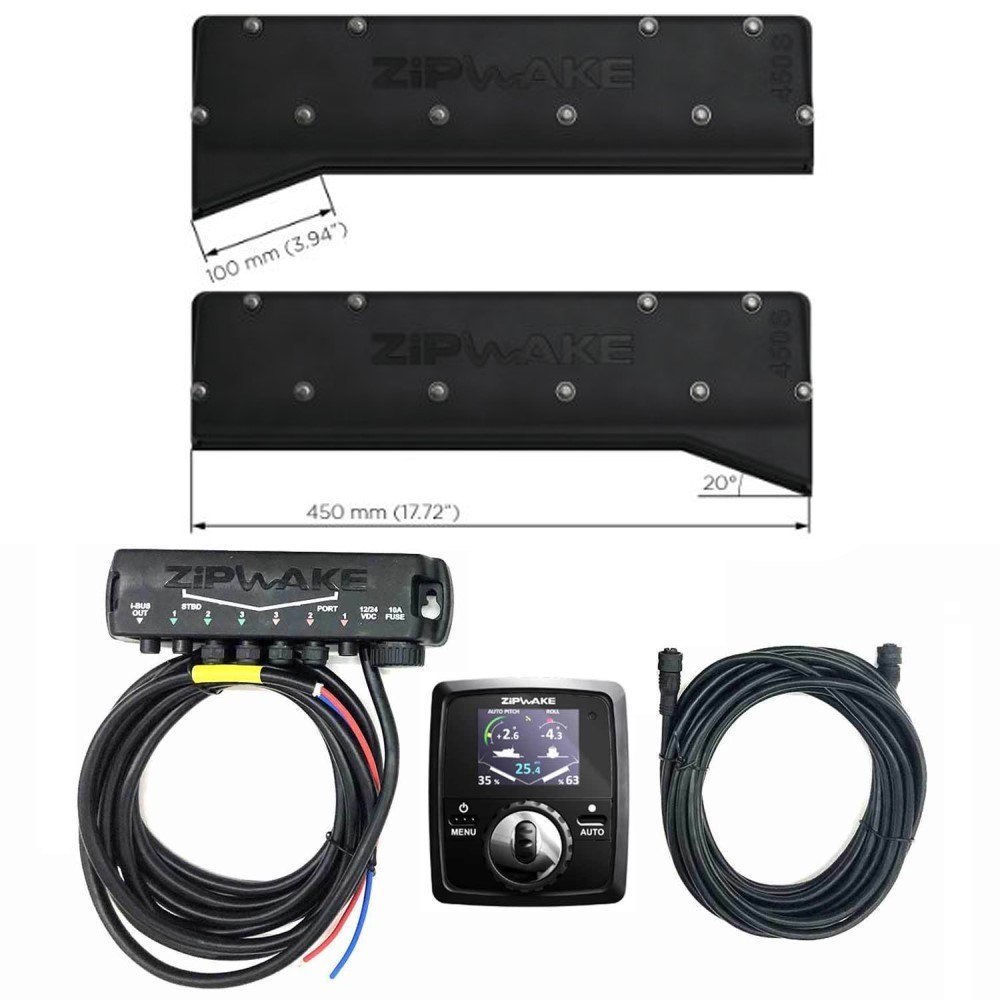
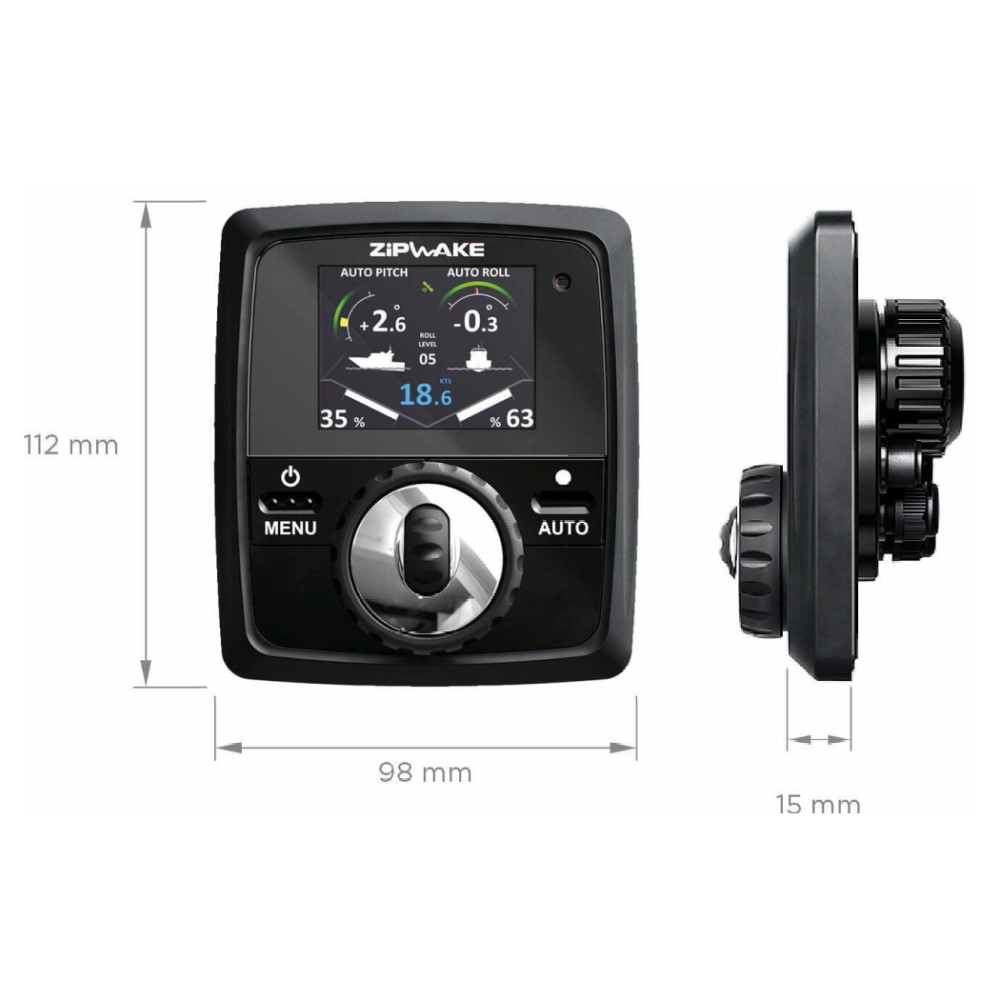
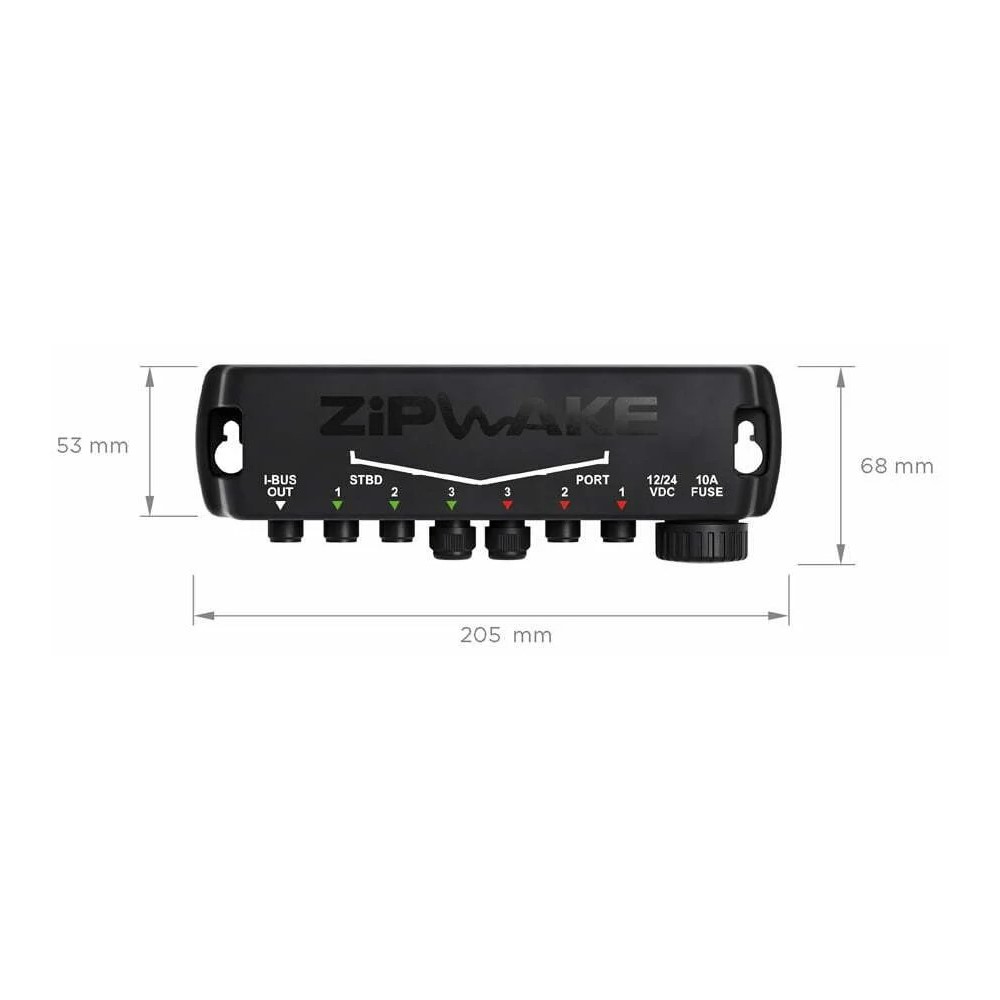
This is a complete kit rather than a pair of loose blades. It contains the 2.4-inch colour control panel with a 7-metre cable, the distribution unit with a 4-metre cable and two 450S chine interceptors with 3-metre cables. The panel combines a global positioning system (GPS) receiver, three-dimensional (3D) gyro and accelerometer, so the system can read speed and boat attitude while showing pitch, roll and interceptor position to the skipper.
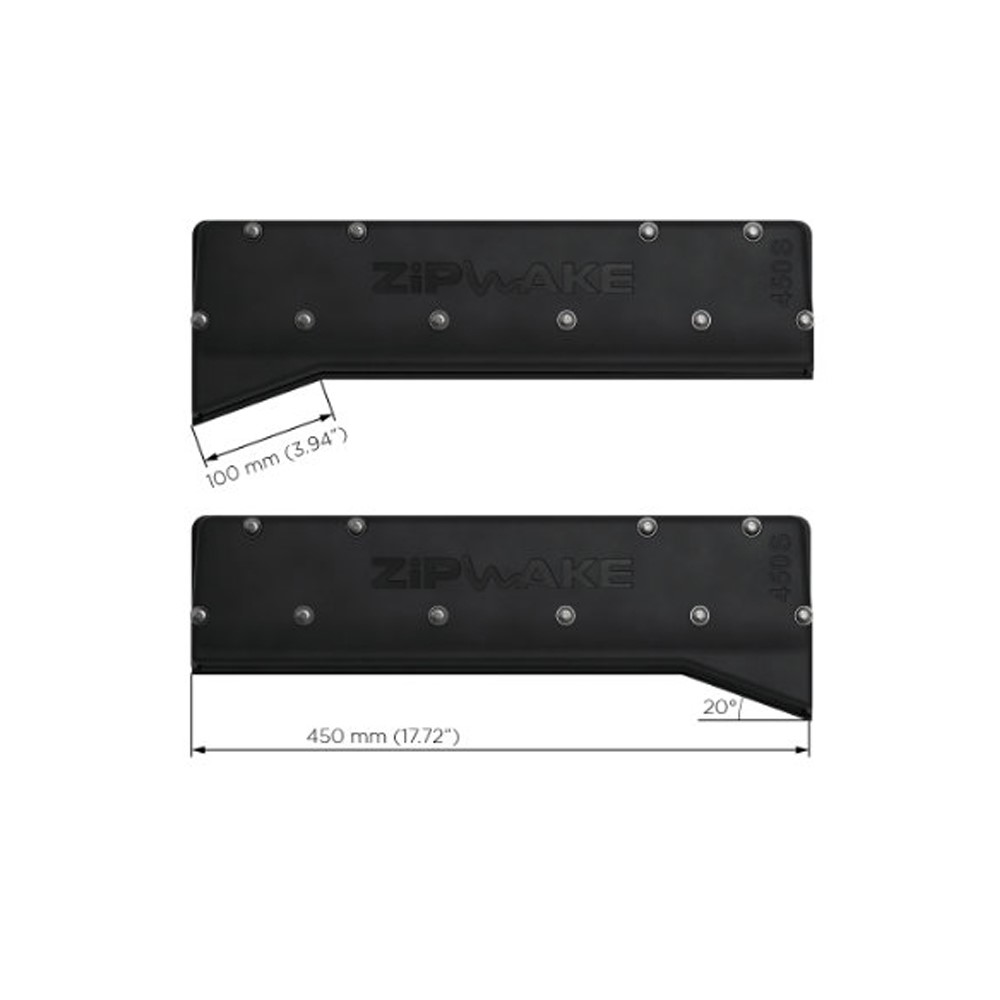
Fast vertical lift at the chine
The two interceptors are shaped for chine installation and each provides a 30 mm vertical blade stroke at 20 mm per second. That makes a full published stroke a 1.5-second movement. Instead of hinging a large metal plane into the flow, the blade extends vertically beneath the transom to create lift. Flood Marine describes it as five to ten times faster than conventional tabs; the official rate supports that claim.
The chine form is the important detail in this exact kit. A sloping transom corner can make a straight unit awkward to place or reduce the useful span. Zipwake offers port and starboard 450 mm chine interceptors that follow that geometry, keeping the lift hardware close to the outer hull where roll correction has leverage. I would still template the transom carefully, check internal access and confirm that strakes, steps, drains, drives and steering movement leave the required clearances.
Series S works on 12–32-volt direct current (DC). Each interceptor is rated at 25 watts maximum, carries an Ingress Protection rating of IP68 to 5 metres and is specified for boat speeds up to 60 knots. The 3-metre polyurethane cable can be extended to 6 metres. Those details give me a proper installation boundary: protected supply, sensible cable route, dry accessible distribution unit and sealed transom work, with commissioning completed exactly as Zipwake instructs.
A helm display that explains the correction
I like that the panel shows what the system is doing. Speed, pitch, roll and blade positions are available on a sunlight-readable screen, so automatic control is visible rather than mysterious. The skipper can set the preferred running attitude, use manual control when appropriate and allow the automatic functions to manage changing conditions. Clear feedback matters because a trim system should reduce workload without separating the person at the helm from the boat’s behaviour.
Auto pitch control helps the hull accelerate onto the plane, broadens the useful planing range and then controls running angle. Active roll responds to wind, waves and shifting load. Balanced Turn adjusts heel through a turn rather than treating the boat as if it were travelling in a straight line. I see that three-part logic as Zipwake’s strongest usability advantage. It is working with the motion I feel at the wheel, not applying one fixed answer to every change.
The distribution unit can operate up to six interceptors, which gives the installation room to grow on a larger or more complex transom. That is useful system design, though I would plan the final layout before drilling the first hole. A second pair must suit the hull and remain within the official configuration. The point is that the central power and communication architecture already anticipates more than the two units supplied here.
Lenco’s cited integration uses National Marine Electronics Association 2000 (NMEA 2000) networking, while Bennett provides light-emitting diode (LED) indication. Zipwake supplies a dedicated panel, sensors, distribution unit and interceptors as one active-motion system with immediate helm feedback.
Zipwake Series S 450S Chine vs Bennett BOLT AutoTrim Pro vs Lenco Pro Control Auto vs Lectrotab ALC-1D
| Automatic trim system | Current UK price | Difference vs Zipwake | Lift hardware | Automatic control | Published response | Supply | Helm feedback | Advertised package | Boat fit | Growth path |
|---|---|---|---|---|---|---|---|---|---|---|
| Zipwake Series S 450S Chine | £3,567 | — | Two 450mm chine interceptors | Pitch, active roll and balanced-turn control | 30mm blade stroke at 20mm/s | 12–32V DC; 25W maximum per interceptor | 2.4-inch colour display; built-in GPS, 3D gyro and accelerometer | Panel and 7m cable; distribution unit and 4m cable; two interceptors and 3m cables | Series family for 6–15m boats; interceptors rated to 60 knots | Distribution unit supports up to six interceptors |
| Bennett BOLT with AutoTrim Pro | from £1,840 | £1,727 less at entry size | Two stainless-steel hinged tabs and electric actuators | Automatic pitch and roll levelling; manual override | 2.5-inch actuator stroke; time not stated on cited listing | 12V | Water-resistant LED keypad; position indication and auto retract | Tabs, actuators, two 20ft harnesses and AutoTrim Pro control | Multiple tab sizes; 13-inch transom height stated | Configured as a conventional two-tab system |
| Lenco 12×12 Pro Control Auto | £2,072 | £1,495 less | Two 12×12-inch stainless-steel edge-mount tabs | Automatic pitch and roll through Pro Control Auto | 2.25-inch electric actuators; time not stated on cited listing | 12V | Keypad and inertial measurement; NMEA 2000 and SmartCraft connectivity | Tabs, actuators, wiring and Pro Control Auto | 17–30ft boats; 11-inch minimum transom | Network integration, conventional two-tab layout |
| Lectrotab XKA12X12 with ALC-1D | £2,035 | £1,532 less | Two 12×12-inch stainless-steel tabs and actuators | Automatic levelling, bow correction and manual mode | 2.25-inch stroke in 8 seconds | 12V actuators; 10–30V control | Sealed display with internal GPS and light-sensitive LEDs | Trim-tab kit and control bought as two advertised components | Control programming for boats 20ft and above | Single or dual station; two-tab architecture |
Bennett’s entry package is £1,727 less and supplies capable automatic control, but it remains a conventional hinged-tab arrangement and the advertised price varies with tab size. Lenco is £1,495 less and adds useful network integration, though its cited 12-by-12-inch kit is published for 17–30-foot boats and an 11-inch minimum transom. The Lectrotab components total £2,035 and publish an eight-second actuator stroke, compared with Zipwake’s 1.5-second full blade movement. I put Zipwake first because its fast chine-specific interceptors, dedicated sensor display, automatic pitch and roll, balanced-turn function, 12–32-volt range, 60-knot interceptor rating and six-unit expansion form the most responsive and complete active-control system here. That is why the higher price is worthwhile.
Installation, setup and ownership
I would treat placement as part of the performance specification. The blades need clean water flow and sound structure behind every fixing. The distribution unit needs a protected, serviceable position. Cables need proper support and gentle bends, and the helm panel needs a sightline that works in sun and darkness without competing with primary navigation information.
Commissioning should be done on the water with the boat loaded in a representative way. I would begin with conservative settings, feel how the hull reacts and then refine the preferred pitch and roll response. Automatic control is at its best when it makes small, timely changes. A dramatic correction usually means the setup or driving condition deserves attention. Manual access remains available, which lets me test the blades and take direct control when the circumstances call for it.
At lift-out, I would clean the blades carefully, confirm free movement and inspect the cable fittings, transom seals and electrical connections. The £3,567 cost sits £1,495 to £1,727 above the alternatives, but I see the return in prompt correction, better visibility, reduced list and calmer turns. Fuel results vary with hull, speed, sea and setup, so I would judge them alongside comfort and helm workload.
My verdict
I would choose the Zipwake Series S 450S Chine kit for a suitable planing or semi-planing hull where quick, visible and expandable automatic control matters. Its 20-millimetre-per-second blades, chine geometry, dedicated 3D control panel and integrated pitch, roll and turn logic make the £3,567 system the strongest overall purchase. See the exact Zipwake Series S 450S Chine kit at Flood Marine.
About this review
Specifications and prices were checked against the live Flood Marine listing, current official Zipwake material, official Bennett, Lenco and Lectrotab material, and the named UK retailer listings on 5 October 2026. This is an editorial assessment rather than an instrumented performance, durability or sea test. Erin McKee is the independent reviewer; the article was not written by Flood Marine Services.